business
Shing-Tung Yau on Wang Hong and Deng Yu's Fields Medals: Hoping Homegrown Scholars Will Lead the World
On July 23, 2026, at the opening ceremony of the 2026 International Congress of Mathematicians (ICM), the International Mathematical Union officially announced the laureates of the 21st Fields Medal. Chinese mathematicians Wang Hong and Deng Yu both received the award.
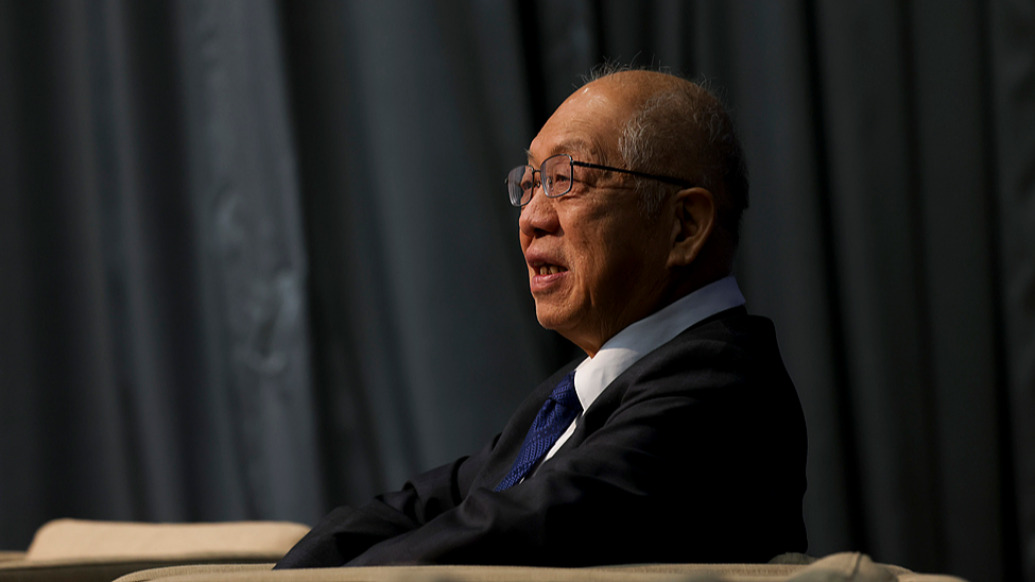
"I am extremely happy. For the Chinese mathematics community, this is a wish we have hoped to see fulfilled for decades," said Shing-Tung Yau—renowned mathematician, the first ethnic Chinese recipient of the Fields Medal, director of the Yau Mathematical Sciences Center at Tsinghua University, and dean of Qiuzhen College—upon hearing the news.
Yau said he had always hoped that at least one Chinese mathematician would win the medal; he never expected two outstanding young mathematicians to receive the honor this time, which made him especially excited.
He believes that the key reason Wang Hong and Deng Yu stood out among so many excellent scholars lies in the originality and importance of their achievements. The problems they solved had remained open for a long time; built on the accumulated work of generations of scholars, they ultimately completed the crucial leap.
Speaking about the cultivation of mathematical talent, Yau pointed out that, first and foremost, scholars themselves must devote substantial time to understanding the development of the field. Great mathematical achievements are never isolated; they are built upon existing research. Beyond studying the literature and the history of the discipline, extensive exchanges with peers are also essential. Major mathematical problems often draw sustained exploration from many people in the academic community, with everyone contributing in some measure. The scholar who ultimately achieves the breakthrough usually synthesizes the collective wisdom before taking that final, decisive step.
He believes the role of math competitions in talent cultivation should not be overstated. "Competitions may spark interest, but they contribute very little to the making of great scholars; competition techniques are far from sufficient to sustain academic research," Yau said.
"Expecting scholars cultivated at home to lead the global trend"
In the interview, Yau detailed the significance of Wang Hong's and Deng Yu's academic achievements. He looks forward to scholars cultivated in China producing the most top-tier results within the domestic academic environment.
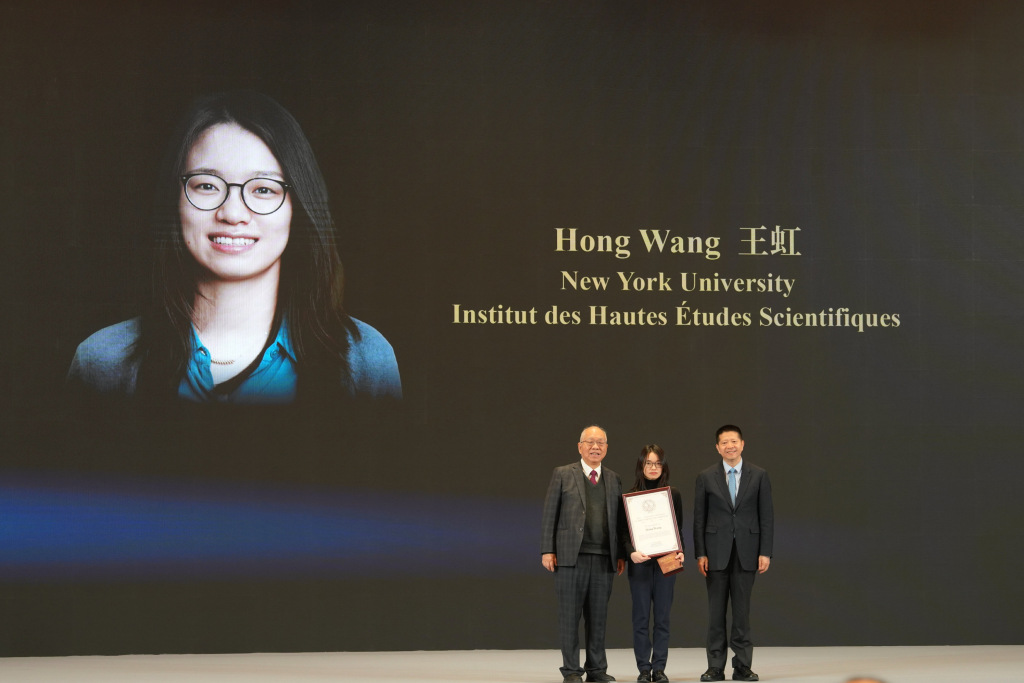
Yau pointed out that Wang Hong has achieved crucial breakthroughs in harmonic analysis and geometric measure theory, with far-reaching influence on related fields. "The work by Wang Hong and her collaborators proving the three-dimensional Kakeya conjecture is of pivotal importance. My friend Charles Fefferman, an expert in harmonic analysis, studied this problem as early as the 1970s, seeking to uncover its connections with Fourier analysis. Over the following decades the community kept trying to crack it—scholars such as Thomas Wolff in the early 1990s made important progress but could not fully resolve it. In the end, Wang Hong completed the proof. It is fair to say this is a landmark contribution," Yau remarked.
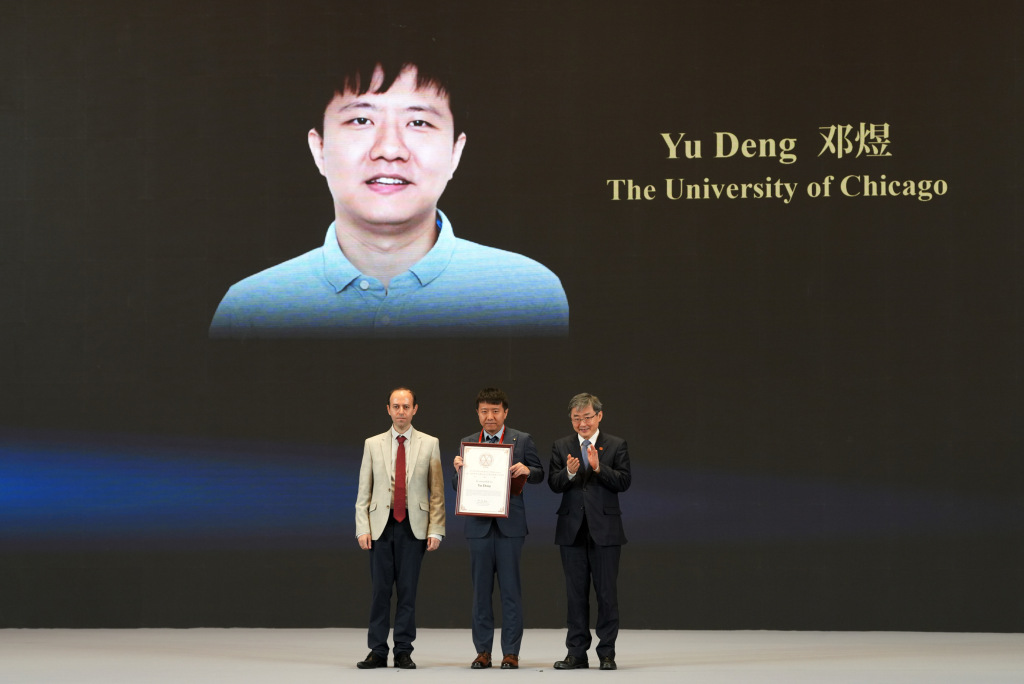
In addition, Yau noted that Deng Yu derived important phenomena of fluid equations starting from the fundamental laws of physics. "This line of work has a long lineage: more than a century ago, the German mathematician David Hilbert raised related questions, and many celebrated scholars have since worked on it, including the Russian mathematician Andrey Kolmogorov and my teacher Charles Morrey. The significance of this work is immense," Yau said.
Yau believes that Wang Hong and Deng Yu both winning the Fields Medal marks the overall maturation of China's mathematical community.
"More than 50 years have passed since I first visited mainland China in 1979. At that time, the work most valued domestically was Chen Jingrun's research on the Goldbach conjecture, but it did not receive much international recognition," Yau said. Since then, large numbers of students have gone to Europe and the United States for advanced study and gradually matured, and Chinese mathematics has flourished.
He believes the research of the early generations of Chinese students abroad focused mainly on concrete problems. The new generation of students has begun to mature, capable of commanding more advanced mathematical ideas—though these scholars were trained mainly overseas.
"Today, the achievements of Wang Hong and Deng Yu give us new hope: we can now expect the final, crucial step—top-tier results produced at home by scholars cultivated in China," Yau said. Throughout history, the scientific development of Italy, France, Britain, Germany, the United States, Japan and other countries has followed a similar path: sending students abroad to absorb nourishment, and eventually bearing fruit at home. China now stands at this last and most critical stage.
Yau hopes that within the next decade, China can cultivate a large cohort of young scholars on its own soil, allowing them to forge their own paths and accomplish work that leads the global trend.
"I have always sincerely invited them to return and teach, hoping they will mentor our students. I look forward to the outstanding young people at Qiuzhen College taking Wang Hong and Deng Yu as role models, and striving, within the next decade, for a student cultivated in China to win the Fields Medal. This is the shared aspiration of the Chinese mathematical community and indeed of Chinese science as a whole—to produce Fields Medal laureates trained at our own universities," Yau said.
"The role of math competitions in talent cultivation should not be overstated"
Wang Hong was born in 1991 in Guangxi and is 35 this year. She is a permanent professor of mathematics at the Institut des Hautes Études Scientifiques (IHÉS) in France and concurrently a professor at the Courant Institute of Mathematical Sciences, New York University. Deng Yu was born in 1989 in Shenzhen, Guangdong, and is 37 this year; he is a full professor at the University of Chicago.
"Major breakthroughs in mathematics and theoretical science often emerge in a scholar's youth. Like the foundational work of Tsung-Dao Lee and Chen-Ning Yang, mathematicians are at their most creative in their twenties and thirties. Yet important results are never achieved overnight—they usually require years, or even longer, of dedicated study," Yau noted. Wang Hong's work, for example, was built on decades of research by seven or eight scholars; it is the outcome of long accumulation and step-by-step progress.
This is the first portion of the interview, translated from the opening ~2,000 characters of the original Chinese article. The full interview continues at the source link below.
Source: The Paper — 丘成桐谈王虹、邓煜获菲尔兹奖