business
Paid to Register SIM Cards? Lawyers Warn: These "Part-Time Jobs" Are Prime Tools for Telecom Fraud
[Editor's Note] Queuing at grilled-fish restaurants, registering new phone cards, padding out home-viewing crowds, even impersonating a boss for stressed office workers or posing as a fake romantic partner for young people being pressed into marriage by their parents—these seemingly ubiquitous, easy short-term gigs sometimes reflect the public mood, and sometimes hide risks that ordinary people easily overlook. Recently, our "Instant Test" studio went undercover to experience various part-time jobs firsthand, exposing the chaos behind some of them, breaking down the potential traps, clarifying the legal boundaries, and offering a real-world reference for regulating market order.
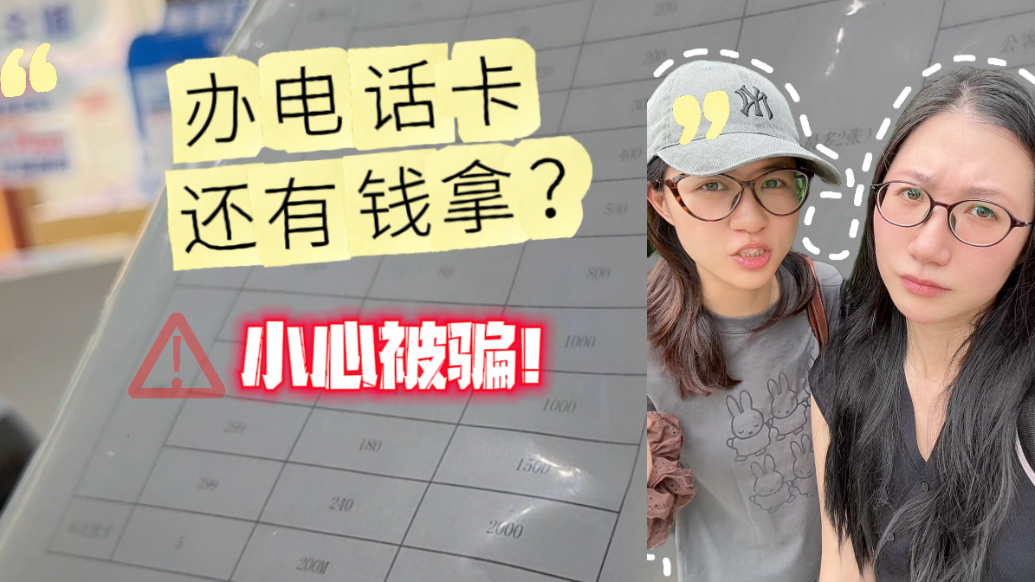
Recently, a part-time-job group chat we had infiltrated was flooded with ads for carrier SIM-card registration and "crowd-padding." The recruitment requirements were explicit: applicants must not be blacklisted by carriers and must still have registration quota left under their name. The ads publicly claimed the work was purely to hit business targets, with daily pay ranging from 80 to 150 yuan.
The demands on these so-called "part-timers" varied. Some claimed the customer could register a telecom card and keep it for personal use, merely occupying a registration slot to boost metrics, with the card automatically cancelled within three to six months; others required that the physical card be mailed to the paying party for use.
On July 8, we signed up for a telecom crowd-padding gig. After registering with the team leader, we were pulled into a dedicated task group, where the contact sent a densely written list of registration instructions. The rules said to first check the card numbers under our name, pick blank numbers not yet linked to WeChat, and promised that all prepaid phone fees would be reimbursed—we wouldn't have to spend a cent.
The contact repeatedly stressed the registration requirements in the group and claimed the cards were only used to mass-send rental-advertising text messages, asking whether we could accept that.
Full of doubts, we visited a physical telecom service hall to ask. A staff member there gave a stern warning: taking on this kind of "card-collecting part-time job" is extremely risky, because all cards are now registered under real names—once a phone card is used for illegal activities, the person who registered it under their real name also bears legal responsibility.
We then visited China Mobile and China Unicom outlets. Staff at all three carriers said exactly the same thing, all advising against taking part in such activities.
So is there any case where a service hall itself recruits people to register cards for crowd-padding? Staff at all three carriers' physical outlets said there was no such practice at their locations.
Afterward, we phoned the part-time contact to confront them. The other party "guaranteed" the cards would not be used for anything illegal and insisted it was not fraud.
Regarding the above situation, Zhao Liangshan, senior partner at Shaanxi Hengda Law Firm and a well-known public-interest lawyer, explained that under Article 31 of the Anti-Telecom and Online Fraud Law, a real-name phone card may only be used by the registrant and must not be handed over to others privately. Even if the registrant initially did not know the card would be used for fraud, the act of handing it over is itself a violation, and can lead to administrative penalties, telecom sanctions, suspension of communication services, and damage to one's credit record. If circumstances such as abnormal payment or repeated card registration lead to a finding that the person "should have known," they may violate Article 287-2 of the Criminal Law—the crime of aiding information-network criminal activity—and bear criminal liability. Those who were genuinely deceived and reported and cancelled the cards in time generally will not face criminal prosecution, but must still cooperate with police investigations.
Zhao Liangshan analyzed that the team leaders of such card-registration gigs and the upstream card-collecting gangs are suspected of multiple offenses, primarily the crime of aiding information-network criminal activity under the Criminal Law. If they collect and resell identity information and verification codes in bulk, they are also suspected of the crime of infringing citizens' personal information; those who knowingly keep supplying cards for telecom fraud can be held liable as accomplices to fraud. Moreover, service halls have no such official card-registration crowd-padding gigs—this is an illegal black-and-gray-market operation chain and a key target of the "card-cutting" campaign, and the gangs involved will be investigated and dealt with across the entire chain according to law.
"Phone-card part-time jobs" are not a new scam. In October 2025, a report by "Kankan News" titled "Exposed! Behind Getting Paid to Register Phone Cards Lies This Gray Industry Chain..." noted that these so-called card-registration gigs are not officially sanctioned; the phone cards are, with high probability, sold to third-party gangs to "raise" cards in "cat pools" (SIM banks) and then resold, becoming tools of black-and-gray industries such as telecom fraud, money laundering, and online troll armies.
The report warns that in such situations, people should stay alert: when faced with temptations like "free gifts for registering a card" or "cash for registering a card," stay calm and don't lose big over small gains; protect your personal information by not casually handing your ID and other details to strangers, and use official channels when doing business; check regularly by periodically reviewing the phone cards and bank accounts under your name to prevent illegal misuse; and report actively by promptly notifying the police of any suspicious behavior.