business
6 US Coast Guard Patrol Ships "Appear" in the South China Sea: What Is Washington Up To?
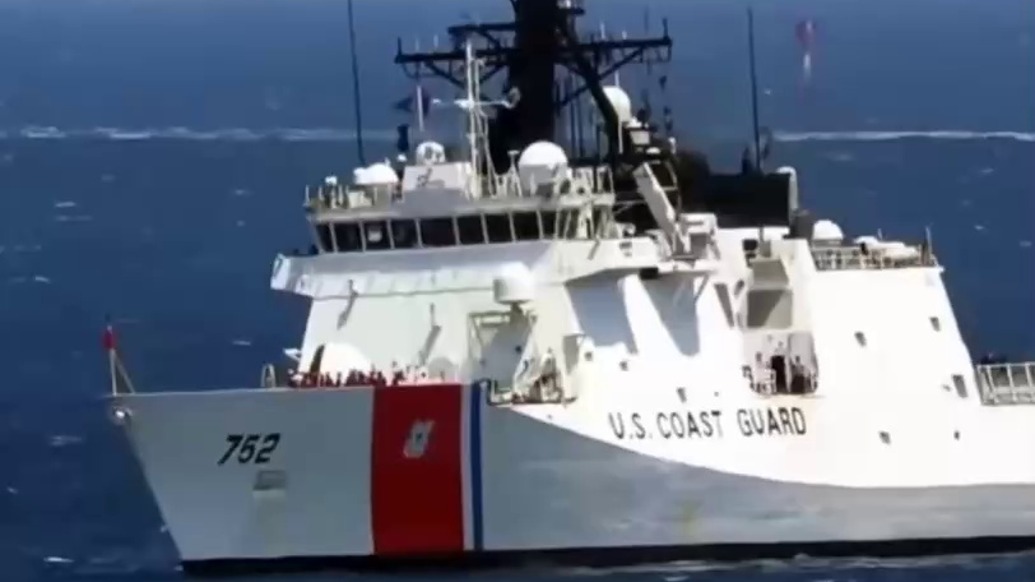
Recently, the United States moved six Coast Guard patrol ships from the war-torn Middle East to Subic Bay in the Philippines. These vessels had previously been tasked with maritime security and drug and weapons interdiction in the Middle East. Why did they not stay in the protracted conflict zone of the Middle East, but instead travel all the way to the South China Sea?
What is the background of these six patrol ships?
According to US media reports, the six US Coast Guard "Sentinel"-class fast response cutters belong to the newly formed "Expeditionary Patrol Squadron." The cutters have been authorized to be based in Singapore and to rotate into Subic Bay on Luzon Island in the Philippines to carry out missions, with their deployment lasting at least until September.
Taken at face value, the US Coast Guard seems to operate mainly near US territorial waters—so why has it gone to the Middle East one moment and the South China Sea the next? Military commentator Li Yaqiang noted that the US Coast Guard is in fact a global maritime armed force of the United States.
Li Yaqiang: The US Coast Guard is a component of the US armed forces, occupying a status equivalent to the country's maritime police and known as the "second navy." Its operational radius is by no means limited to the US coast; it is also a paramilitary force through which the United States projects its national will.
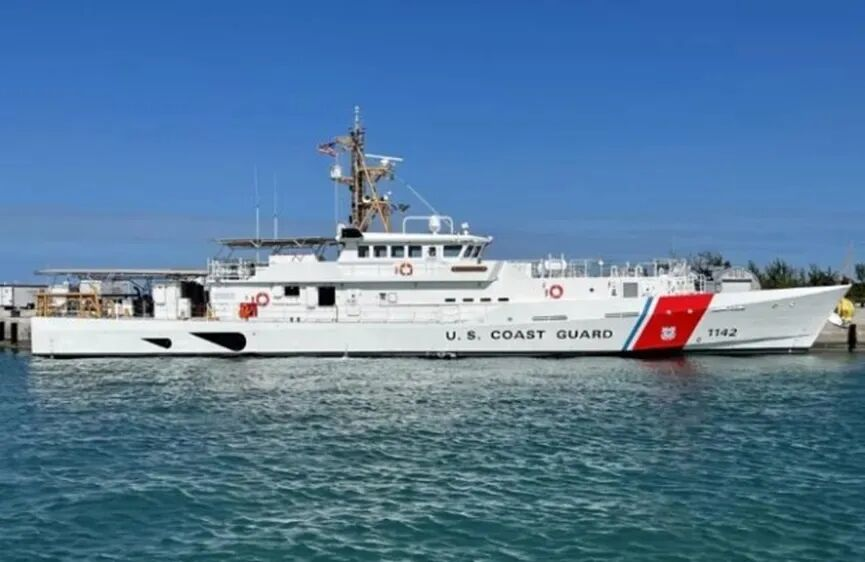
US Coast Guard "Sentinel"-class patrol cutter
Of course, the US vessels did not come to the South China Sea to catch drug traffickers or crack down on smuggling. Li Yaqiang explained that, in terms of tonnage and firepower, these six patrol ships are not strong; keeping them in a high-intensity battlefield like the Middle East would serve no useful purpose, and maintaining such forces there would instead crowd out US logistical resources in the region. Deployed in the South China Sea, however, they can take advantage of their high mobility to shuttle between reefs and islets, maintaining a "close-in" presence.
Li Yaqiang: The "Sentinel"-class patrol cutters that have come this time are 47 meters long, weighing around 300 to 400 tons, with a top speed of 25 knots—medium-sized by US Coast Guard standards. Their firepower is not very strong: they carry only a 25mm cannon and a small number of machine guns, and are mainly tasked with coastal patrol, search and rescue, anti-drug and anti-smuggling operations. The war situation in the Middle East made it difficult for them to stay there. In a region like Southeast Asia, with its many islands and shallow waters, these ships have convenient advantages—they can dock at ordinary wharves and are relatively simple to support.
"Fighting Big with Small" — Lowering Military Sensitivity
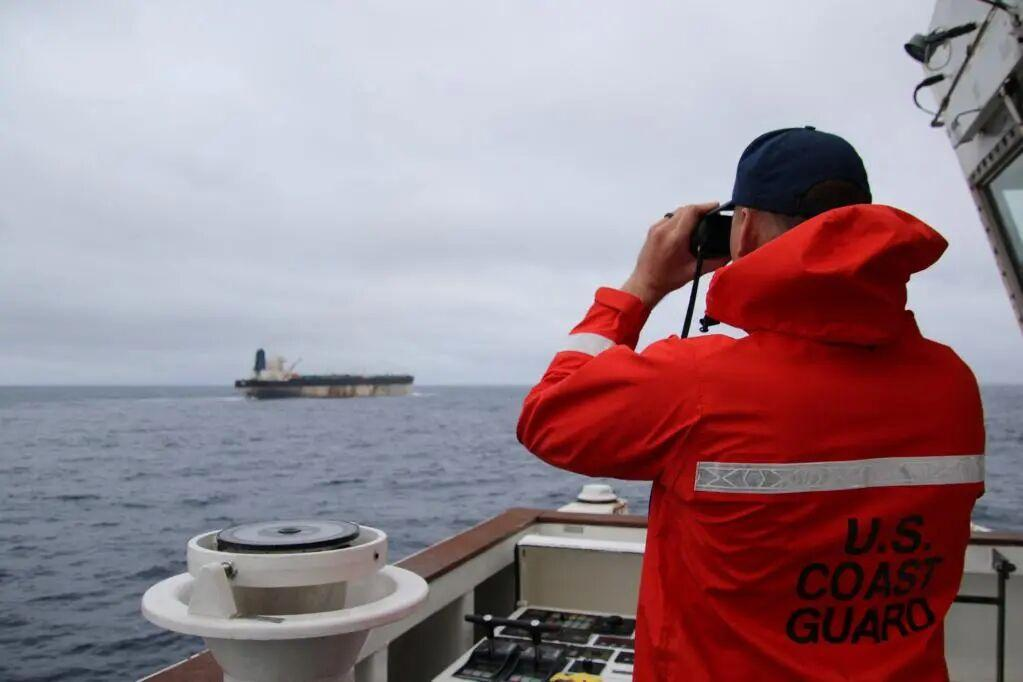
In the past, most of the patrol ships the United States sent to the South China Sea were larger in tonnage; this time, it has chosen to deploy these small fast response cutters to Subic Bay, which faces the South China Sea. Military commentator Li Yaqiang said that although the ships are smaller, the United States can use them to demonstrate a military presence while lowering sensitivity.
Li Yaqiang: Why send the Coast Guard rather than warships? This shows that the United States is also wary about the use of military force—especially in East Asia. The Americans know that even sending large warships, or even an aircraft carrier, would raise their own security concerns. Sending the Coast Guard both signals a military presence and demonstrates the resolve to maintain relations with allies and to participate in maritime security affairs, while minimizing military sensitivity as much as possible.
China Has the Capacity to Safeguard Peace and Stability in the South China Sea
According to media statistics, the China Coast Guard currently operates 280 law-enforcement ships of over 100 tons, with a total tonnage approaching 400,000 tons. Six small craft are simply not in the same league as the China Coast Guard. Li Yaqiang said the likelihood of the US vessels encountering the China Coast Guard is very small.
Li Yaqiang: We also have patrol boats of this class, as well as 10,000-ton patrol ships suited to far-seas operations. Our overall firepower and expansion capabilities are stronger than those of the US Coast Guard. The main operating area of these six patrol ships that have come this time is the southern part of the South China Sea and the waters around Southeast Asia, so the chance of encountering our vessels at sea is small.
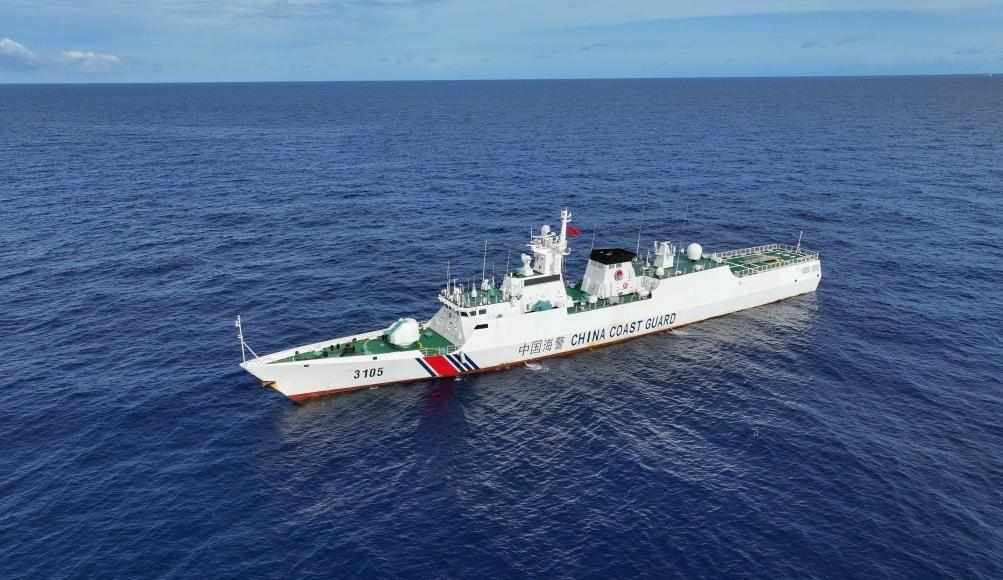
Li Yaqiang analyzed that individual countries around the South China Sea may try to make something of this US move, but it will not have a major impact on the overall situation in the South China Sea.
Li Yaqiang: The Americans' interference will not fundamentally change the situation in the South China Sea region. We enjoy an overwhelming strategic advantage across the South China Sea; even if countries like the US and Japan were drawn into South China Sea affairs, they would gain nothing there. Our military presence here is in fact very restrained. If they dare to provoke, we can increase our military presence here, step up patrols, and strengthen law-enforcement forces. We have full confidence, and full strength, to safeguard peace and stability in the South China Sea.