
top-news
Instant Commentary | Deputy Division Chief Accused of High-Handed Parking; 'After-Hours' Conduct Also Subject to Discipline
A dispute over a female car owner maliciously occupying a neighbor's parking space in a Changsha residential community has continued to simmer for days. The female driver was identified as Ms. Peng, deputy division chief of a certain department at the Changsha Sports Bureau. On the evening of July 9, the Changsha Sports Bureau issued an official notice stating that, regarding the incident in which "one of our staff members" occupied someone else's parking space, it would join forces with the public security authorities and the subdistrict where the community is located to conduct a comprehensive investigation, and would handle the person involved in accordance with regulations and publicize the result.
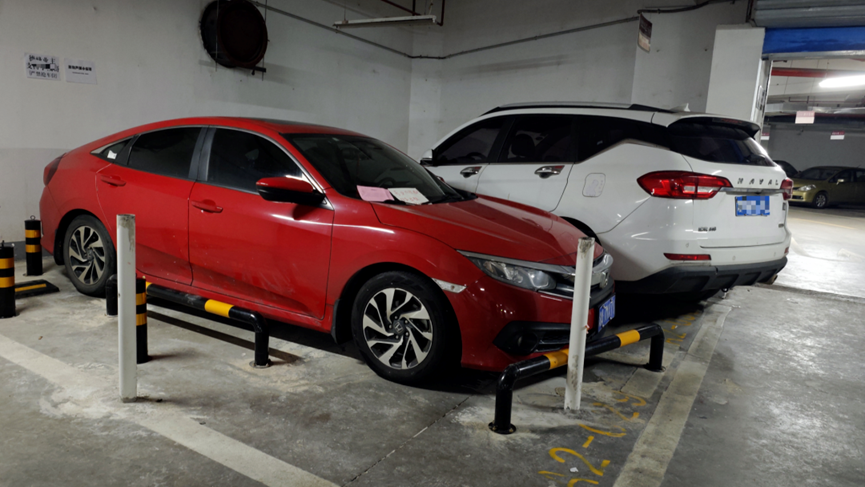
Mr. Min, the homeowner, spent 80,000 yuan to purchase a titled parking space in the community. On the evening of June 30, he found someone else's car parked in his space. When he contacted the owner, he discovered the phone number left was wrong; after much trouble he finally reached her, only for her to claim she was "on a business trip out of town and wouldn't be back for three or four days"—but she was then found to have been in the community the whole time, merely "unwilling to come downstairs." Though clearly in the wrong, the female owner called the police twice and refused to apologize.
Later, the conflict escalated, and Mr. Min used U-shaped iron pipes and other objects to block the car inside his space. On July 6, the female owner asked someone to relay an offer to pay 500 yuan to "settle privately," but omitted any apology, which Mr. Min rejected on the spot. It was not until the evening of July 7, after repeated mediation by multiple parties in the community, that the barricade was removed and the car—stuck in an eight-day standoff—was finally moved.
What could have been a minor neighborhood dispute resolved with a simple apology and an immediate move of the car instead escalated into a days-long public farce that sparked widespread disgust online. Throughout the dispute, the car owner's lies, evasion, and defiant confrontation laid bare her arrogance.
The female owner's status as a civil servant—and in particular as a deputy division chief—has been repeatedly highlighted and magnified in public opinion, becoming a glaring label for this incident.
Occupying a neighbor's parking space, refusing to apologize, and acting with brute arrogance—is this privilege-seeking at heart? Although there is no direct evidence that Ms. Peng "abused her power to bully a neighbor," public attention naturally falls on her identity as a leading cadre. That leading cadres set an exemplary example in obeying the law is a matter of course, and they are exactly the ones under the public's watchful, judging eyes.
Full and rigorous self-discipline within the Party has never been limited to restraining public officials' conduct "within the eight working hours"; cadres' daily lives and public words and deeds also fall within the scope of disciplinary oversight, with no public-private divide that creates a blind spot in discipline. The CPC Disciplinary Regulations set out clear punitive clauses for Party members and cadres who violate social morality or infringe upon the legitimate rights and interests of the public. For instance, they stipulate that "those who violate social public order and good customs and engage in improper words or deeds in public places or cyberspace, causing a bad influence, shall be given a warning or a serious warning," and that other conduct that seriously violates social morality shall be handled according to the specific circumstances.
Leading cadres hold power and bear special responsibilities, and society holds them to higher expectations of law-abiding and moral conduct. Within the narrow confines of a parking space lies no less a touchstone for testing a cadre's work style. Extending rigorous Party self-discipline into the details of daily life is precisely about breaking the lucky mindset that "no one is watching outside the eight working hours." Drawing a hard line through binding accountability makes every public servant remember: inside and outside the workplace, in front of others and behind their backs, they must set an example of law-abiding and virtuous conduct.
Disciplinary enforcement and accountability apply regardless of public or private settings, and the building of work style has no endpoint and no blind spot. We hope the Changsha Sports Bureau honors its commitment, conducts a comprehensive investigation in accordance with the law, handles the person involved per regulations, and publicizes the result. A deputy division chief's high-handed parking cannot be left without a resolution.