culture
They Lived Frugally All Their Lives, Then Donated 5 Million Yuan Before Saying Goodbye
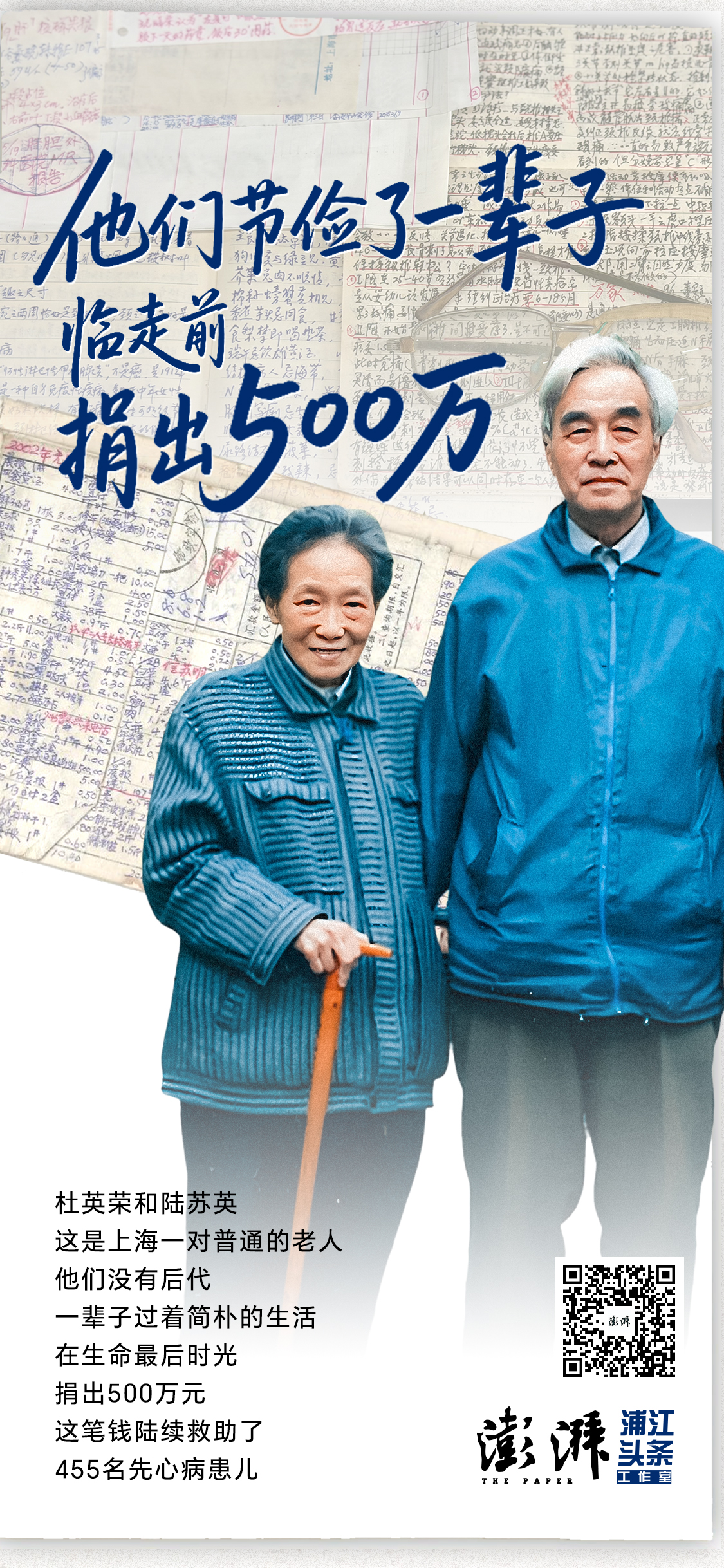
They Lived Frugally All Their Lives, Then Donated 5 Million Yuan Before Saying Goodbye
"I often take Bus 770 past your hospital. Do you have a program to help children with congenital heart disease?"
In early 2018, Cheng Bei, head of the social work department at Shanghai Yuanda Cardiothoracic Hospital, received a call from an elderly gentleman.

After a brief conversation, Cheng Bei visited their home. It was an ordinary old house of about fifty square meters, home to an elderly couple who lived very frugally — their belongings worn and cluttered, the kind they "couldn't bear to throw away." The old man would ride a tricycle to the community cafeteria to buy a 17-yuan boxed meal that would last them two meals.
Cheng Bei told them the hospital could arrange surgeries, and helping one child in need cost around ten thousand yuan. Before long, the elderly couple brought out 500,000 yuan. "Let's start with 10 children."
Soon after, they decided to add another 4.5 million yuan. The total donation of 5 million yuan was executed through the Shanghai Overseas Chinese Foundation, and the money went on to help 455 children with congenital heart disease.
At first, Cheng Bei did not know that when they made the donation decision, the old man, Du Yingrong, was already nearing the end of his life. Her connection with the old lady, Lu Suying, would continue for many more years.
Du Yingrong passed away in 2018, and Lu Suying in 2025. The couple had no descendants and spent their final days in the hospital. Their affairs were managed by the Foundation — a practice now increasingly known as appointed guardianship and estate management.
In 2026, through a memorial exhibition, Cheng Bei saw the couple's belongings. Old Shanghai residents value propriety and rarely share their private matters with others. Amid fragments of photos, receipts, musical instruments, and notes, she finally understood the couple's lives and the choices they made.
"I Thought Their Home Was Quite Shabby Too"
On the fourth floor of the hospital, everyone knew when Lu Suying was getting an injection.
She had been a doctor her whole life, but in old age, she was terrified of needles. Before the needle even touched her skin, she would cry out in pain.
Lu Suying lived at Yuanda Cardiothoracic Hospital for many years and became the beloved "Grandma" of the whole floor. Everyone spoiled Grandma — coaxing her during injections, sharing treats with her. Lu Suying had a sweet tooth. Cheng Bei brought her a jar of fermented tofu and a jar of honey, and the old lady would spread both on either side of her steamed bun, eating with great care.
"Splitting a boxed meal with her husband was fine, and so was having jam with steamed buns." In Cheng Bei's eyes, Grandma was an interesting character, with frugality etched into her bones. Once, when Cheng Bei gave her a carton of milk, Grandma complained it was too expensive and shot back, "Is that the best you can do?"
That one remark sent Cheng Bei on a hunt for cheaper milk, but she could never beat Grandma's record of "27 yuan per carton." "Later I found out they bought milk that was about to expire," Cheng Bei said.
Everyone spoiled Lu Suying, Cheng Bei said, because at the end of the day, they knew she was a good person.
In 2018, the couple proactively contacted the hospital after seeing its public service ads about children with congenital heart disease. The hospital then connected them with the Shanghai Overseas Chinese Foundation to handle the donation. "The foundation manages the funds, and the entire process is transparent and open," said Zhang Fan, deputy secretary-general of the foundation.
Once the donation was arranged, in May 2018, the couple brought 500,000 yuan in cash to the hospital. "When they withdrew the money, the bank called us to verify because they were worried the elderly couple might be getting scammed," Cheng Bei recalled.
Seeing that their donated money was genuinely helping children, the couple soon decided to add another 4.5 million yuan. This time, everyone was shocked. "I told them not to donate everything and to save for themselves," Cheng Bei tried to dissuade them. "I thought their home was quite shabby too."
Du Yingrong then revealed his condition. He told Cheng Bei, "The two of us probably don't have much time left. We have some pension, plus a bit of savings. There's nothing much to spend on. That's enough. Let it be."
The Elderly Couple Who Chose Appointed Guardianship
By then, Du Yingrong was already in the late stages of cancer, and Lu Suying also suffered from heart failure and looked frail. The couple had been living in a nursing home, but seized the donation opportunity to move into Yuanda Cardiothoracic Hospital.
Du Yingrong did not last long in the hospital. Cheng Bei recalled that when they were admitted, the medical staff helped Grandma into a wheelchair, but Grandpa, who was in worse condition, insisted on walking on his own. "We pushed Grandma forward, and when we looked back, Grandpa could no longer stand."
At first, they shared a room, but Du Yingrong's condition quickly deteriorated. The two beds were separated by a curtain, and at night Lu Suying could clearly hear the medical staff suctioning Du's sputum. Concerned about her emotional state and rest, the hospital negotiated with her and moved Du Yingrong to the ICU. Grandma was reluctant at first, but eventually agreed.
Cheng Bei felt that Grandma had been protected by Grandpa her whole life — "she did not even know the bank card passwords." But when it came to the end of Du Yingrong's life, only Lu Suying could make decisions. No intubation, no invasive treatments — minimizing suffering was the couple's principle.
So who would make decisions for Lu Suying in the future? What would happen to their affairs after the two were gone? Despite already planning to donate their estate, there were still many matters beyond their control. When they discussed these concerns with the Foundation and the hospital, the couple was deeply worried.
In recent years, issues surrounding end-of-life guardianship and estate management for solitary seniors have drawn widespread attention, bringing concepts like "appointed guardianship" into public view. Appointed guardianship means that adults with full civil capacity can negotiate with relatives or other willing individuals or organizations in advance, and appoint their guardian in writing. The appointed guardian assumes custodial duties when that adult loses or partially loses civil capacity.
Du Yingrong and Lu Suying, as elderly people without children, were exactly the kind of people in need of appointed guardianship. In January 2026, Shanghai enacted the country's first provincial-level specialized policy on appointed guardianship for the elderly, marking an important step in protecting this demographic.
But back in 2018, few people knew about appointed guardianship. Notary Li Chenyang from Putuo District Notary Office was brought into the case. On his recommendation, Lu Suying signed an appointed guardianship agreement with the Foundation, which was notarized at the Putuo District Notary Office. At the same time, the couple each signed and notarized wills, arranging for the donation of their real estate, and entrusting the Foundation to sell their property after their deaths and donate the proceeds — along with other assets — to help children from poor families with congenital heart disease.
Li Chenyang believes this was very likely the first case in China where a foundation organization was fully entrusted to serve as appointed guardian and to manage estate donation.
On June 19, 2018, the couple notarized their wills and arranged their affairs. Four days later, Du Yingrong, aged 81, passed away peacefully.
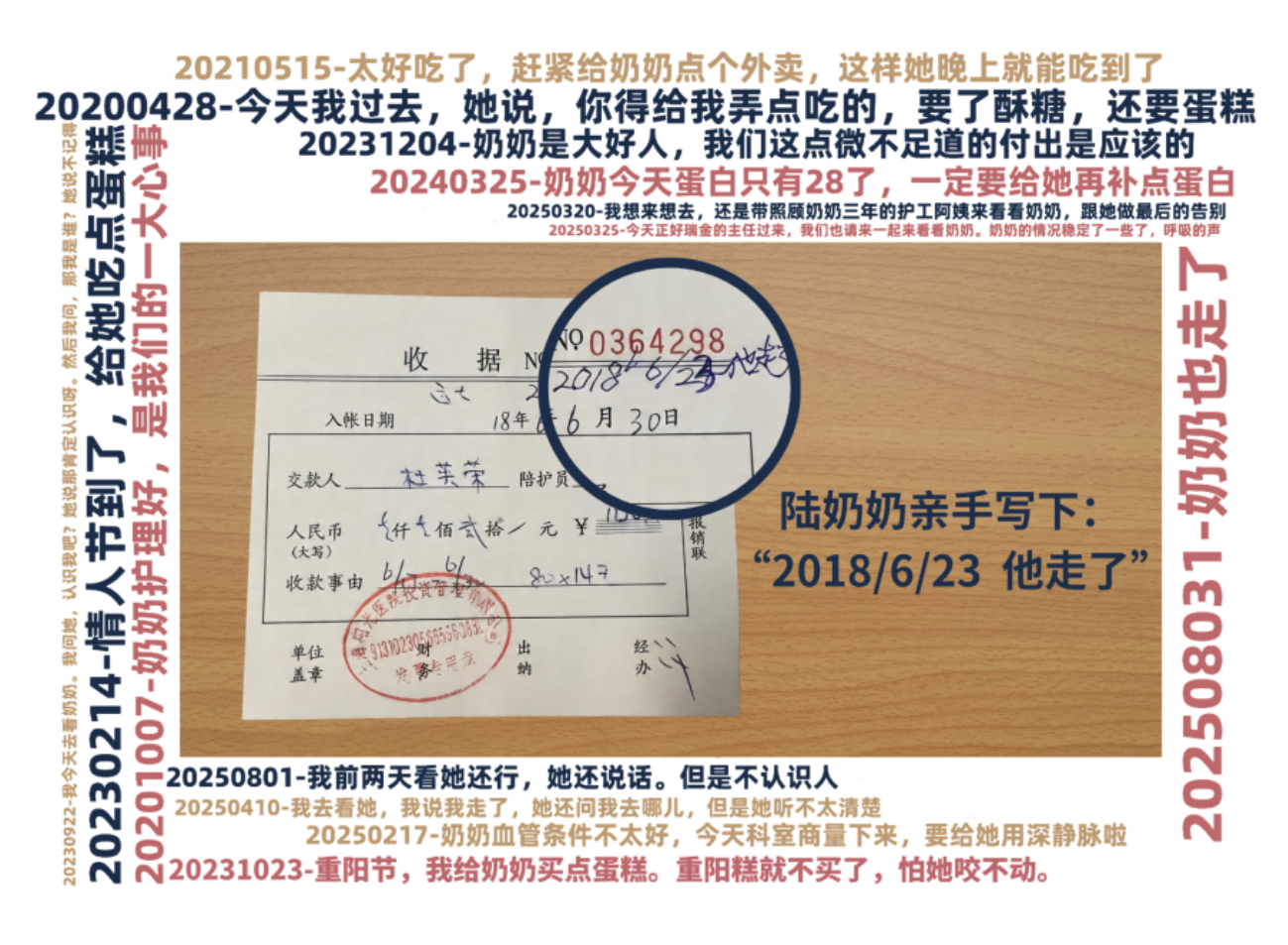
"2018/6/23 — He Left"
After Du Yingrong's death, Lu Suying did not show much grief in public. She spent her last seven years living in the hospital, rarely talking about herself. "In 2025 she was mostly drowsy, but we would often touch her to let her know we were there," Cheng Bei said.
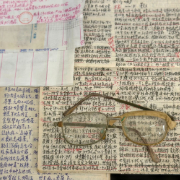
In March 2026, staff from the Foundation and the notary office visited the couple's home to inventory their belongings. The room was filled with the mustiness of age — rickety old furniture, tiny receipts for pennies and dimes, glasses wrapped in tape, and other odds and ends. "3 sesame balls for 2 yuan, 1 box of tofu for 0.5 yuan, 1 newspaper for 1 yuan, 4.2 jin of apples for 4 yuan..." The notebook was filled with tiny script recording daily expenses, sketching out the rhythms of an ordinary family.
Long-buried memories were thus unearthed.
Du Yingrong was born in 1937 in Hebei Province, studied at Heilongjiang University's Foreign Languages Department, and became a teaching assistant at the Second Military Medical University's foreign language teaching and research office in 1961. Lu Suying was born in 1933 in Jiangsu Province, studied at Shanghai First Medical College (predecessor of Fudan University's Shanghai Medical College), and after graduation became a teaching assistant and military doctor at the Second Military Medical University. The two married in 1964, switched jobs several times, and in 1985 joined the newly established Shanghai Law College (predecessor of Shanghai University of Political Science and Law), where they served as teacher and school doctor respectively until retirement.
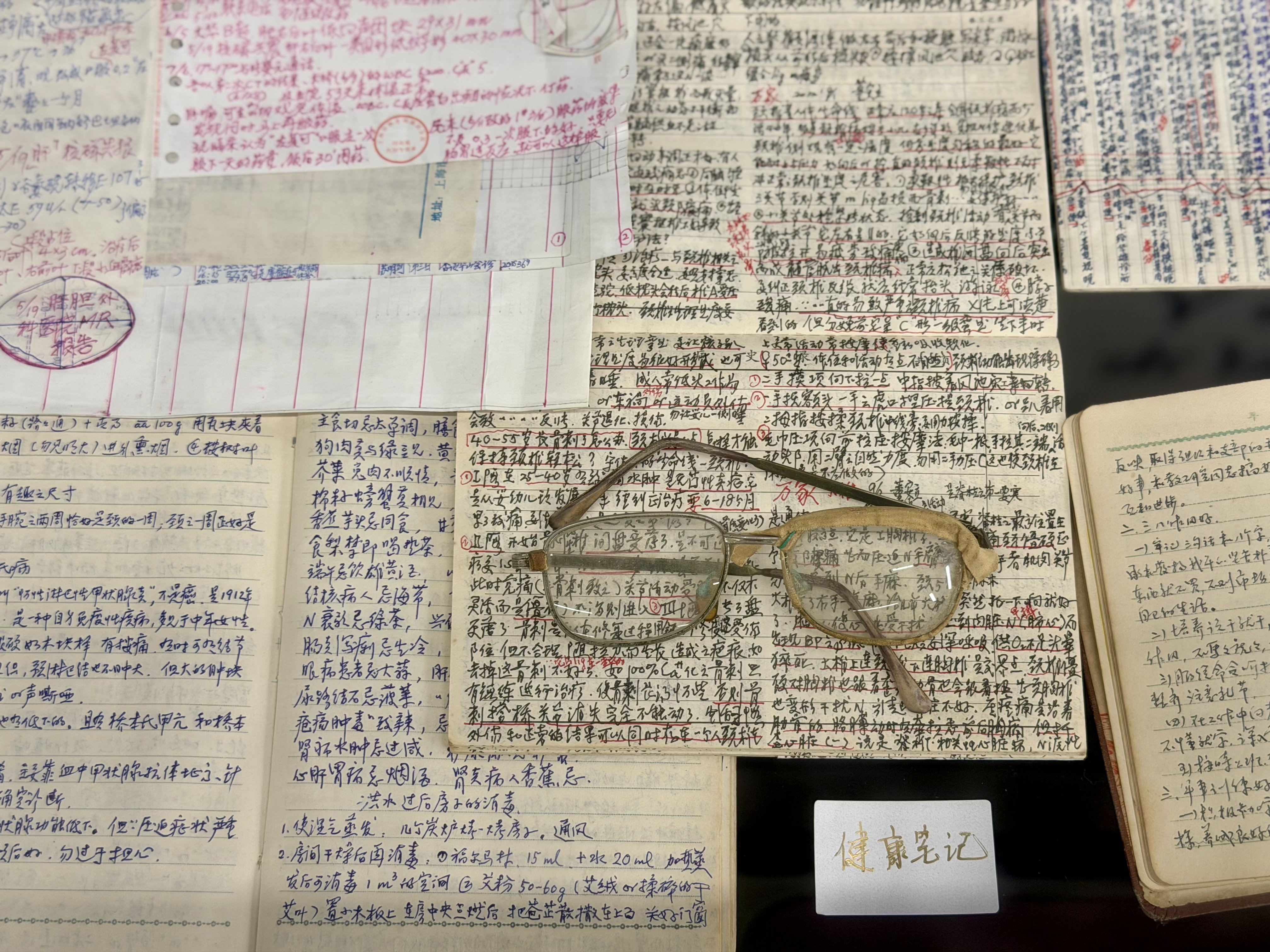
Foundation staff member Qian Xinyao participated in the entire inventory process. She discovered that while the couple lived frugally, their spiritual world was rich. They kept extensive reading notes and news clippings. Their home had a record player, a violin, and badminton rackets. They traveled to many places together, capturing countless moments with their camera. The old man was also quite adept at stock trading, leaving behind several notebooks recording market movements and considerable gains.
Yellowed receipts among the belongings revealed more of their little-known charitable acts: in 2009, a 500-yuan donation to typhoon-hit areas; in 2010, 10,000 yuan to the Yushu earthquake zone and another 10,000 yuan to the "Mother Water Cellar" project; in 2013, 80,000 yuan to the Ya'an earthquake zone and 20,000 yuan for educational assistance.
The couple loved each other deeply throughout their lives. While sorting through belongings, staff members discovered a large bundle of carefully tied love letters, "filled with passionate expressions." Their former friend Wu Ruomei recalled, "Teacher Du once joked that if he went first, he would have everything arranged for Dr. Lu."
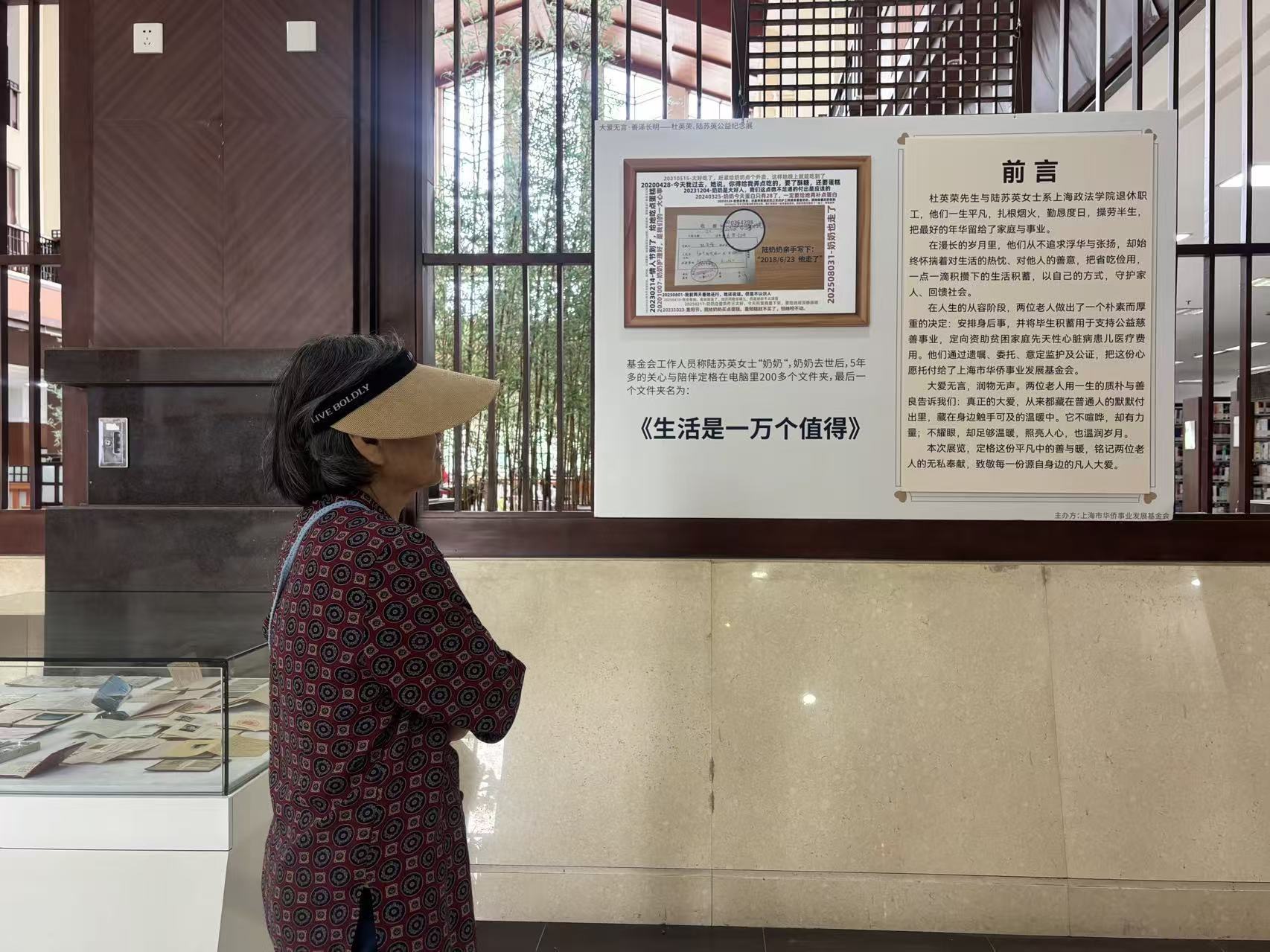
"They were a model couple. Wherever Teacher Du went, he would take Dr. Lu with him," Wu Ruomei recalled. Lu Suying had rheumatism that deformed her fingers, so Du Yingrong did most of the cooking. After the couple moved in retirement, they saw less of their friends but remained warm-hearted. "They had good hearts and were already donating in the 1980s. When my daughter later did an internship in the city, they let her stay with them for half a year."
"When the school was in Qingpu, surrounded by farmland, a bus would come every few weeks to take people to buy better groceries in the city," said Li Yuehua, a staff member at the Shanghai University of Political Science and Law Library. The school was established in 1984 and recruited talent in 1985. Du and Lu joined without hesitation. "They were practically pioneers, full of dedication."
Wang Minhua, who worked in the school clinic, recalled that during a period with extensive construction projects, injured workers would come to Dr. Lu for treatment. She received every patient attentively, regardless of whether she was on duty.
"The two were a breath of fresh air, pure people," Wang Minhua said.
Life Is a Thousand Times Worth It
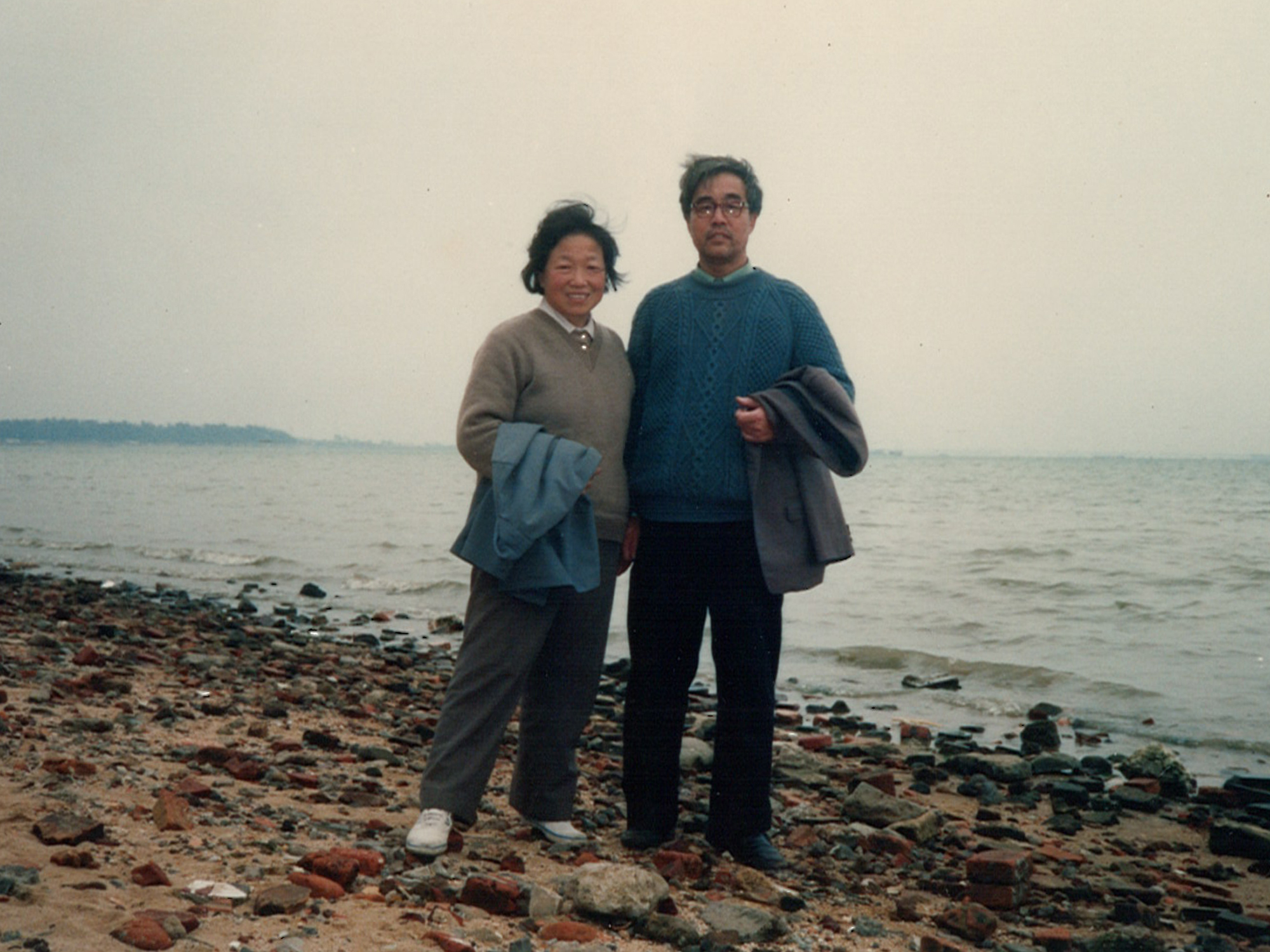
On April 21, 2026, following the couple's wishes, the Foundation arranged a sea burial for Du Yingrong and Lu Suying.
In the vastness of the ocean at 121.43°E, 31.33°N, the two elders were "reunited" in another form. The warm memories they left behind became their eternal "existence."
For Du Yingrong's last birthday in 2018, the Foundation and the hospital bought him a cake. Lu Suying pulled Cheng Bei aside early in the morning, quietly asking her to prepare a nice razor as a gift. "She wanted him to be clean and tidy at the very end."
Cheng Bei and the others spent more time with Lu Suying. Hospital caregivers and medical staff looked after Grandma's daily needs, and would show her photos of the children who had been helped. Lu Suying was always delighted. By 2020, as her health deteriorated, the Foundation formally assumed guardianship duties.
Zhang Fan explained that Foundation staff and volunteers would regularly visit Grandma. The Foundation also had to make every careful medical decision, withdraw funds on her behalf, and meticulously record every expense. They set up a group chat with the hospital to keep accounts and track Grandma's condition.
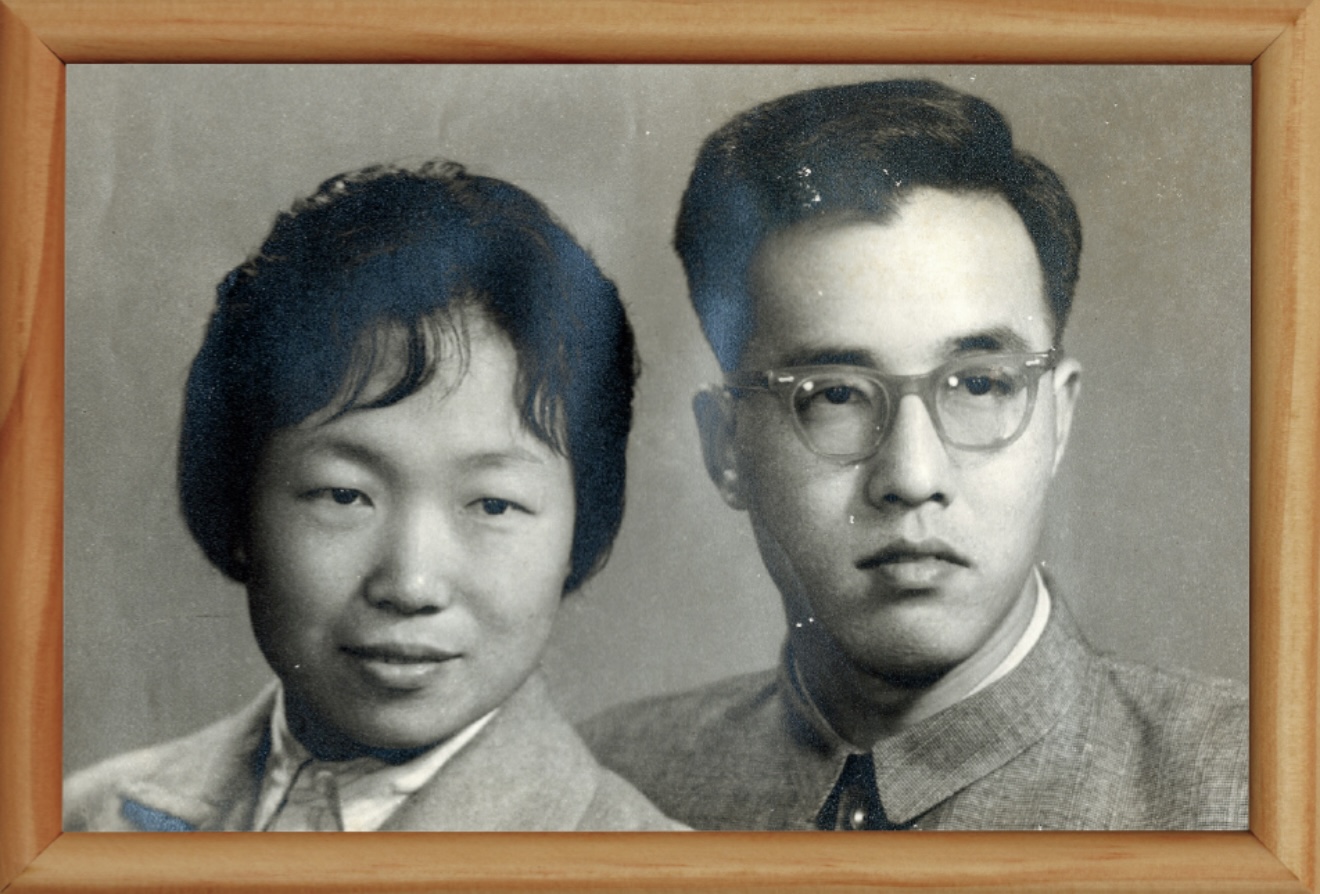
"Grandma loved cake. Grandma choked while eating. Grandma didn't recognize people anymore... Grandma was gone too." Five and a half years of records, more than two thousand days and nights of care, were compiled by the Foundation into 200 folders of "Care Logs." The last folder about Grandma was titled "Life Is a Thousand Times Worth It."
In Zhang Fan's view, fulfilling guardianship duties, though painstaking, was never a rigid "contractual relationship," but rather a two-way flow of goodwill. According to him, the couple left behind a property yet to be sold, and bank deposits expected to total around 1.5 million yuan after medical and other expenses are settled — all of which will go to treating children with congenital heart disease.
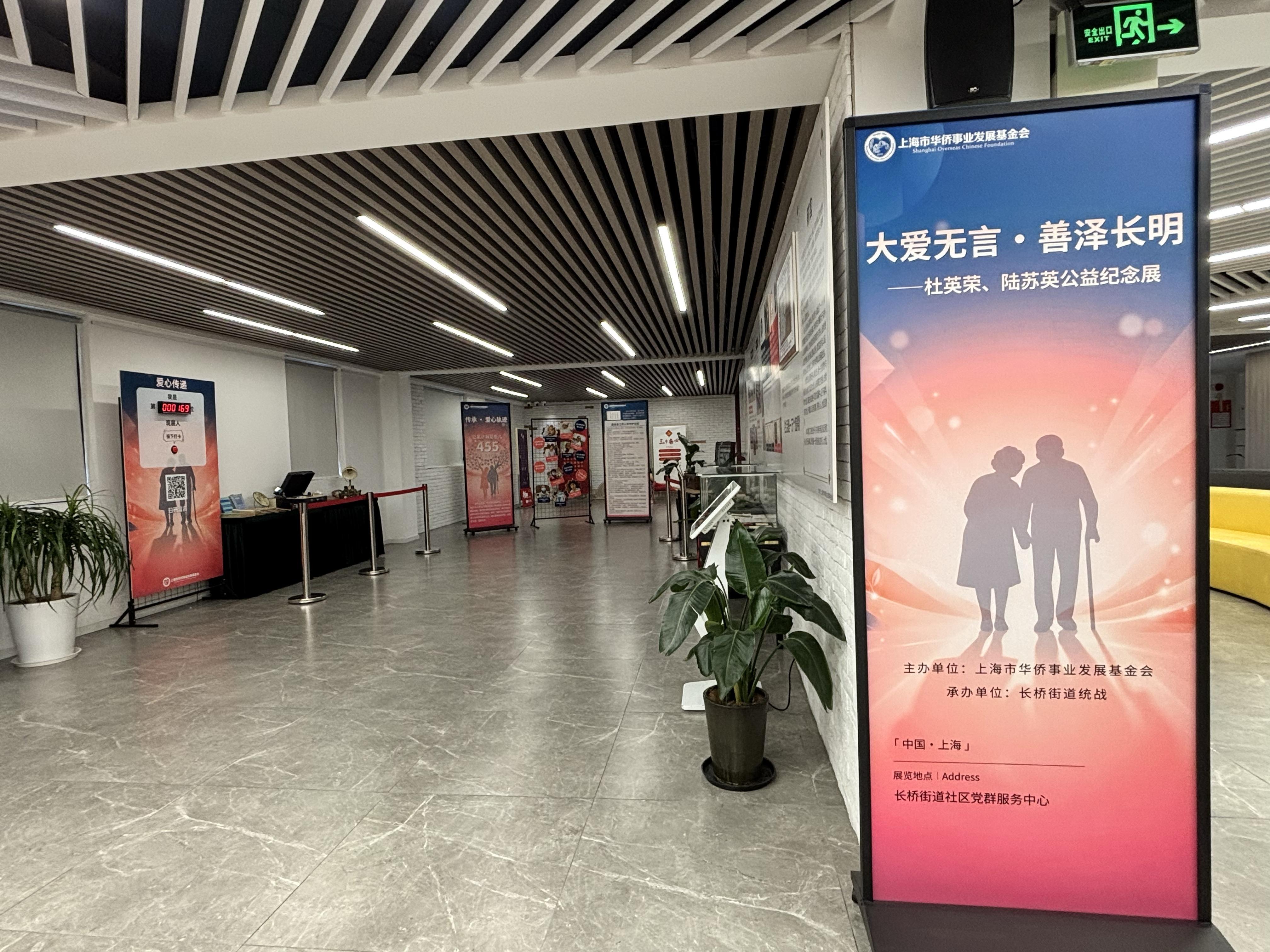
From April to June 2026, an exhibition titled "Great Love Beyond Words, Kindness Shines Eternal" brought the couple's story to the Changqiao neighborhood in Xuhui District where they had lived, and to Shanghai University of Political Science and Law where they had worked, touching countless visitors with their extraordinary ordinary kindness.
As the Foundation said after the exhibition: "Death is not the end; forgetting is. History may not record their names, but 455 rescued children will forever remember the love of Grandma and Grandpa."
455 lives continuing on — carrying them forward.
(At the interviewee's request, Cheng Bei is a pseudonym.)
Originally published at: The Paper