business
CPC Membership Reaches 101.286 Million
According to the latest statistics on CPC membership from the Organization Department of the CPC Central Committee, as of the end of 2025, the total number of CPC members stood at 101.286 million, a net increase of 1.015 million over the previous year. The number of primary-level Party organizations reached 5.431 million, a net increase of 181,000. The CPC maintains a firm commitment to strengthening its primary-level organizations and consolidating its foundations. It exercises rigorous and pragmatic management of its membership, striving to build a well-coordinated and highly effective organizational system that runs from the central to the local level, fully leveraging the role of primary-level Party organizations as battle fortresses and Party members as vanguards and exemplars in promoting reform, development, and stability.
The total number of Party members grew at a measured pace, increasing by 1.0% year-on-year. A total of 2.086 million new Party members were admitted during the year, of whom 1.072 million — accounting for 51.4% — were from frontline production and work positions; 1.143 million, or 54.8%, held college degrees or above; and 1.753 million, or 84.0%, were aged 35 or younger.
The composition of Party membership continued to improve. By the end of 2025, 59.76 million members — 59.0% of the total — had college degrees or above, an increase of 1.4 percentage points over the previous year. Female members numbered 31.914 million, representing 31.5% of the total, up 0.6 percentage points. Ethnic minority members totaled 7.878 million, accounting for 7.8%, up 0.1 percentage points. Workers and farmers remained the mainstay of the Party's membership, making up 32.4% of the total.
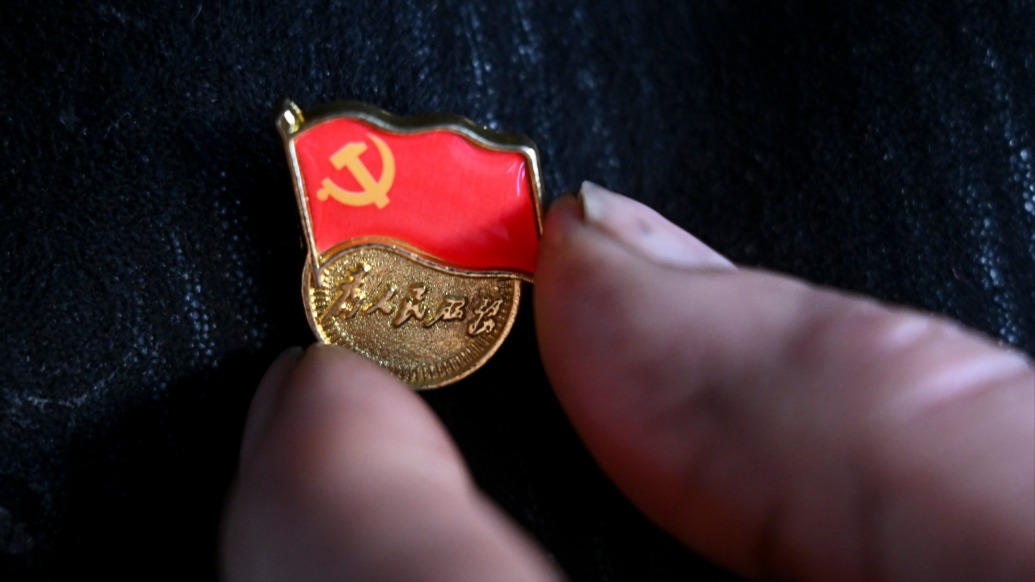
Party member education and management were steadily strengthened. Party organizations at all levels resolutely implemented the decisions and plans of the CPC Central Committee, persistently using Xi Jinping Thought on Socialism with Chinese Characteristics for a New Era to forge unity and strengthen the Party's soul. They meticulously organized study and education initiatives to deeply implement the Central Committee's eight-point regulations on improving conduct, continuously enhancing Party member education and training. The total number of training sessions for Party members increased by 3.7% year-on-year, and Party committees at or above the county level provided full-time training to 4.987 million secretaries of primary-level Party organizations. Inner-Party political life was conducted rigorously and in a standardized manner: 3,202 local Party committee leadership teams held democratic life meetings, and 4.636 million Party branches held organizational life meetings and conducted democratic evaluations of Party members. Commendations and care for Party members were actively promoted: Party organizations at all levels recognized 108,000 advanced primary-level Party organizations, 583,000 outstanding Communist Party members, and 165,000 outstanding Party affairs workers. A total of 939,000 medals for "50 Years of Glory in the Party" were awarded throughout the year.
Primary-level Party organizations grew stronger and more effective. Nationwide, there were 314,000 primary-level Party committees, 333,000 general Party branches, and 4.783 million Party branches, increases of 8,000, 4,000, and 170,000 respectively over the previous year, reflecting a more scientifically organized and tightly structured system. Party-building efforts to promote rural revitalization advanced steadily, with continued strengthening of village Party organization leadership. Among 483,000 village Party secretaries, 56.5% held college degrees or above, up 8.9 percentage points year-on-year. The selection and deployment of first secretaries stationed in villages continued, with 188,000 currently serving, covering 39.0% of all administrative villages nationwide. The Party-led urban and rural grassroots governance system continued to improve, with sustained efforts to reduce burdens on and empower primary-level units. Community-level Party-building forces were further strengthened, and the overall effectiveness of Party-building-led grassroots governance continued to improve. The coordinated advancement of Party-building across all sectors — including government organs, public institutions, enterprises, and social organizations — achieved new progress. The political and organizational functions of primary-level Party organizations were further enhanced. The Party's political and organizational strengths were increasingly translated into advantages in development and victory, mustering a powerful force for comprehensively advancing the building of a strong country and the great rejuvenation of the Chinese nation through Chinese-style modernization.