technology
Why Silicon Valley Is Racing to Hire Philosophers: The Cheaper AI-Generated Content Becomes, the More Scarce and Valuable Judgment Becomes
Philosophy has long suffered from a reputation of being "pedantic" and "abstruse." But with the explosion of the artificial intelligence (AI) boom, Silicon Valley has begun turning to philosophers for help, hoping to build more "virtuous" machines within the industry.
Demis Hassabis, CEO of Google DeepMind, has repeatedly called for more philosophers to engage in thinking about the social changes brought by AI. According to reports, DeepMind employs at least 10 philosophers. The company's senior philosopher, Iason Gabriel, credits philosophical efforts for reducing AI "hallucinations" (fabricating facts), describing philosophy as a "powerful mechanism" for improving AI's long-reasoning processes.
Anthropic also values philosophy's contribution to AI. Earlier this year, its Claude model released a "new constitution," led by chief philosopher Amanda Askell, incorporating training materials from various fields, including the moral philosophy of Immanuel Kant. They want Claude to possess "good character."
These two disciplines have never been so tightly intertwined, and the proportion of philosophy-related positions within AI is rising. Earlier this year, the Federal Reserve Bank of New York released data showing that philosophy graduates in the U.S. find jobs more easily than their computer science peers. In the most recent year for which data is available — 2024 — the unemployment rate for computer science graduates was 7%, compared to 5.1% for philosophy graduates. Many philosophy graduates are now flowing into AI companies, and academics are being actively recruited as well.
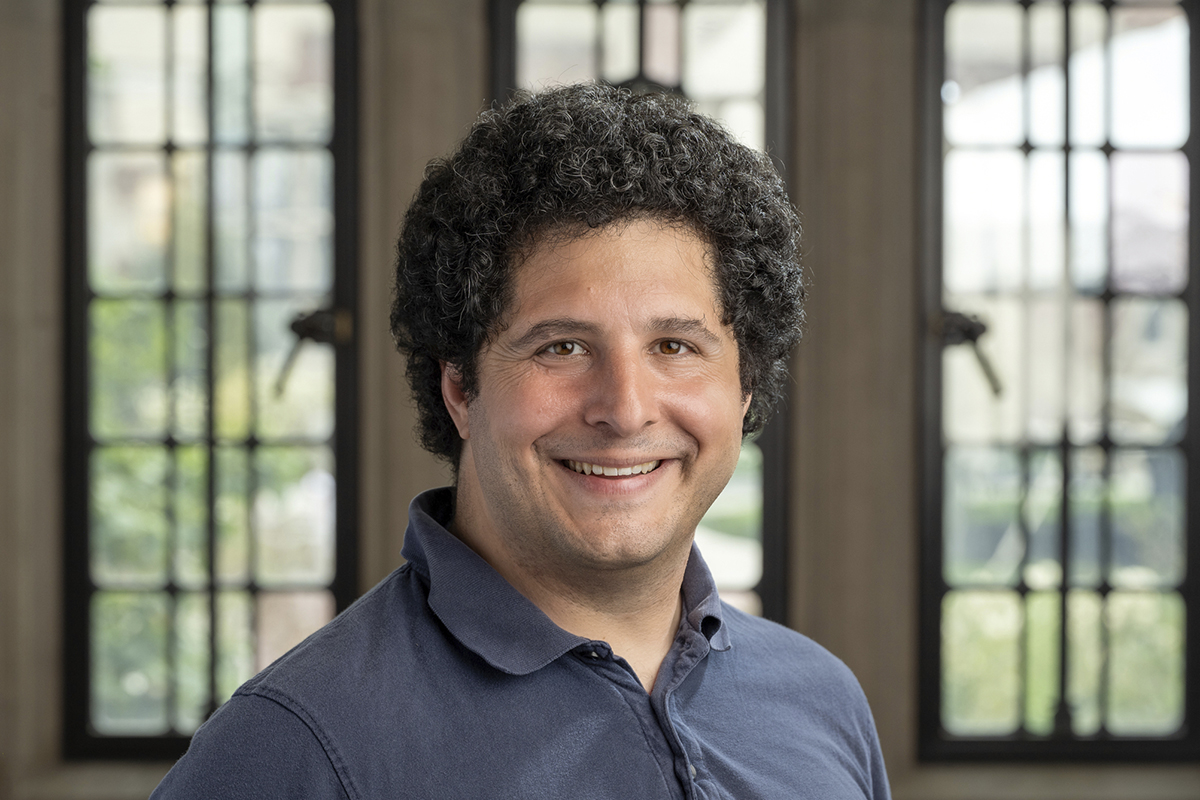
This year, Yale philosophy professor Daniel Greco also received an olive branch from a tech company. Since April, he has been working part-time training large language models, including posing questions designed to test the limits of AI's philosophical reasoning and then scoring the answers. He enjoys the work and recently published an article titled "I'm a Philosophy Professor. Here's Why I'm Training AI to Replace Me," which sparked controversy — even drawing a rebuttal from a Harvard philosophy scholar.
In a recent online interview with The Paper (www.thepaper.cn), Daniel Greco said that, in terms of philosophical academic research, AI-written papers currently lack originality, but there is no insurmountable barrier in principle. Conversely, philosophy will continue to influence AI, particularly on the issue of value alignment. How to make AI behavior compatible with human values — these are questions that still require the ongoing participation of philosophers.
On the once-popular notion of "liberal arts decline" in the AI era, Greco believes that as content generation becomes increasingly cheap, the truly scarce ability will shift toward judgment — which is precisely the core of what philosophy has long trained.
How Philosophers Train Large Models
The Paper: As a philosopher, how did you first encounter and come to understand AI, and how did you integrate this technology with philosophical research?
Greco: It starts with the philosophy of mind course I teach. In that class, we always read the 1950 paper by British computer scientist Alan Turing, which introduced the concept of the Turing Test. When I used to teach that course, my students and I would play with early programs designed to pass the Turing Test, like the chatbot "Eliza" developed by American scientists in the 1960s, which simulated a psychotherapist answering questions. Back then, it was a demonstration that we seemed far from passing the Turing Test.
Then, in the blink of an eye, GPT-3 arrived, followed closely by ChatGPT. I remember when it came out, I was teaching a philosophy of mind course, and I realized I really had to change my thinking. The Turing Test is designed to determine whether a machine can exhibit intelligence equivalent to or indistinguishable from a human. But now I'm more inclined to think that even passing the Turing Test doesn't mean a machine possesses a human mind.
So from the perspective of philosophy of mind, I became interested in AI — wanting to see to what degree it could possess certain abilities while still lacking others. For instance, I can hardly imagine it having so much of what I'd call some form of intelligence and reasoning ability while having no desires, not being a subject, and being unable to act autonomously in the world. This essentially reflects how I've integrated it into my philosophical thinking and research process.
It's also been helpful in writing. When I have some ideas about a topic that I want to express but can't quite organize them yet, AI can help push those ideas forward. Now I can directly put many ideas into a large prompt and start a conversation, which gets me from vague thoughts to an outline stage much faster.
The Paper: Have you tried incorporating AI into your philosophy classroom?
Greco: No. Many of us are still trying to figure out how to adapt teaching to a world where students have access to AI. And I think the AI-related aspect of our work is just trying to understand how this will change assignments — to deal with the fact that homework can no longer be reliably tested.
I haven't really found a positive way to incorporate AI into teaching yet.
The Paper: You're now working part-time for an AI company, training large models using your philosophical knowledge. When the AI company first approached you, did you have any hesitation or ethical concerns? What was the main reason you accepted this part-time work?
Greco: I'd say it was definitely curiosity. Tech companies are valuing input from philosophers, so the mere interest in collaborating with philosophers is very encouraging. Then, I wanted to see what kind of input I could provide to large models. I'm now working directly for a tech company, and I've also done some indirect work — third parties collect philosophical data from me and then sell it to companies.
So different platforms get different kinds of philosophical training, but I have no ethical concerns. The overall social impact of AI will be highly multidimensional and unpredictable. There will inevitably be huge negative impacts, but I think there will also be huge positive ones. And the small work I'm doing now is simply to make philosophy better. The pay is decent, but far from life-changing — I'm only doing AI training part-time, and my main job is still teaching at the university.
The Paper: Within the scope contractually permitted, could you introduce how you specifically train large models for tech companies? For example, what does a typical workflow look like?
Greco: The work of training large models started this April. Typically, the company or I give the model a series of prompts, the model generates answers, and then I rate the different answers and identify any loopholes or errors.
My favorite training mode is specifically trying to make the model fail. I look for cases where the model can make mistakes, then conduct extensive further verification within those cases to demonstrate the error — and this process itself is also done through AI, so it's quite interesting. In the next round of training, the model learns from that data and becomes less prone to making the same type of errors again.