business
Kunming inspection train collision kills 11, injures 2; investigation report released
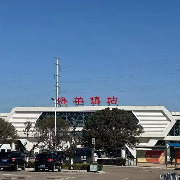
On November 27, 2025, within Luoyang Subdistrict, Chenggong District, Kunming City, Yunnan Province, the China Railway Kunming Bureau Group Co., Ltd. (hereinafter referred to as "Kunming Bureau Group") inspection train No. 55537, while traveling through Luoyangzhen Station, collided with construction workers from the Kunming South Track Maintenance Section, causing 11 deaths and 2 injuries, with direct economic losses of 14.52 million yuan. The National Railway Administration's Party Leadership Group has recently reviewed and approved the "Investigation Report on the '11·27' Major Railway Traffic Accident Involving the Collision Between an Inspection Train and Workers at Luoyangzhen Station, China Railway Kunming Bureau Group Co., Ltd." The investigation determined that this was a major railway traffic liability accident caused by illegal command and reckless operations during construction, failure to establish an effective safety protection system on site, lax daily safety management by the enterprise, and inadequate implementation of industry regulatory responsibilities.
After the accident, the Chinese Communist Party Central Committee and the State Council attached great importance. Premier Li Qiang and other central leaders issued important instructions with clear requirements. The Ministry of Emergency Management, the National Railway Administration, the Ministry of Public Security, China State Railway Group Co., Ltd. (hereinafter referred to as "China Railway"), as well as the Yunnan Provincial Party Committee and Provincial Government, swiftly rushed to the scene to carry out emergency rescue and disposal efforts.
In accordance with relevant laws and regulations, the National Railway Administration took the lead in swiftly establishing an accident investigation team composed of the Ministry of Emergency Management, the Ministry of Public Security, the Chengdu Railway Regulatory Bureau, the Kunming Railway Public Security Bureau, the Yunnan Provincial Department of Emergency Management, the Provincial Federation of Trade Unions, and the Kunming Railway Transport Procuratorate Branch. The State Council Work Safety Commission placed the accident investigation and handling under supervision. Adhering to the principles of "scientific rigor, legal compliance, factual accuracy, and practical effectiveness," the investigation team conducted on-site inspections, evidence collection, and comprehensive analysis, ascertaining the accident's course, causes, and casualties, identifying the responsibilities of relevant entities and departments, uncovering problems in industry supervision and related personnel's responsibilities, and proposing accident liability determinations and handling recommendations. At the same time, the team drew broader lessons from the accident, deeply analyzed the prominent problems exposed, summarized key lessons, and proposed corrective and preventive measures.
The investigation team determined that the direct cause of the accident was that, during construction work at Luoyangzhen Station by the Kunming South Track Maintenance Section, the construction supervisor, without receiving a dispatch order authorizing construction and knowing that conditions were not met for construction, illegally opened the work access door and led workers into the work area. The supervisor also failed to jointly confirm train movements with the on-site safety guard and illegally directed workers to carry out construction operations. The station liaison officer failed to properly monitor train movements and provide timely and accurate advance warnings and confirmations to the on-site safety guard, and failed to remind and urge workers to clear the tracks. This resulted in workers being struck by the normally passing inspection train No. 55537, causing heavy casualties.
The investigation found that the Kunming Bureau Group exercised lax review and oversight of construction plans, lacked unified management at construction interfaces, exhibited prominent problems of habitual illegal command and systematic failures in the protection system, implemented lax enterprise safety management, and conducted perfunctory hazard inspections and rectification efforts. It also exposed problems of inadequate industry management and regulatory enforcement by relevant departments.
The investigation determined that the Kunming Bureau Group and related entities bear responsibility for the accident and recommended that the Chengdu Railway Regulatory Bureau impose administrative penalties on the relevant units for their illegal actions in accordance with the law. At the same time, China Railway was ordered to submit a written inspection to the State Council, and the Kunming Bureau Group and Chengdu Railway Regulatory Bureau were respectively ordered to submit written inspections to China Railway and the National Railway Administration.
The investigation team referred the station liaison officer, suspected of committing the crime of major liability accident, to judicial authorities for handling. Clues and materials related to the performance of duties by public officials from relevant departments and units discovered during the investigation were transferred according to management authority to the Central Commission for Discipline Inspection and the National Supervisory Commission's discipline inspection and supervision teams stationed at the Ministry of Transport and China Railway, respectively. A total of 34 responsible personnel from the Kunming Bureau Group, the Chengdu Railway Regulatory Bureau, and other units received Party discipline and administrative sanctions.
In response to the problems exposed by the accident, the investigation team summarized four major lessons: major risk prevention and hazard inspection and rectification were not rigorous, thorough, or detailed, failing to effectively promote the transition of safety governance to pre-incident prevention; safety responsibility implementation was inadequate, failing to truly build a solid foundation for production safety; similar accidents recurred repeatedly, failing to translate the lessons of blood into concrete actions to strengthen production safety; and safety defenses were not solidly constructed, failing to effectively improve the intrinsic safety level of railway operations. At the same time, five corrective and preventive measures were proposed: earnestly assume political responsibility for maintaining railway safety and stability; strengthen full-chain safety management of railway operational line construction; improve and perfect the railway production safety management system; enhance the safety capabilities and qualifications of railway employees; and implement efficient and precise safety supervision.