business
Reviewing the Ctrip Monopoly Case Through Three "Firsts"
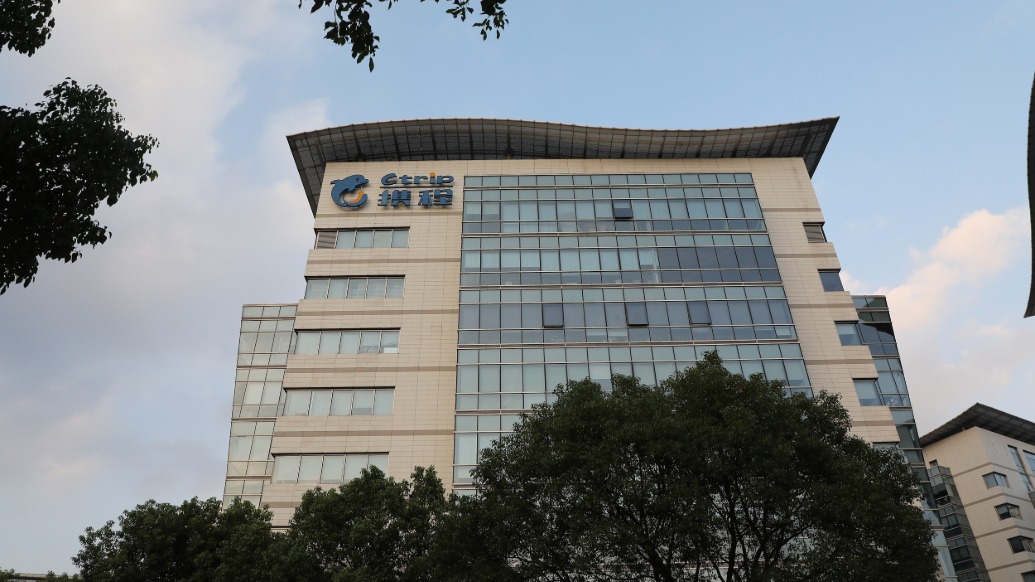
On July 25, the closely watched Ctrip monopoly case saw its penalty result announced: the State Administration for Market Regulation (SAMR) imposed an administrative penalty on Trip.com Group Co., Ltd. (hereinafter "Ctrip") for abusing its market dominance to engage in monopolistic conduct, with fines and confiscations totaling 5.179 billion yuan.
The investigation and handling of the Ctrip monopoly case is yet another major landmark case in the normalized antitrust supervision of the platform economy, with breakthrough significance in many respects. This reporter reviews the full course of the Ctrip monopoly case from the angle of three "firsts."
China's First Antitrust Case in the Online Travel Sector
"Ctrip required me to sign a 'best-price clause,' guaranteeing that my selling price on Ctrip must be lower than on other channels. Moreover, the commission rate rose from around 10% at the start to over 25% for some room types now, severely squeezing profit margins. After accounting for rent, labor and energy costs, my net profit is already below 5%," said the owner of a homestay in Dali, Yunnan.
Since 2025, regulators have received a large volume of complaints and reports from industry associations, hotel operators and online travel platforms concerning Ctrip's monopolistic conduct, and market regulators in many localities had summoned Ctrip for talks. SAMR responded promptly to public concerns, carried out extensive external verification, and on January 14, 2026 announced that it was opening an investigation into Ctrip for suspected abuse of market dominance. It also drew backbone antitrust enforcement personnel from market regulators across the country to form a special task force for on-site investigation, traveling to more than ten provinces to gather evidence.
Ctrip is currently China's largest online travel platform, with core businesses covering hotel reservations, transport ticketing and travel vacations; Qunar is its wholly owned subsidiary. According to estimates by BOCOM International, as of the end of 2024 Ctrip held roughly a 56% share of gross merchandise value (GMV) in China's core hotel-and-travel market.
"Before online travel and local-life platforms emerged, hotels' room sales mainly relied on offline channels and telephone bookings. Platforms let consumers conveniently compare and choose services, and let merchants break through geographic limits to reach a wider customer base, greatly improving the efficiency of matching supply and demand," said Song Xiaoxi, vice chairman and secretary-general of the China Hospitality Association. "High-quality development of the lodging industry requires healthy interaction between platforms and merchants. Yet for a time the two sides became increasingly antagonistic. A healthy commercial ecosystem should let all parties obtain reasonable returns and room for development."
An operator of a hotel in Sichuan Province acknowledged frankly: "Among third-party online hotel-booking platforms, Ctrip has the largest customer base and the most sales. Our hotel once worked with other platforms, but the order volume was too small. Ctrip accounts for 80%–90% of our online orders. You could say that without Ctrip we can't survive, but with Ctrip we can't live well."
"The Ctrip monopoly case is China's first antitrust case in the online travel sector. It carries important significance for regulating the competitive order of the online travel platform-service market, protecting the lawful rights and interests of hotel merchants and consumers, and promoting high-quality development of the industry," said Ning Lizhi, member of the expert advisory group of the State Council's Anti-Monopoly and Anti-Unfair-Competition Commission and professor at the Wuhan University Law School.
China's First Case of a New-Type Monopolistic Practice in the Platform Economy
The technical analysis in investigating the Ctrip monopoly case was extremely difficult. The relevant data were scattered across terminal devices, cloud servers and business systems—large in volume, complex in relationships, and highly concealed in nature. After more than five months of meticulous investigation, the task force conducted big-data analysis and algorithmic parsing of tens of thousands of gigabytes (GB) of electronic data.
"In the course of handling the case, regulators adhered to technology empowerment and data support, and explored and formed an evidence-gathering technical path of 'multi-route evidence collection + automated data parsing + targeted precise assessment,' providing strong support for establishing the facts," said Fang Jie, deputy director of the Competition Policy and Assessment Center of SAMR.
Ultimately, the traces of monopolistic conduct hidden within complex technical systems were painstakingly reconstructed, sketching out the full picture of China's first case of a new-type monopolistic practice in the platform economy.
"Our hotel signed a cooperation agreement with Ctrip in 2018, listed at the 'Premier-badge' grade, and signed a 'package direct-procurement' arrangement, meaning we could not cooperate with other platforms. If discovered, we would receive a warning and be required to remove our listings from other platforms," a hotel operator in Chongqing recalled.
Ctrip used technical means and manual comparison to monitor in real time, and if it found a 'Premier-badge' hotel operating on other platforms, it would impose penalties such as traffic restrictions and 'delisting,' causing sharp drops in the merchant's traffic and revenue. Ctrip's requirement that 'Premier-badge' hotels conduct exclusive cooperation constitutes the restricted-transaction conduct prohibited under Article 22, Paragraph 1, Item 4 of the Anti-Monopoly Law.
"Our hotel began doing 'Gold-badge' in late June 2025. Previously our ranking on Ctrip was beyond 2,000; after the 'Gold-badge' it rose to around 200. If our price on other platforms was lower than on Ctrip, staff would contact us and demand we guarantee it be at least 20 yuan lower than on other platforms," said an operator of a hotel in Beijing.
"Ctrip used the 'Price Adjustment Assistant' to automatically monitor prices and adjust room rates to the 'lowest price across the entire network,' generally monitoring around 9 a.m., 10 a.m., 12 p.m., 2 p.m. and 6 p.m. each day, and continuing to adjust in the early morning hours," a staff member at a homestay in Yunnan explained, noting that in just one month the algorithm automatically adjusted prices more than 100 times.
Ctrip used its price-comparison system to compare the prices of the same hotel across different platforms. When it found that a 'Gold-badge' or 'no-badge' hotel's price was higher than on other platforms, it used technical tools such as the 'Price Adjustment Assistant' and 'Badge Manager' to adjust the hotel's price to the lowest across the entire network, and imposed penalties such as traffic restrictions, 'delisting' and deduction of order reserve funds. This constitutes the conduct of attaching unreasonable transaction conditions prohibited under Article 22, Paragraph 1, Item 5 of the Anti-Monopoly Law.
On the basis of grasping abundant facts and data analysis, the task force conducted in-depth analysis and argumentation, repeatedly hearing the opinions of relevant experts, and ultimately determined that since 2020 Ctrip had abused its dominant position in China's domestic online hotel-booking platform-service market—centering on the traffic-allocation mechanism and using platform rules and technical means—to carry out the above two types of monopolistic conduct.
Shi Jianzhong, deputy head of the expert advisory group of the State Council's Anti-Monopoly and Anti-Unfair-Competition Commission and dean of the Institute of Data Rule of Law at China University of Political Science and Law, analyzed: "Unlike the past simple and direct 'pick one of two' monopoly model, Ctrip deeply integrated digital-intelligence technology with ecosystem layout, forming a composite 'technology + ecosystem + conduct' monopoly model. Through digital-intelligence technologies such as algorithmic monitoring, traffic regulation and ecosystem bundling, Ctrip precisely and efficiently carried out monopolistic conduct that is more concealed and more harmful."
[This is a partial translation of the original Chinese report. The full article additionally covers the third "first"—the first platform-economy monopoly case to impose three types of penalties simultaneously—including the composition of the penalty (a 122-million-yuan refund of order reserve funds, 1.658 billion yuan of confiscated illegal gains, and a 3.521-billion-yuan fine equal to 7.5% of Ctrip's 46.958-billion-yuan 2025 domestic sales), and expert commentary on why "how to fix it" matters more than "how much to fine."]