business
Takaichi Pushes Through Imperial House Law Revision: No Opening for a Female Emperor, but Imperial Adoption Introduced
Japan's government on July 24 officially promulgated the revised Imperial House Law, whose core purpose is to secure a sufficient number of imperial family members. It is the first substantive revision to the main text of the Imperial House Law since it took effect in 1947. The bill failed to win unanimous approval in either the House of Representatives or the House of Councillors, reflecting divided public opinion.
According to Xinhua News Agency, Japan's National Diet passed the amendment to the Imperial House Law on July 17. It retains the rule that the throne may be inherited only by male descendants in the male line, while — to address the shrinking imperial family — it will allow the imperial household to adopt male descendants of certain "former miyake" (former imperial branch families), giving their male offspring the right of succession, and will permit female imperial members to retain their imperial status after marrying commoners.
The revision contains two major points of controversy: on one hand, male descendants of imperial "adoptees" will be eligible for the throne; on the other, female emperors and matrilineal emperors remain unrecognized.
Under the current Imperial House Law, first in line to the throne is Crown Prince Fumihito (Akishino), younger brother of Emperor Naruhito, followed by Fumihito's son Prince Hisahito. Emperor Naruhito's only child, Princess Aiko, has no right of succession because she is a woman. Yet debate over whether Prince Hisahito or Princess Aiko is better suited to inherit the throne has simmered for years. Behind the divided public opinion lies the conflict between Japan's conservative imperial tradition, which insists on patrilineal male emperors, and modern progressive social values, which support female and matrilineal emperors in the name of gender equality.
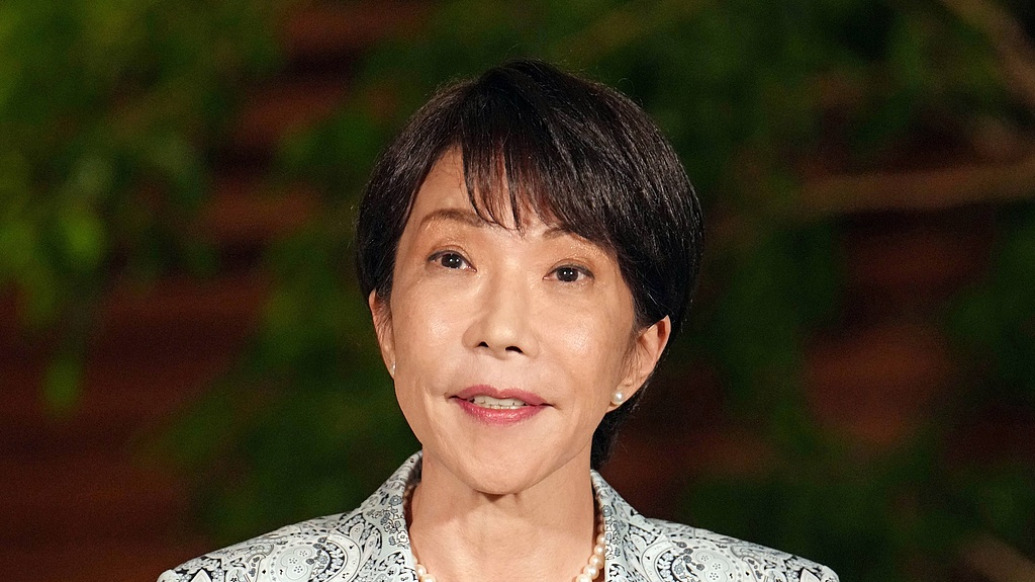
The government of Sanae Takaichi has held firmly to the principle of "male-line male" succession and pushed it through forcefully via personnel arrangements. Some lawmakers accuse Takaichi of "refusing to acknowledge what the public broadly hopes for," calling it one factor behind her recent slide in approval ratings.
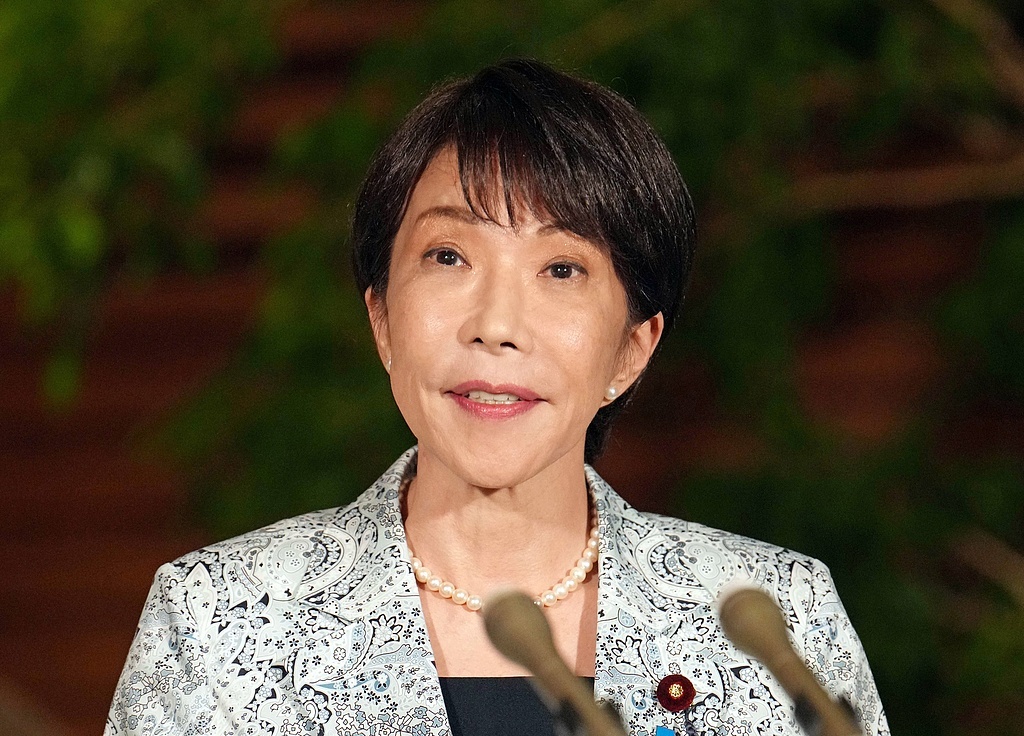
Sanae Takaichi. File photo: Visual China Group
A shortage of male heirs and the dispute over succession
Japan's imperial family currently has 16 members, only three of whom are males eligible for the throne. Besides Prince Fumihito and Prince Hisahito, Emperor Naruhito's uncle Prince Hitachi (Masahito) also holds succession rights, but he turned 90 this year. Emperor Naruhito, 66, and Empress Masako have only one daughter, 24-year-old Princess Aiko, who has no succession rights under the current system. The shortage of heirs to the throne has drawn growing attention.
Prince Hisahito, second in line, has only just come of age and has repeatedly been the subject of negative media reports, leaving Japanese society sharply split in its assessment of him. Princess Aiko, by contrast, has largely maintained a poised public image, excelled academically and been active in public service, leading part of the public to hope she could inherit the throne.
In fact, Japan's succession crisis has existed for a long time. After Prince Fumihito's birth in 1965, no male heir was born into the imperial family for decades. The government of Junichiro Koizumi once convened experts to discuss the possibility of female and matrilineal emperors. With Hisahito's birth in 2006 securing an heir, reform of the succession system was shelved.
Notably, in January 2006, just before Hisahito's birth, the Diet was still debating a revision of the Imperial House Law, with a draft amendment that would have allowed female and matrilineal emperors. At a House of Representatives Budget Committee session at the time, Sanae Takaichi, then a lawmaker, challenged then Chief Cabinet Secretary Shinzo Abe: she said she did not oppose a female emperor, but that a matrilineal emperor required careful deliberation because the tradition of patrilineal succession in "an unbroken line for ages eternal" might be destroyed, and she asked how he viewed the significance of this imperial tradition.
A "female emperor" refers to a woman inheriting the throne, as opposed to a "male emperor." Princess Aiko, for example, is the current emperor's biological daughter and her lineage comes from the male line; if she acceded, she would be a "female emperor of male-line descent." A "matrilineal emperor," by contrast, is one who inherits the throne through a mother of imperial blood, regardless of whether that person is male or female.
According to records on the House of Representatives website, Takaichi said at the session 20 years ago: "Various papers have been published, but only through transmission from father to son — that is, restricted to males of the male line — can the Y chromosome of the first emperor be accurately passed down. If not, that Y chromosome ends right there."
Takaichi's thinking stems from a traditional view of the imperial house long held by Japanese conservatives: that the greatest distinctiveness of Japan's imperial family lies in continuous patrilineal succession, emphasizing "an unbroken line for ages eternal" and "male-line males," which together constitute the legitimacy of the imperial house. (Note: "an unbroken line for ages eternal" refers to the claim that all 126 reigns, from the first Emperor Jimmu to the current emperor, have passed through males of patrilineal descent, underscoring the continuity of the male-line imperial bloodline.)
Abe did not respond directly at the time, saying that as chief cabinet secretary representing the government's position, it would be inappropriate to comment from any particular standpoint.
Before Takaichi took office, the speakers and vice speakers of both houses of the Diet had in 2024 convened ruling and opposition parties to launch cross-party consultations on plans to "secure the number of imperial family members and achieve stable imperial succession," but the talks stalled last year: the Liberal Democratic Party held to the patrilineal tradition, while the Constitutional Democratic Party and others argued that female and matrilineal emperors should be included in the discussion.
Compared with 20 years ago, Takaichi — now prime minister — has shifted from questioner to driving force in the revision of the Imperial House Law. In the House of Representatives election this February, she proposed pushing "a major turn in important policies concerning the very foundations of the nation," which included revising the Imperial House Law.
The LDP and the Japan Innovation Party wrote explicitly in their campaign platforms that "permitting the adoption system currently not allowed under the imperial family system, so that males of patrilineal imperial descent can become imperial family members" would be the top-priority plan.
Japan Broadcasting Corporation (NHK) commented that the ruling parties and some experts who put the adoption system first in this revision hope not only to increase the number of imperial family members, but also to achieve long-term stability of the patrilineal male succession system. For that reason, they strongly oppose granting imperial status to the husbands and children of female imperial members, believing it could ultimately lead to a female emperor or even a matrilineal emperor.
Seen from another angle, this strong opposition also reflects their awareness that maintaining patrilineal male succession is becoming increasingly difficult, and that public calls for female and matrilineal emperors are growing ever louder — hence a sense of crisis.
In a nationwide opinion poll conducted by the Mainichi Shimbun on July 18-19, when asked about the newly revised Imperial House Law, 72 percent of respondents said "a female emperor should be allowed," only 11 percent saw "no need to allow" one, and 17 percent answered "don't know."
After the revision, female imperial members may remain in the imperial family after marriage, but only they themselves; their husbands and children will remain ordinary citizens, and the women may not establish "miyake" branch houses. (Note: "miyake" is a concept in Japan's imperial system referring to branch families established by male imperial members such as the emperor's brothers or sons.)
This is a partial translation of the original Chinese report, covering its first section. The full article, including a further section on how distant the prospective imperial adoptees' bloodline is from the current emperor, is available at the source link.