top-news
Investigation: How Did a Suspected Stolen Copper Buddha End Up at Guanfu Museum?
Translation of article DB ID=356
Chinese → English, first 2000 characters, preserving paragraph structure
A suspected stolen copper Buddha statue has sparked widespread attention, with no conclusion yet reached.
Recently, a netizen posted online, placing an "ancient bronze arhat statue" displayed in the Guanfu Museum exhibition hall alongside the "cast bronze seated statue of Patriarch Puan" stolen from Haikou's Five Lord's Temple in Hainan in April 2000 for comparison. The dimensions, weight, and damage characteristics were all highly similar.
Twenty-six years after the theft, this copper Buddha statue has allegedly appeared in the exhibition hall of the Guanfu Museum.
Facing the sudden controversy, the Guanfu Museum, founded by renowned collector Ma Weidu, was thrust into the spotlight.
On the evening of July 2, 2026, the Guanfu Museum issued a statement claiming that the copper Buddha was acquired in 2005 when the Guanfu Museum Xiamen Branch was about to open. The museum had procured an ancient copper arhat statue as a cultural relic exhibit from a legal antique market in Xiamen.
On July 3, a Guanfu Museum administrator told a The Paper reporter, "This copper arhat statue has always been displayed in the public exhibition area, and it remains there to this day."
On July 4, The Paper reporters visited the Guanfu Museum and observed that, to cooperate with relevant authorities' verification, the exhibition area for the "ancient bronze arhat statue" was temporarily closed for nearly two hours, then reopened normally. During this time, founder Ma Weidu appeared at the venue to assist with the verification, stating that "the result will certainly be good."
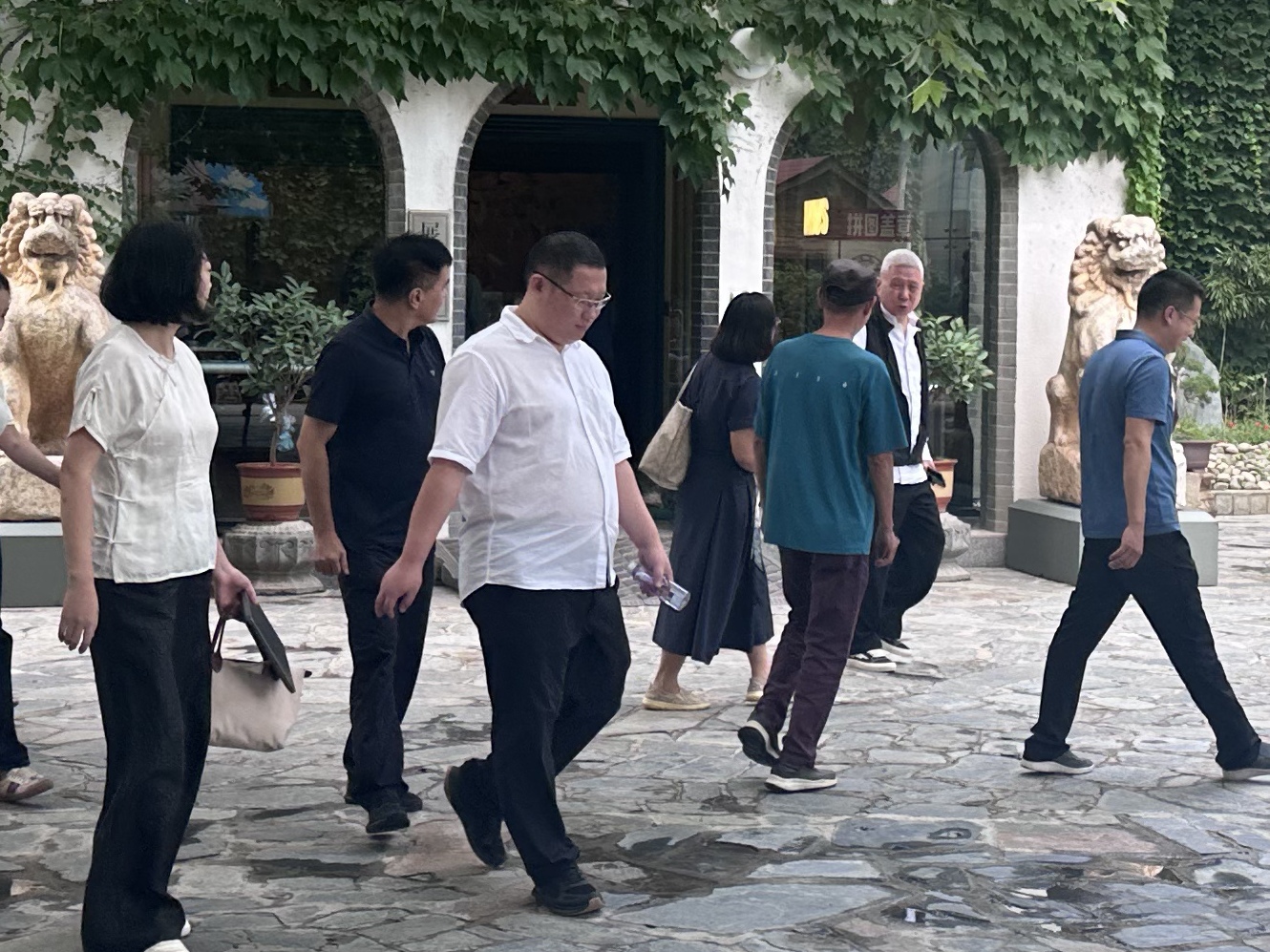
On July 4, 2026, Guanfu Museum founder Ma Weidu (gray-haired person in the photo) appeared at the venue. Photos by The Paper reporter Zhang Chengjie unless otherwise noted.
So, how did the Guanfu Museum come to acquire this copper Buddha from Xiamen's antique market that is so highly similar to the "cast bronze seated statue of Patriarch Puan"?
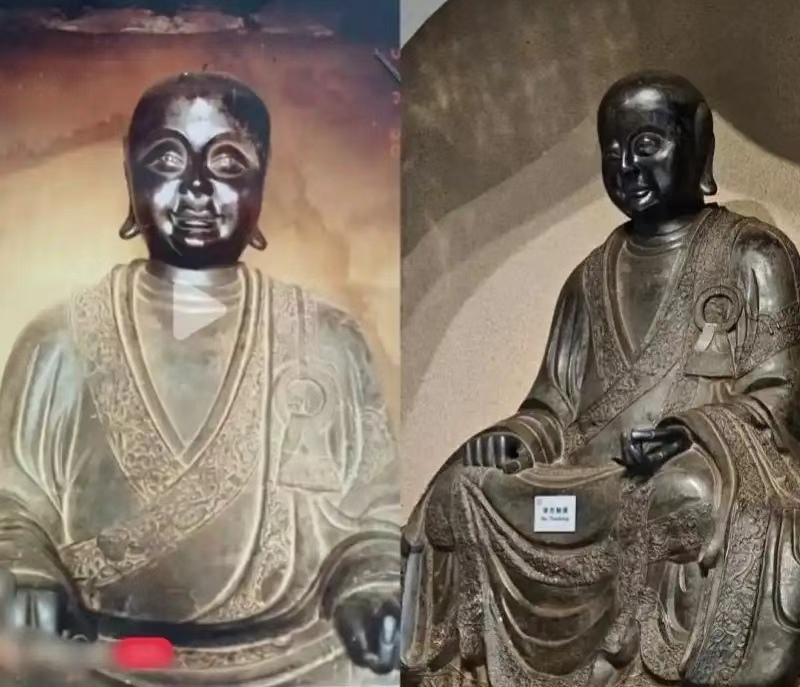
A comparison image posted by netizens: left shows the stolen copper Buddha, right shows the 'ancient bronze arhat statue' at Guanfu Museum.
— The Gray Area of the Antique Market —
Haikou's Five Lord's Temple is located on Haifu Road in Qiongshan District. Built to commemorate five prominent officials exiled to Hainan during the Tang and Song dynasties, it is a nationally protected cultural heritage site.
In the early morning of April 30, 2000, criminals cut the padlock of the iron door of a garbage room on the east side, entered through the garbage chute, then pried open the locks of the Five Lord's Temple and the Buddha Hall, stealing the Buddha statue.
According to the Five Lord's Temple theft archive: the statue is made of copper, a seated figure of Patriarch Puan, approximately 1.3 meters tall, weighing about 100 kilograms, with a hole in the top of the head and damage on the lower right side.
In 2003, the local court found two persons on duty guilty of dereliction of duty, as their severe negligence led to the theft of a national first-class cultural relic that could not be recovered. They were each sentenced to two years in prison with a two-year suspension.
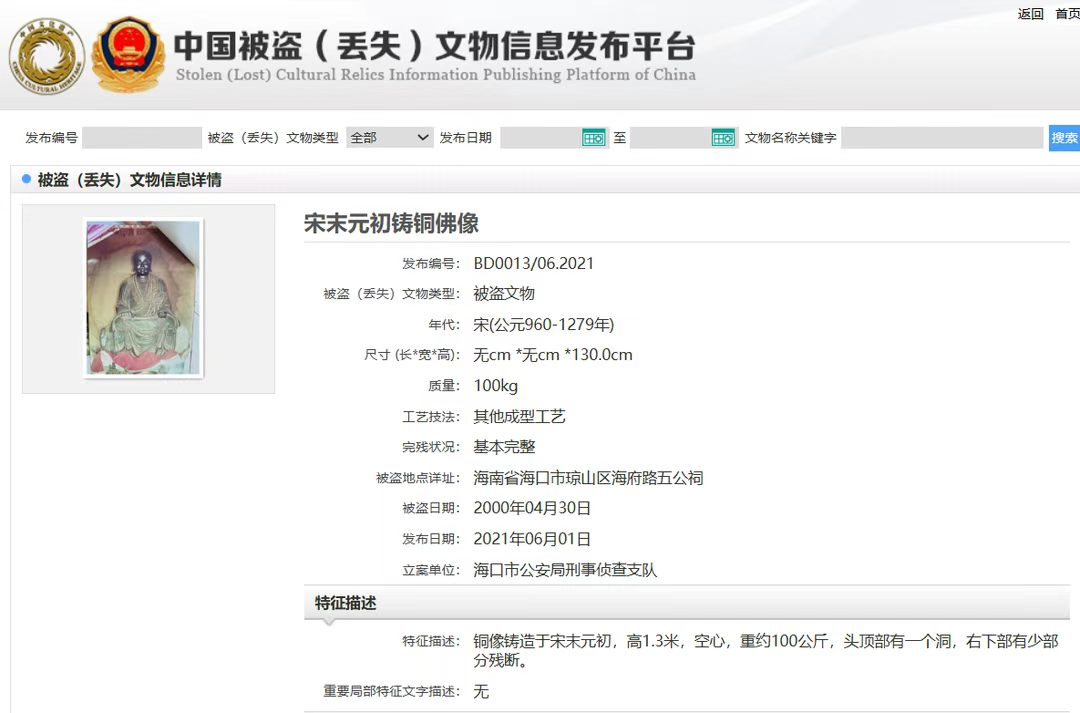
In 2021, the stolen copper Buddha statue was entered into China's Stolen (Lost) Cultural Relic Information Release Platform.
After the theft, the Five Lord's Temple had a replica made in 2004, which remains on display in the original location to this day.
In 2005, the Guanfu Museum solicited cultural relic exhibits from Xiamen's legal antique market and acquired an "ancient copper arhat statue."
"Just from the timing analysis, the copper Buddha should have been purchased from the Egret Island Antique City," said a Mr. Ma, an antique dealer who has operated in Xiamen for years. He told The Paper that more than twenty years ago, the vast majority of antique shops in Xiamen that could handle a hundred-kilogram copper Buddha deal were concentrated in Egret Island Antique City.
Xiamen now has eight antique cities, but around 2004 and 2005, Xiamen's antique ecosystem was completely different. The Paper reporters found several antique dealers who had witnessed the rise and fall of Xiamen's antique industry, trying to reconstruct the scene from those years.
In its statement, the Guanfu Museum claimed that this copper arhat statue was "solicited as a cultural relic exhibit from a legal antique market in Xiamen." In the view of industry insiders, this simply means "purchased from the antique market."
"Mr. Ma Weidu very much enjoyed coming to Xiamen to buy things in his early years. Over more than twenty years, he has been purchasing collectibles in Xiamen since the Egret Island Antique City period. Before 2020, he came to Xiamen at least once a year, basically," the aforementioned Mr. Ma, the antique dealer, said.
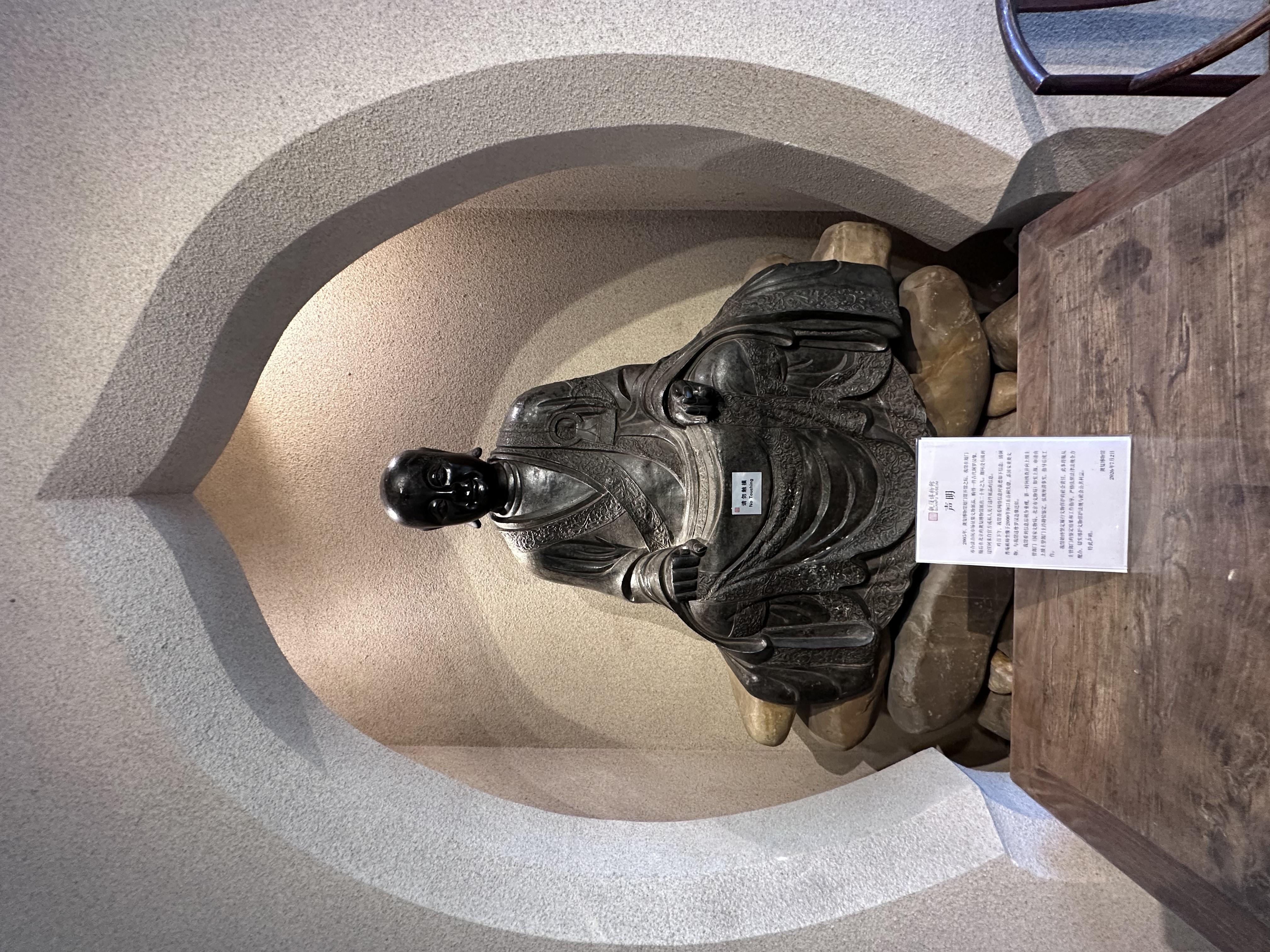
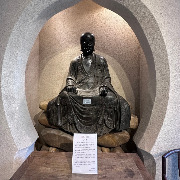
The 'ancient bronze arhat statue' in the Guanfu Museum exhibition hall, alleged to be the 'cast bronze seated statue of Patriarch Puan' stolen from the Five Lord's Temple.
The Egret Island Antique City he mentioned was the only large-scale antique city in Xiamen before 2009. At that time, the antique city was not very large, with only about 100 merchants, of which over 70 shops had formal approval procedures. This made it an important distribution center for the antique market in Fujian and even the entire southern region.
Zhang Qing, an antique dealer who has operated in Xiamen for many years, recalled that business at the antique city was particularly good back then. Collectors from Guangdong, Taiwan, China, and even Japan, Europe, and the United States all came here to "treasure hunt." On weekends, it was packed with people. Shop entrances and corridors were covered with street stalls displaying porcelain, calligraphy, paintings, jade, antique furniture, and the four treasures of the study.
"In the best times, one could earn several hundred thousand yuan," Zhang Qing said.
Later, due to the impending demolition of Egret Island Antique City, antique merchants were dispersed. Within just a few months, Xiamen saw the emergence of multiple antique cities including Dongdu Cultural Antique City, Yuxin Antique City, Wanshou Road Flea Market, Douxi Road, Triumphal Plaza Xia-Shang-Zhou, and Binbei Min-Tai. This antique industry landscape continues to this day.
Reporters from The Paper visited several antique cities and found that business is now sluggish, far from what it once was.
Perhaps it is precisely this early market ecology of high volume and mixed quality that hides an unknown gray area behind antique transactions.
"The antique market essentially has a gray area. In the early days, everyone called it the 'ghost market.' Transactions typically took place in the early morning and dispersed at dawn. The main items circulating were cultural relics obtained through grave robbing and theft," the aforementioned Mr. Ma, the antique dealer, said. "Moreover, antique transactions basically do not involve invoices or receipts. Such documentation serves no practical purpose in this circle. Antique practitioners themselves have appraisal skills and fundamentally do not need external experts. Collection records are just personally documented purchase information."
This long-established, unregulated operational model has, to some extent, provided a breeding ground for laundering stolen cultural relics.
An antique industry practitioner in Xiamen told The Paper that more than 20 years ago, some transactions involving cultural relics in the local antique market still existed in a gray area. With the improvement of China's cultural relic protection legal system and the continuous strengthening of regulatory oversight, the space for such illegal transactions has been significantly compressed, and related business activities have been brought under standardized management.
"Many seasoned collectors have gradually withdrawn from the open market," the aforementioned practitioner said.
— The Secret Transaction —
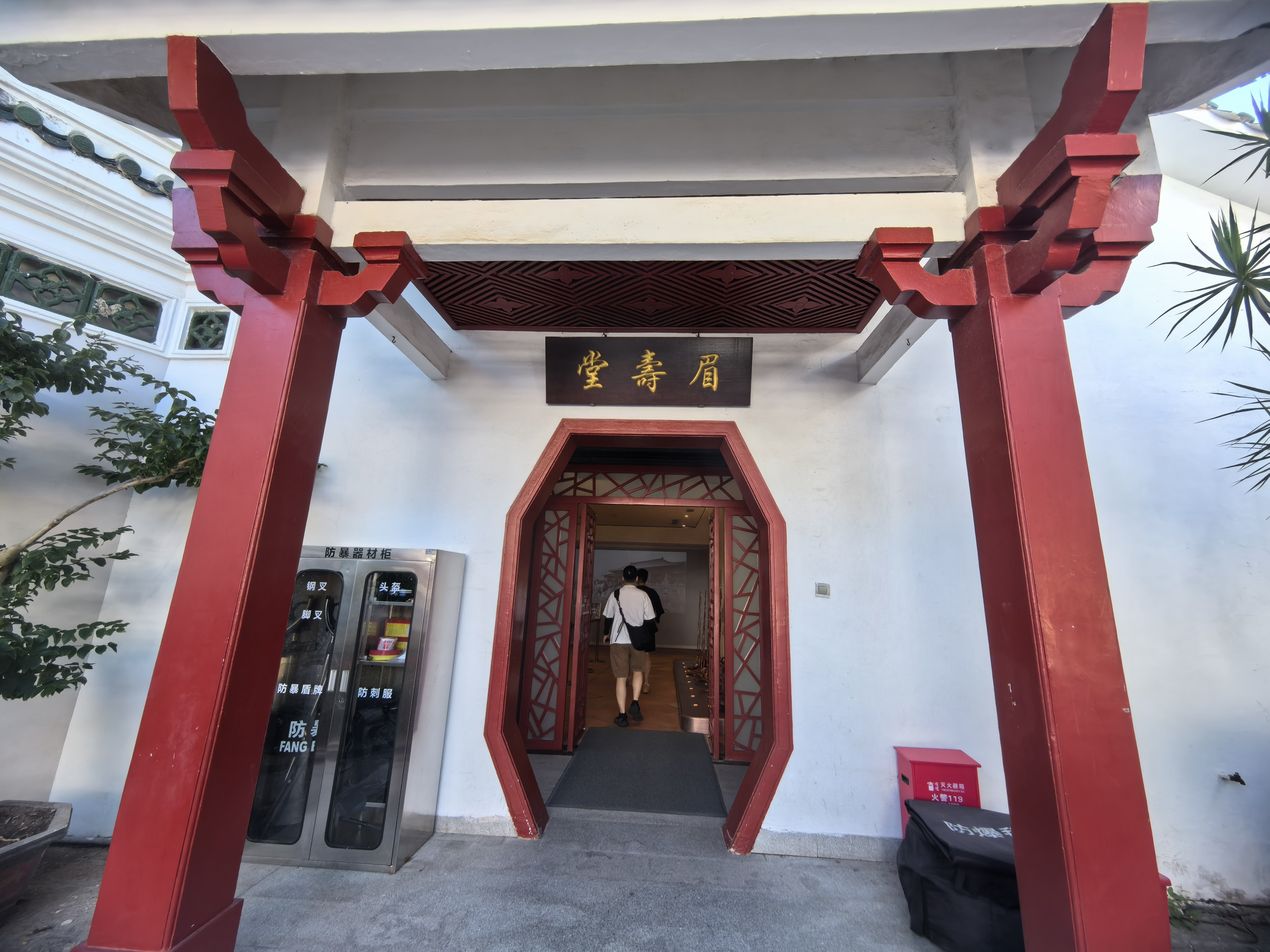
The former 'Meishou Hall' that once housed the Guanfu Museum Xiamen Branch, now converted into an auxiliary exhibition area of Shuzhuang Garden. Photo by The Paper reporter Han Yuting.
Through whose hands did this statue, suspected to be the "seated statue of Patriarch Puan" stolen from the Five Lord's Temple, ultimately flow to the Guanfu Museum?
Several senior antique industry figures in Xiamen shared the core transaction details with The Paper.
Initially, this copper Buddha was purchased by three people in partnership — two were antique dealers from Fujian, and one was from Guangdong. It was eventually resold to the Guanfu Museum.
Whether it was acquired in the name of the Guanfu Museum or purchased privately by Mr. Ma Weidu remains unconfirmed.
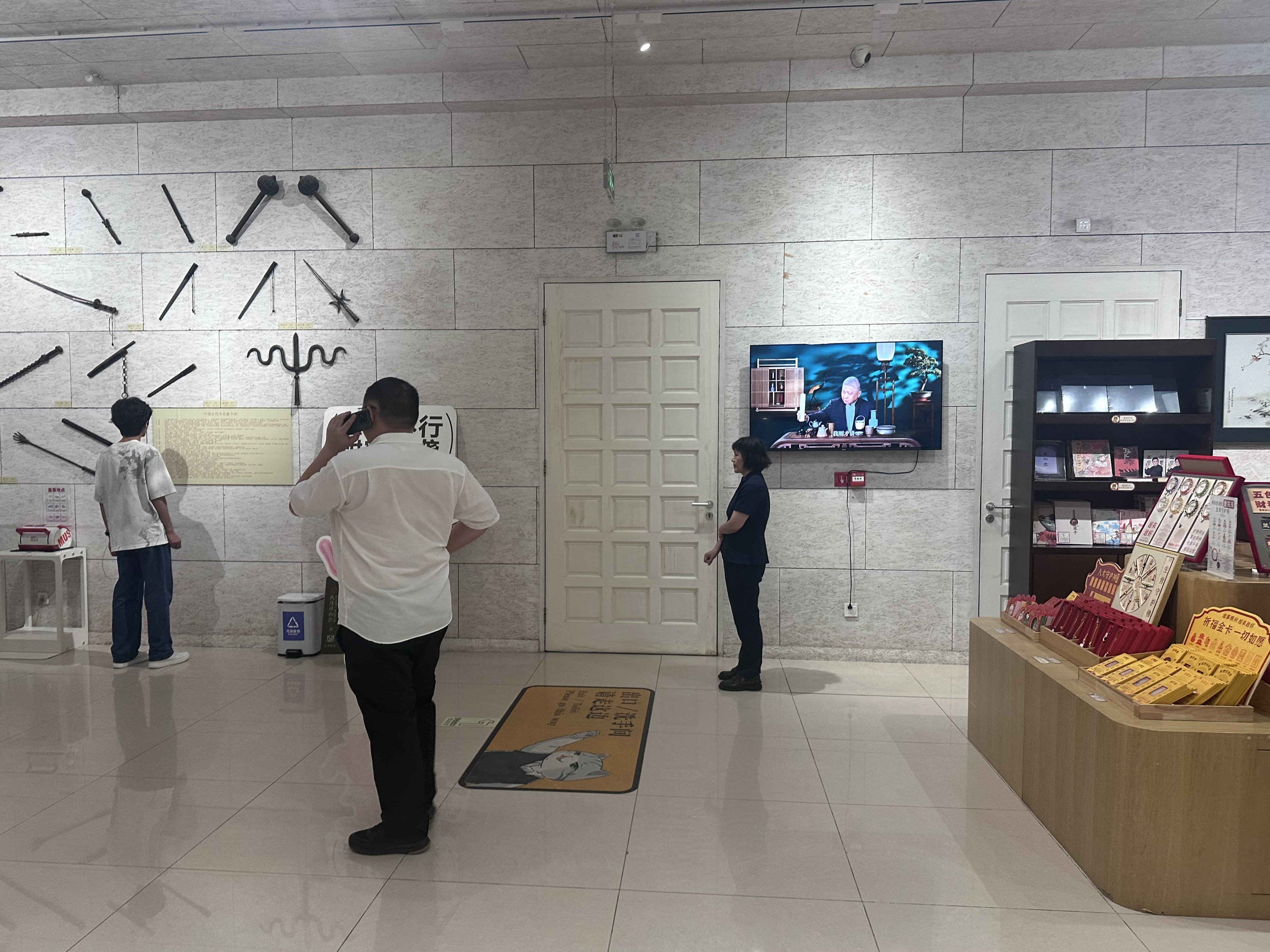
On July 4, 2026, the exhibition area for the 'ancient bronze arhat statue' was temporarily closed for nearly two hours to facilitate verification by relevant authorities.
"The transaction price for this Buddha statue at the time should have been around one million yuan. The intermediary was an antique dealer surnamed Luo, who still operates an antique shop in Xiamen," said a senior antique dealer in Xiamen. He added that the dealer surnamed Luo has long been a close friend of Ma Weidu's circle in Xiamen.
Initially, this transaction was extremely secretive within Xiamen's antique circle. Only a few well-capitalized collectors knew about it after the deal was completed. As a result, the dealer surnamed Luo had "offended" many old customers.
As for where the copper Buddha flowed into Xiamen from, opinions are now divided. Some say it arrived directly from Hainan, while others claim the three antique dealers purchased it from Guangxi.
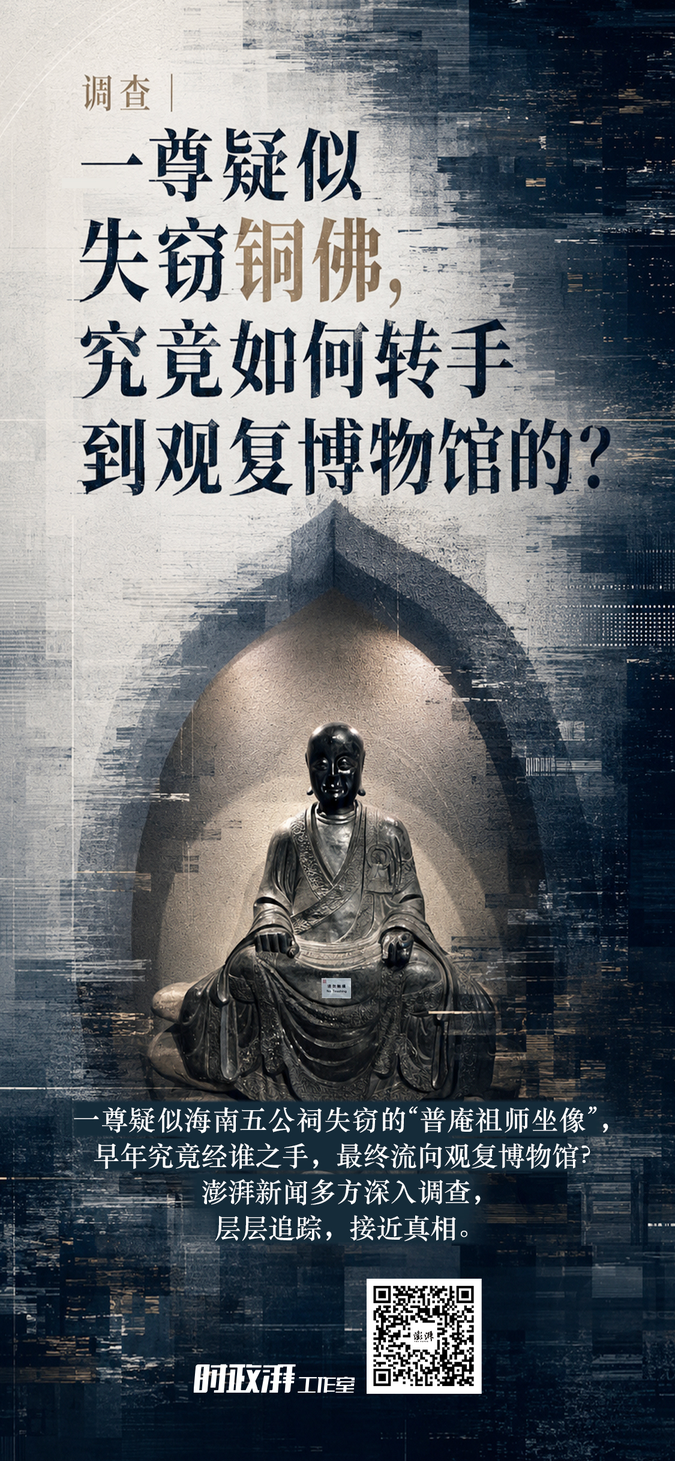
Poster design by Yu Fei.
Source: The Paper (澎湃新闻). Translated from Chinese.