
business
British Steel ‘Expropriated,’ EU Tightens Restrictions as China-Europe Trade Frictions Rise
By The Paper — Source: The Paper (www.thepaper.cn)
Recently, economic and trade relations between China and Europe have taken on a complex dynamic.
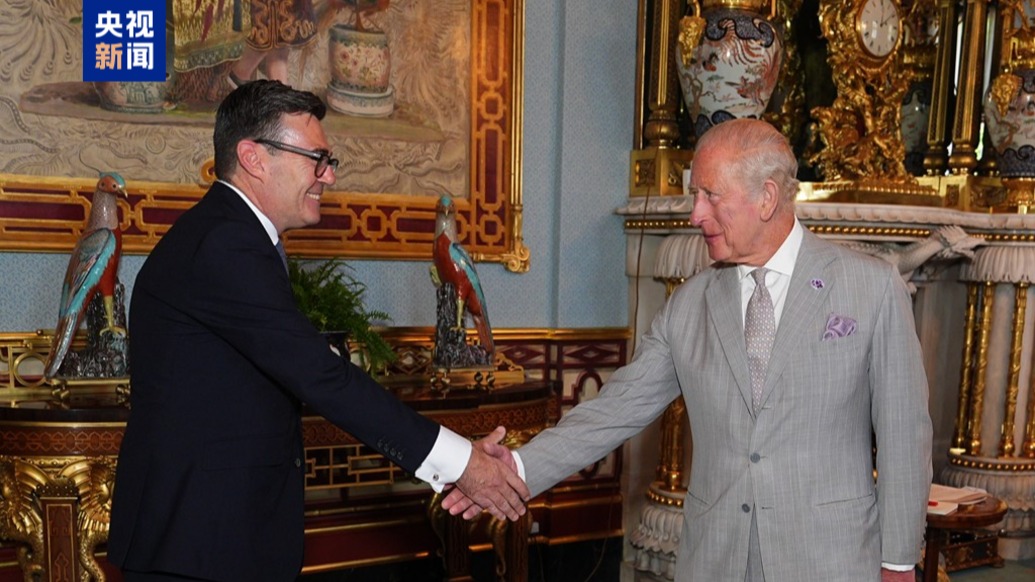
On the eve of the inauguration of Britain’s new Prime Minister Burnham, the UK government announced that, citing the Steel Industry (Nationalization) Act, it would nationalize British Steel — in which China’s Jingye Group holds a controlling stake. Outgoing Prime Minister Starmer said the decision “safeguards the future of Britain’s steel industry.”
In response to the British government’s decision, Jingye Group issued a statement on July 19, criticizing the UK government for “breaching faith” and “trampling on the rule of law,” and describing the move as “outright expropriation.” The group demanded that the UK side compensate it for all investment losses, said it had launched consultations under the relevant bilateral investment treaty, and reserved all legal rights including international arbitration.
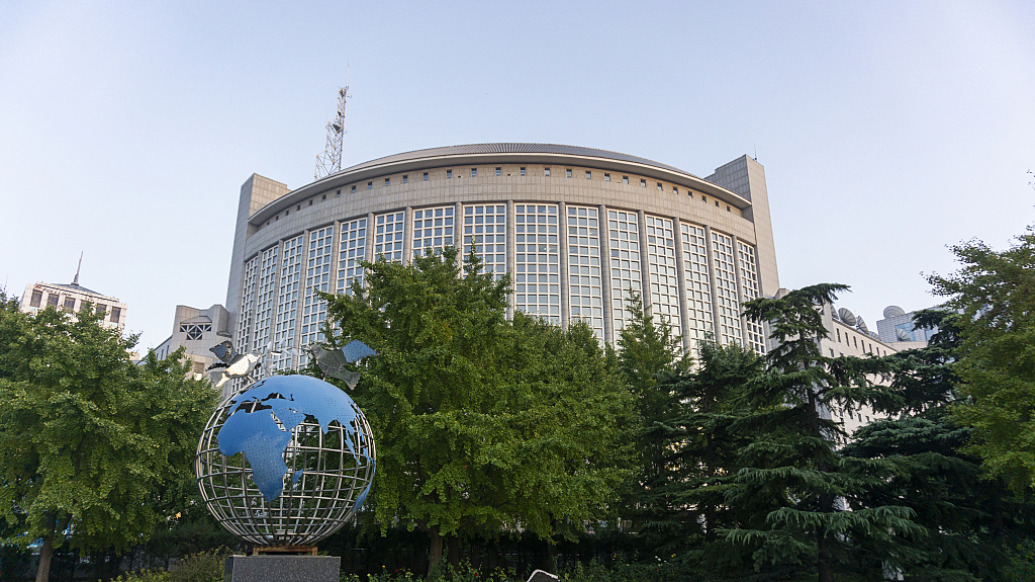
China’s Ministry of Foreign Affairs also said on July 18 that how the UK handles this matter will directly affect Chinese investors’ view of the British investment environment and the Chinese public’s view of the UK government’s credibility. China and the UK have signed an investment protection agreement, and the legitimate rights and interests of investors must be fully safeguarded in accordance with the law. China supports its enterprises in protecting their rights through legal means, is closely monitoring developments, and will take rights-protection measures if necessary.
The British Steel case is the latest in a series of recent trade disputes between China and European countries. In early July, the EU launched a barrage of trade remedy measures against China: on July 8 it imposed anti-dumping duties on Chinese-made tires for passenger cars, buses and light trucks; on July 9 it formally opened an anti-dumping investigation into Chinese Beijing duck products.
Cui Hongjian, a professor at the Academy of Regional and Global Governance at Beijing Foreign Studies University, told The Paper (www.thepaper.cn) that the entire Western perspective on the economy has changed, with economic activity now burdened with many non-economic considerations, such as so-called impacts on national security. “Now Britain and the EU are aligned in direction — they have elevated national-security strategic considerations to an unprecedented height and are using that yardstick to measure almost all economic activity.” He analyzed that while there are economic considerations in these trade disputes, political considerations predominate; a full-scale trade war between China and Europe is not certain, but the “frequency of local trade frictions will grow higher and higher, and their intensity may also increase.”
Jian Junbo, director of the Center for China-Europe Relations at Fudan University and deputy secretary-general of the Shanghai Society for European Studies, told The Paper that both Britain’s nationalization of British Steel and the EU’s dense rollout of trade remedy measures represent the “securitization” and “politicization” of economic and trade issues, and run counter to the relevant WTO rules and principles. “These actions are not only damaging their economic and trade relations with China, but even harming the overall China-Europe and China-UK relationships.”
British Steel’s Nationalization: From the Brink of Bankruptcy to ‘Outright Expropriation’
British Steel was formed in 1967 through the merger of 14 British steel companies, once accounting for 90% of the UK’s steel production capacity with more than 260,000 employees. After its 1988 privatization, British Steel’s journey was rocky: it merged with a Dutch company and changed its name in 1999, was acquired by India’s Tata Group and renamed again in 2007, and in 2016 was bought by a British company for £1 before reverting to the British Steel name. In May 2019, battered by Brexit, British Steel declared bankruptcy.
Jingye Group is a Fortune Global 500 company headquartered in Pingshan County, Shijiazhuang, Hebei Province. According to a statement Jingye issued on July 19, in 2020 Jingye lawfully acquired the near-bankrupt British Steel; within just one year of the acquisition, through internal reform and operational optimization, British Steel returned to profitability. Over five years, Jingye continuously invested substantial funds, upgraded equipment, advanced technology, paid taxes in full, and created tens of thousands of local jobs, spurring the development of the community and related industries.
However, in April 2025, the UK government forcibly took over British Steel through the Steel Industry (Special Measures) Act, stripping Jingye — as a shareholder — of its control, management and profit rights. This May, the UK government notified that it would legislate for the full nationalization of British Steel. In a statement released on July 16, the UK government said the nationalization would preserve thousands of jobs, support downstream industries dependent on domestically produced steel, and help safeguard supply chains, major infrastructure projects and national security.
Cui Hongjian said the broader backdrop to British Steel’s nationalization is a fierce collision between so-called market rules and market principles on the one hand and political goals and political principles on the other, and that the British government and Jingye Group “operate on different logics.” He believes the two sides now need to find a technical solution — within the framework set by the China-UK investment protection agreement and relevant laws and regulations — and negotiate a compensation plan both can accept. “Although their logics and starting points differ, in the end there is an overlap between the two.”
Li Guanjie, a research fellow at the UK Research Center of the Institute of Global Governance and Area Studies at Shanghai International Studies University, also told The Paper that the British government’s move first fits the governing Labour Party’s philosophy of nationalizing areas it deems to be in the realm of public livelihood or that threaten security. Second, it is also a choice under the current international situation: “From the perspective of military or security needs, Britain also safeguards the localized production of steel for the military-industrial sector, and its so-called ‘national security’ rationale is not entirely directed at China.”
In March this year, the UK government announced a steel strategy, planning to achieve 50% domestic production of the steel it uses, up from the previous 30%. The UK’s National Wealth Fund provides £2.5 billion to leverage private-sector investment in the steel industry, while also cutting steel import quotas and raising tariffs.
Li Guanjie said that no matter how strongly the UK government emphasizes the importance of the steel industry, “steel is already a declining sector in Britain,” and that the core issue after nationalization remains how to operate it: “If a company loses several million or hundreds of thousands of pounds a day, that is likely a problem the public finances cannot solve.”
According to estimates by the UK’s National Audit Office, after forcibly taking over British Steel’s operations last April, the UK government is projected to have spent more than £600 million by the end of June this year to keep the company running. Reuters also reported on July 16 that British Steel’s current operating costs are about £1 million per day. And according to Jingye Group’s statement, by 2028 British Steel’s operating expenditure could exceed £1.5 billion.
Amid Anxiety, the EU Steps Up Measures Against China
As the British Steel nationalization unfolds, the EU is also considering further tightening trade restrictions against China.
According to a July 16 report by the Global Times, Redon — deputy director-general of the European Commission’s Directorate-General for Trade and Economic Security — stated in the European Parliament that, before the October deadline set by European Commissioner for Trade and Economic Security Šefčovič, the EU would introduce unilateral trade protection measures against China to advance negotiations with Beijing. He declared that “dialogue alone is not enough,” emphasized the need for the EU to proactively defend its industrial base, closely watch China’s economic and trade moves, and would most likely roll out multiple unilateral protective measures, advancing the relevant work in parallel.
Redon’s remarks came after China released its import and export data for the first half of the year. According to figures published by China’s Customs Administration, in June China’s trade surplus with the EU rose to US$32.9 billion, up 27% year on year, a historic record. In the first half of the year, China’s exports to the EU reached US$312.3 billion, up 17% year on year, while imports stood at US$135.6 billion, up 9% year on year, and in the first half of the year, China’s…