business
World Cup Headlines | Football's Coming Home? Not Yet! Argentina Come From Behind to Beat England and Reach the Final
England–Argentina clashes have never been short of drama and allure. The first half was consumed by clashes between the two sides, while the second half produced a thrilling comeback for the ages.
On July 16 (Beijing time), reigning champions Argentina, after conceding first in the second half, came from behind to beat England 2–1 thanks to two assists from Lionel Messi.
In this match, both teams set new highs for goals scored in a single World Cup (Argentina 19, England 14). After Gordon broke the deadlock in the 55th minute, the tactical adjustments of Thomas Tuchel and Lionel Scaloni decided the outcome. The overly cautious Tuchel brought on three defensive-minded players in succession and ultimately squandered a winning position, while Scaloni shifted Messi to the right flank — the little genius delivered two assists to seal Argentina's epic comeback.
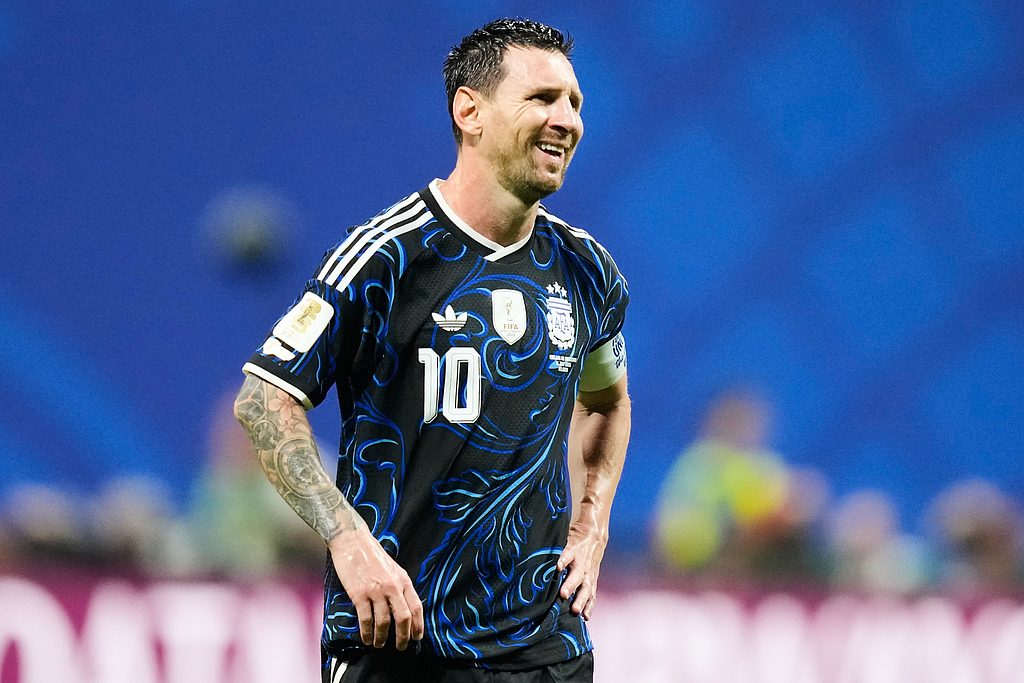
Messi's two assists decide the match
When Argentina found themselves in dire straits, only Messi could save them. After the 60th minute of the second half, Messi adopted a style rarely seen from him before — positioning himself in the left half-space of England's defense and repeatedly whipping in dangerous crosses with his left foot at a 45-degree angle. Scaloni's tactical setup, combined with Messi's individual brilliance, made Argentina's great turnaround possible.
French legend Thierry Henry commented after the match: “Scaloni put the little guy (Messi) on the right flank rather than in the crowded central area, giving him one-on-one opportunities on the right. There's a reason they are world champions.”
In the 69th minute, Messi delivered a cross that González headed toward goal, only for Pickford to make a brilliant save. In the 86th minute, perhaps wary of Messi's crossing, England left a large gap in front of the box while defending a tactical corner; defensive midfielder Anderson shifted laterally to stop Messi's cross, but Messi instead slipped the ball to Enzo Fernández at the edge of the area, whose long-range strike equalized. In the second minute of stoppage time, rather than crossing with his left at 45 degrees, Messi cut to the byline and lifted a right-footed ball into the middle of the box for Lautaro Martínez to tap into an empty net for the winner.
That was Messi's fourth assist in three consecutive matches, extending his own all-time World Cup assists record to 12. What makes it even more remarkable is that 10 of those 12 assists came in the knockout stages.
In this match, the 39-year-old (and 21 days) Messi became the oldest outfield player ever to appear in a World Cup semifinal. Thanks to his two assists, he was named the official Player of the Match after the game — his fifth such honor in seven matches at this World Cup.
Barring any major surprise, Messi will now reach his third World Cup final. In the 2014 final, Argentina lost 1–0 to Germany, though Messi still won the tournament's Golden Ball. In the 2022 final, Argentina drew 3–3 with France after 120 minutes and won 4–2 on penalties; Messi scored twice in the final and claimed the Golden Ball once again.
At the 2026 World Cup, Messi has contributed 8 goals and 4 assists to lead Argentina to the final. He will become only the second player after Cafu to feature in three World Cup finals. Cafu reached three finals with Brazil in 1994, 1998 and 2002, winning in 1994 and 2002.
Meanwhile, Messi has now scored or assisted in 13 consecutive appearances for club and country. At 39, he has registered the second-longest goal-involvement streak of his career, behind only the run of 14 consecutive games that ended in 2011.
In the final on Monday morning (Beijing time), can Messi equal that record?
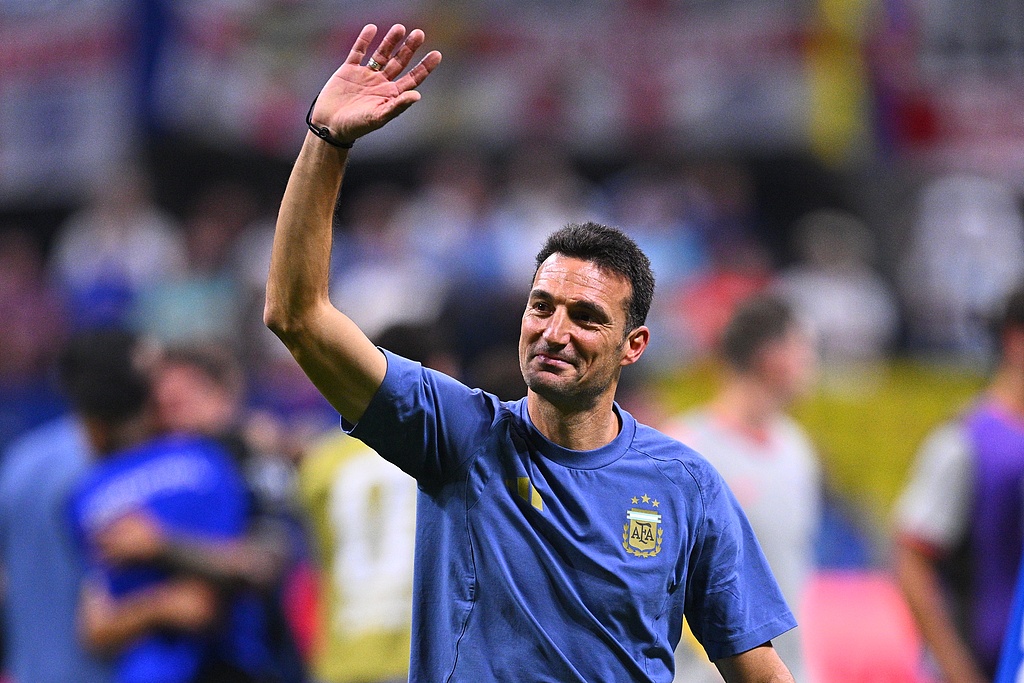
Europe vs. the Americas: Argentina to face Spain in the final
Before this match, Argentina had scored 17 goals in seven games; Enzo's equalizer was their 18th of the tournament, tying the national record for a single World Cup set back in the inaugural 1930 edition (18 goals in five matches). In stoppage time, Lautaro added another to take Argentina's tally to 19 — a new high for a single tournament. Argentina ultimately came from behind to beat England 2–1 and reach the final; it marks the sixth time in their history they have reached the semifinals, and all six have ended in a final appearance.
This is Argentina's seventh World Cup final, after the 1930, 1978, 1986, 1990, 2014 and 2022 editions, with three titles and three runners-up finishes. According to statistics, only Germany (8) have reached more finals in World Cup history.
This is the sixth time in World Cup history that a defending champion has reached the final again at the next tournament. The previous five occasions: 1934 champions Italy successfully retained the title in 1938; 1958 champions Brazil won again in 1962; 1986 champions Argentina finished runners-up in 1990; 1994 champions Brazil were runners-up in 1998; and 2018 champions France were runners-up in 2022.
In other words, across the 96-year history of the World Cup, only Italy and Brazil have managed to retain the trophy, with the last successful defense dating back to Brazil in 1962. Four years ago, France came within a step of repeating as champions, only to lose to Argentina on penalties in the final.
Scaloni thus became the seventh coach in World Cup history to lead a team to two finals, though only Italy's Vittorio Pozzo had previously won both (in 1934 and 1938). He is also the second manager in Argentina's history to reach two World Cup finals, after Carlos Bilardo, who took Argentina to the 1986 and 1990 finals — winning the title in 1986 and returning to the final four years later in 1990.
After the match, Scaloni said in an interview: “I simply cannot put it into words — this is a joy for the team and for our people; they never cease to amaze me. It is hard to express in words the brilliance the players displayed. We really are one of a kind. It is these players who have led us to victory.”
“We will do our utmost to win the (final); we will give it everything. But this (match) has already been impressive. We are unique — this is not arrogance, it is courage.”
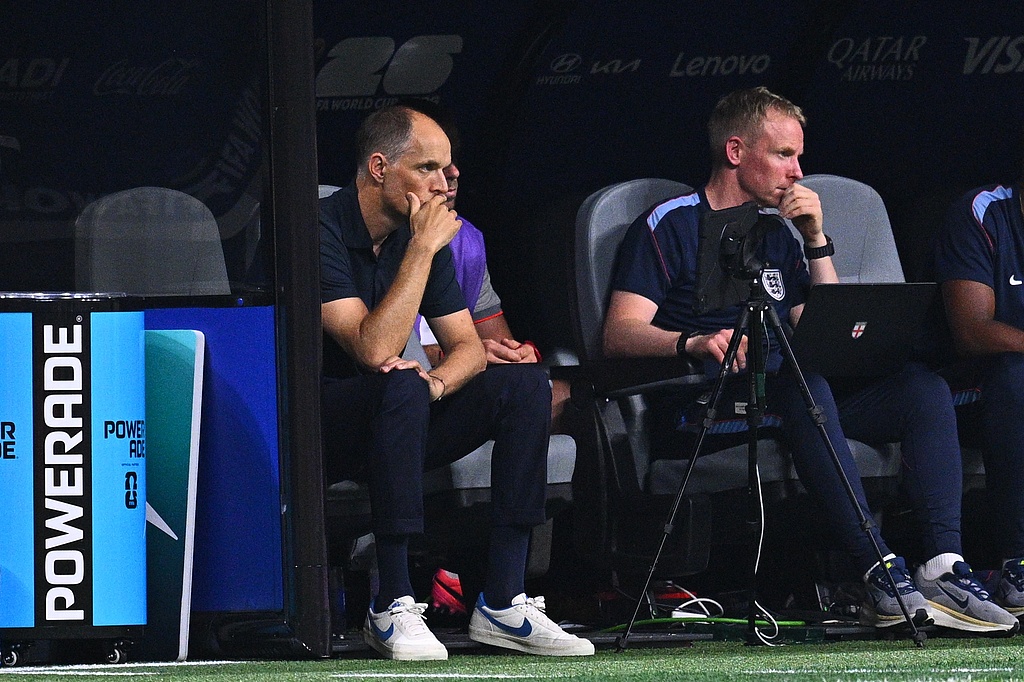
Did caution cost them? Tuchel fails to break the foreign-coach curse
England took the lead in this match; in the 55th minute, Rogers crossed from the right and Gordon bundled the ball in to break the deadlock. After gaining the advantage, England manager Tuchel opted to sit back too early, and the team gradually fell into a passive position as they retreated across the board.
In the 72nd minute, goalscorer Gordon was replaced by Konsa as England switched to a three-man back line; in the 82nd minute, Tuchel brought on two more defenders, O'Reilly and Dan Burn, in a desperate rearguard attempt to protect the lead. But the changes backfired — Enzo's two long-range efforts finally beat Pickford, and Tuchel paid the price for his caution.
Reflecting on the match, Henry said: “The better team won. They showed a great attitude and mentality. Argentina played some beautiful football, while in my view England dropped into a five-man defense too early — they thought they needed to protect the lead, but it was a bit too soon.”
For Tuchel, elimination also means he will not become the first foreign manager to win the World Cup. Both finalists — Argentina and Spain — are coached by homegrown managers, so this tournament will again see no foreign coach lift the trophy. From the inaugural 1930 World Cup to the previous edition, the pattern of homegrown managers winning the title has held. As the only ‘foreign’ manager among the semifinalists, Germany's Tuchel could not break that curse.