business
Why Are Celebrities' Messy Marriages Put on Display in Reality TV Shows?
From "falling in love" to "see you, ex-lover," in the public mind the former is a condensed version of a romantic idol drama, while the latter is a standard piece of realist short fiction. Love is to be enjoyed, whereas marriage is placed within a field of social scrutiny and examined with a sharp eye.
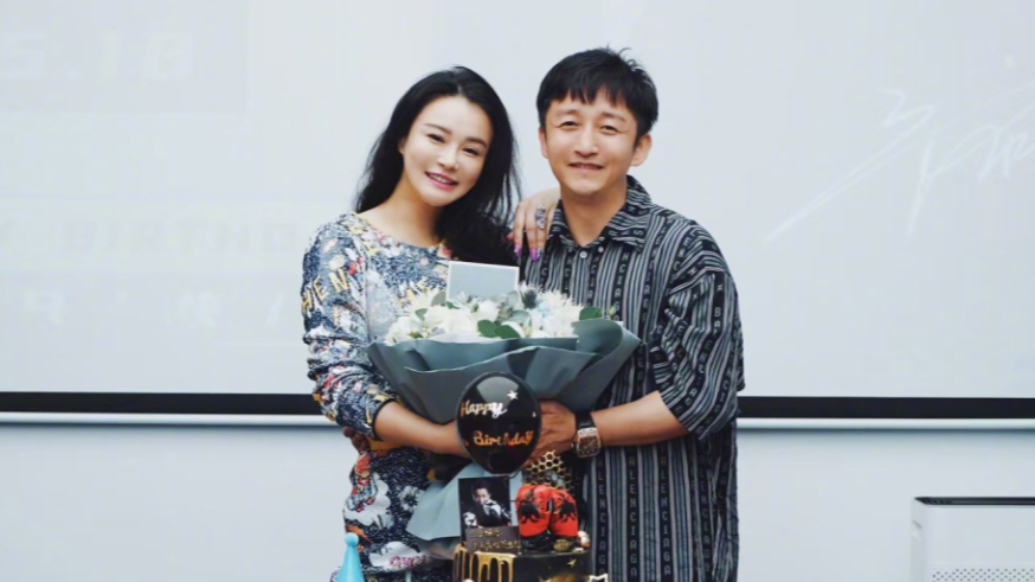
Recently, former boxing champion Zou Shiming and his wife Ran Yingying appeared on the variety show "Sisters Who Run the Home 2" (Jiejie Dangjia 2). Carrying the scattered debris of a messy marriage, they quickly became the focus of public opinion.
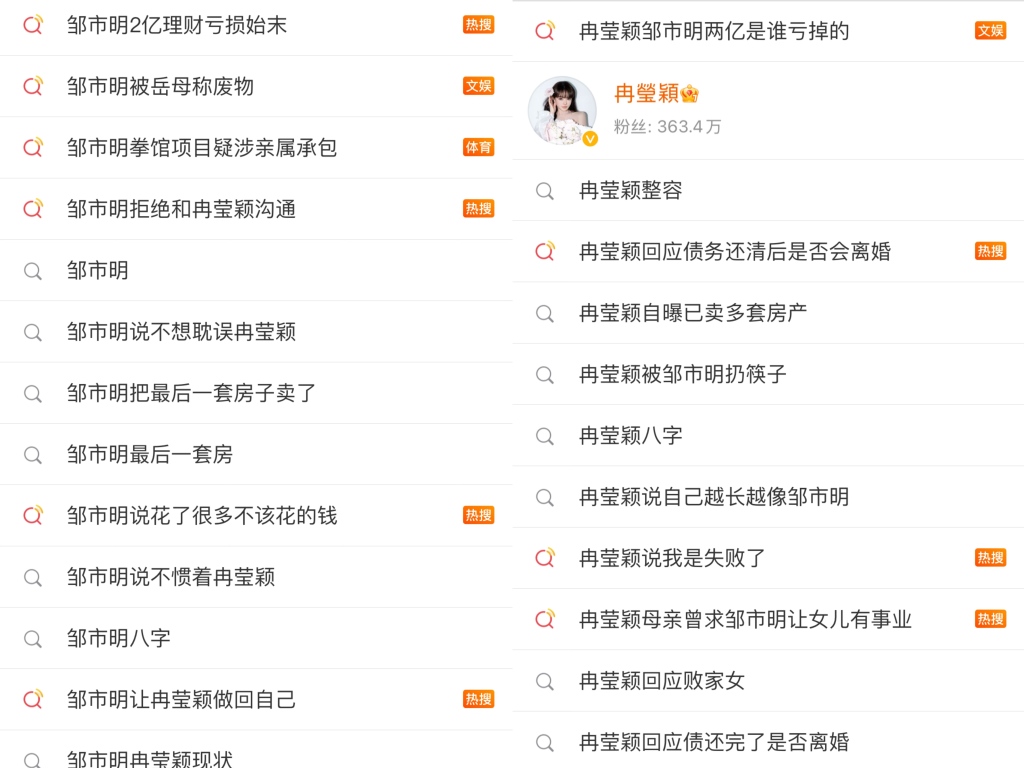
Zou Shiming and Ran Yingying have repeatedly topped trending searches in recent days because of the variety show "Sisters Who Run the Home 2."
Zou and Ran began their cross-industry entrepreneurial ventures in 2017, accumulating losses of more than 200 million yuan to date, and were forced to sell properties in multiple cities to repay debts. As of the end of March 2026, the couple had paid off loans owed to three banks, with three remaining small debts owed to two other banks, which are being settled according to plan.
Judging solely from the fragments presented in the program, Zou Shiming as a husband and father is hard to like. Through the camera, viewers see his many character flaws and questionable behavior — cold, dismissive words toward his wife, or hiding in his room playing video games while his child ran a high fever. In Ran Yingying's telling, the marriage has long been under enormous strain.
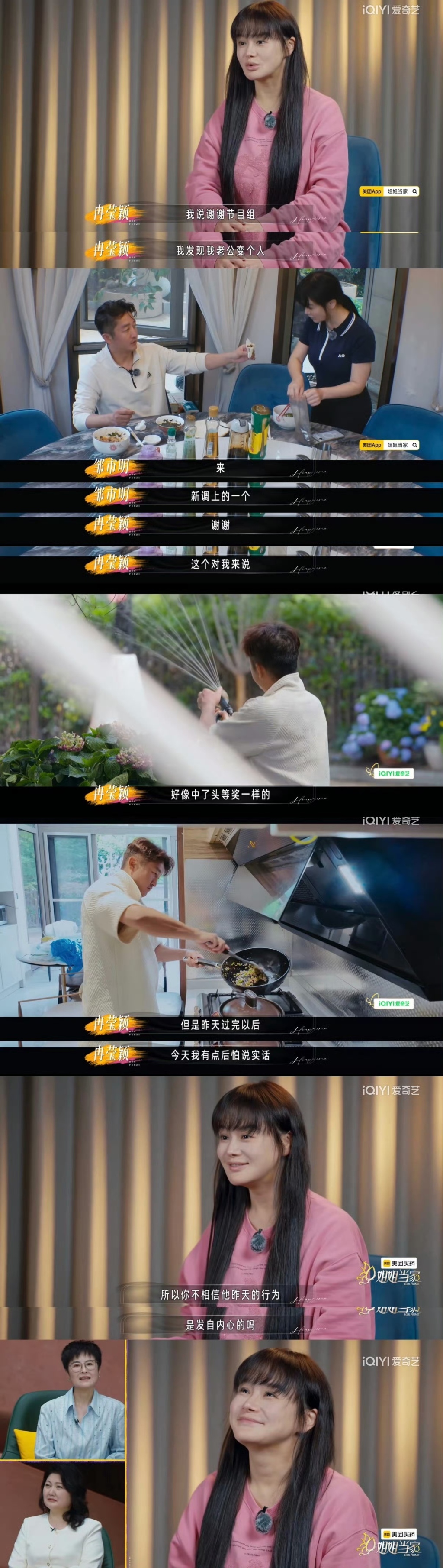
Facing the production team's questions about Zou Shiming's brief on-camera displays of tenderness and consideration, Ran Yingying responded with a wordless smile.
Yet after the show aired, public opinion about the couple went through a reversal. At first, netizens overwhelmingly sympathized with Ran Yingying, believing she was trapped in a loveless, high-pressure marriage — enduring her husband's cold violence while having to look after him like a caretaker.
But soon afterwards, part of the public discourse shifted. Accusations that Ran Yingying had "squandered Zou Shiming's fortune" began to surface. Through clips and conjecture, netizens pieced together an alternative narrative of "a husband ruined by his wife."
Looking at the celebrity couples who have appeared on variety shows in recent years, those clipped and extracted scenes — spread selectively and reworked into derivative content — have come to carry far too many people's imaginings about middle-aged marriage. Most of these imaginings never land anywhere real; they simply drift, torn against each other, in the online ether.
Celebrity Marriage as Spectacle
Faced with the marital crises and domestic wreckage that celebrities present on variety shows, it is hard not to feel an instinctive suspicion: so many minute accusations against each other, so much ugliness and scar tissue from the trivia of daily life — how can they disclose it all, item by item, to audiences on the other side of the screen?
A year ago on "See You Again, Lover 4" (Zaijian Airen 4), Huang Shengyi revealed a string of her husband Yang Zi's "bizarre" habits — for instance, that chatting with her required setting up a group chat into which all of Yang Zi's alternate accounts were added. Huang Shengyi held no financial power at home and did not even know the household income. The couple had long been living apart, and communication between them was riddled with condescension and evasion.
Added together, these details were enough to construct an infuriating husband and a pitiable wife. Once viewers accepted that emotion, a highly dramatic reaction followed close behind: how on earth did they put up with each other for so many years?
Under this kind of psychological suggestion, the sympathy for one spouse and the condemnation of the other only grew more intense.
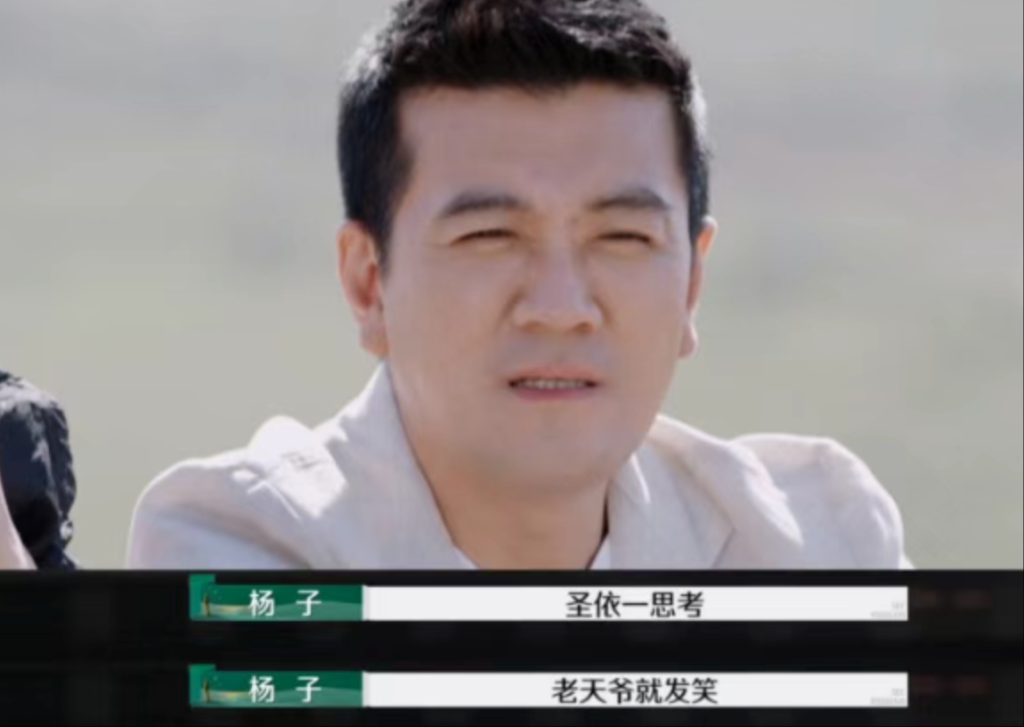
Yang Zi commenting on his wife Huang Shengyi in the variety show "See You Again, Lover 4."
On the same program, singer Li Xingliang and his wife Mai Lin became even bigger "traffic winners." Compared with Yang Zi and Huang Shengyi, this couple represented something relatively rare in variety television: a wife on the receiving end of concentrated condemnation. Mai Lin's insistence on buying smoked chicken, her "I'd like a cup of coffee, but is that appropriate?" and other now-famous scenes turned her into a target of public criticism.
When the show aired, the intensity of the public's denunciation of Mai Lin almost amounted to a siege. Meme stickers and derivative content proliferated, "Mai-ology" went viral, and attacking Mai Lin briefly became a trend — even a form of political correctness.
Variety shows about marriage and romance have been especially lively over the past five years. Public emotion and opinion act like a fire: they not only fuel traffic but directly generate it, so much so that a complete "ordinary person" like Mai Lin could be propelled into celebrity on a wave of public spittle.
Fame and career revival have thus become the "1+1>2" miracle that celebrity couples reap from variety shows. A few months ago on "Viva La Romance 2026" (Wives' Romantic Getaway 2026), the kindergarten-teacher-like dynamic between former Olympic champion Sun Yang and his wife Zhang Doudou repeatedly climbed the trending charts, and the couple's commercial value soared accordingly.
What the camera showed was a Sun Yang virtually incapable of managing his personal life: constantly needing attention and praise, stubbornly single-minded, deaf to other people's advice — insisting on getting his phone screen wrapped at the airport, refusing to deviate from the original route when leading the way, and treating his wife with oblivious insensitivity.
After Zou Shiming appeared on television, Sun Yang was brought up once again. Two men who were once the nation's finest athletes displayed a similarly low level of emotional maturity and intelligence. People clucked at having extracted a common trait — and felt sorry for the wives at their sides.
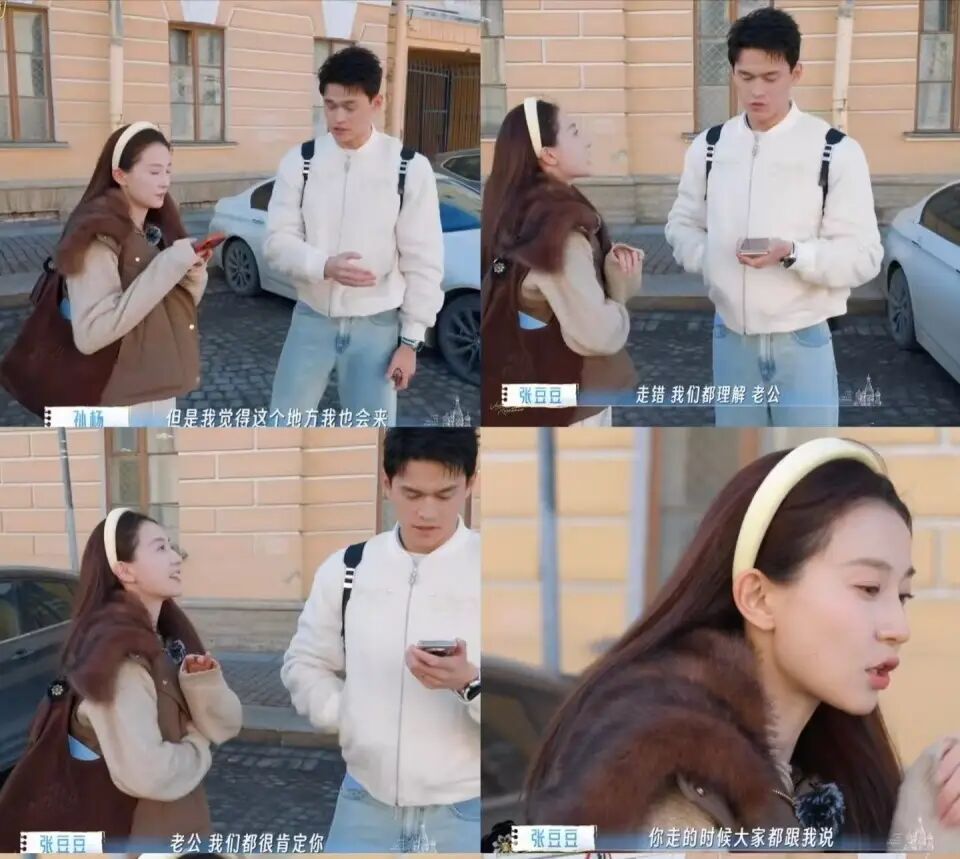
The "famous scene" in "Viva La Romance 2026" in which Sun Yang leads the way down the wrong route and insists on finding the bus stop.
Even earlier, in the variety show "Happy Trio" (Xingfu Sanchongzou) featuring Wu Jing and Xie Nan, a handful of clips saddled Wu Jing with labels such as hot-tempered, volatile, and chauvinistic. In one scene, as the couple cooked in the kitchen, Xie Nan asked twice, "Do you want chicken soup?" and received an irritable reply.
At the same time, however, a countervailing chorus of voices called on everyone to remember the broader social "gold content" of athletes like Zou Shiming and Sun Yang. Wu Jing and Xie Nan's off-program statements and explanations likewise pulled the public back toward a stance of "even a wise judge cannot settle family disputes."
The discussion then turned realistic and level-headed, sliding smoothly back into contact with real life: the essence of marriage is an exchange of value, and the bitter fruit each participant chews has a cause that has nothing to do with love.
This is a partial translation of the original commentary. The full article, which further discusses life after the cameras stop rolling, is available in Chinese at the source link.