business
State Media on Shenzhen Metro's Blanket Security Checks and Massive Queues: Public Services Need Sound Scientific Foresight
At around 8 p.m. on July 19, Shenzhen Metro issued an announcement: due to continuously rising citywide travel and tourism demand, full-coverage security screening at station entrances would take effect the following day (July 20). All carry-on luggage would have to pass through X-ray machines, and every passenger would be required to undergo a personal check with handheld devices. Less than 12 hours elapsed between the announcement and its implementation.
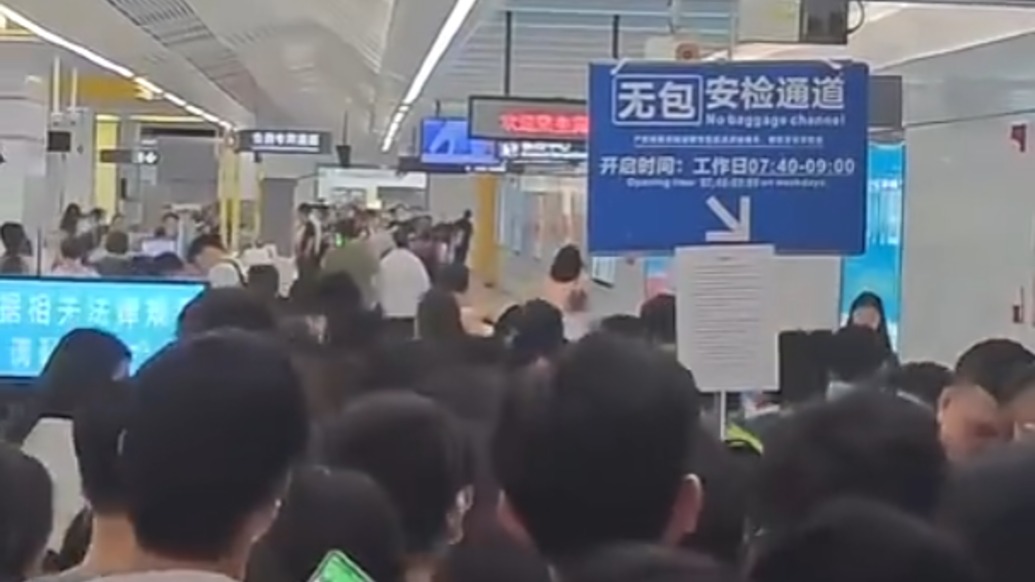
During the next morning's rush hour, queues stretching hundreds of meters formed at some of Shenzhen's high-traffic stations, with many commuters waiting twenty to thirty minutes, drawing widespread complaints from residents. The prevailing view in public opinion was that the security upgrade lacked differentiated design and was not accompanied by any coordinated passenger-flow management plan.
Metro operators do have a legal basis for conducting security checks, or for adjusting screening levels according to passenger volumes and the security situation, and their original intention of safeguarding public safety is understandable. But legality does not mean implementation can ignore method. Today, when the metro has long been the mainstream commuting mode in megacities, balancing safety and efficiency—whether in routine service improvements or in security upgrades at critical moments—should be a basic competence of governance. There is a wealth of mature experience to draw on, and achieving this balance is hardly difficult.
The question, therefore, is not "whether to screen" but "how to screen." In Shenzhen, a city with nearly ten million metro trips per day, hastily rolling out a control policy in a "one-size-fits-all" blitz directly caused the tension between safety and efficiency to erupt in the extreme scenario of the morning rush hour. When the operator paid a wildly disproportionate cost in public mobility for a marginal gain in safety, the screening slid from its original purpose of "ensuring safety" toward the outcome of "widespread disruption." This shows the policy design had strayed from its goal—and it produced the absurd spectacle of "crowds stuck at security while trains ran empty."
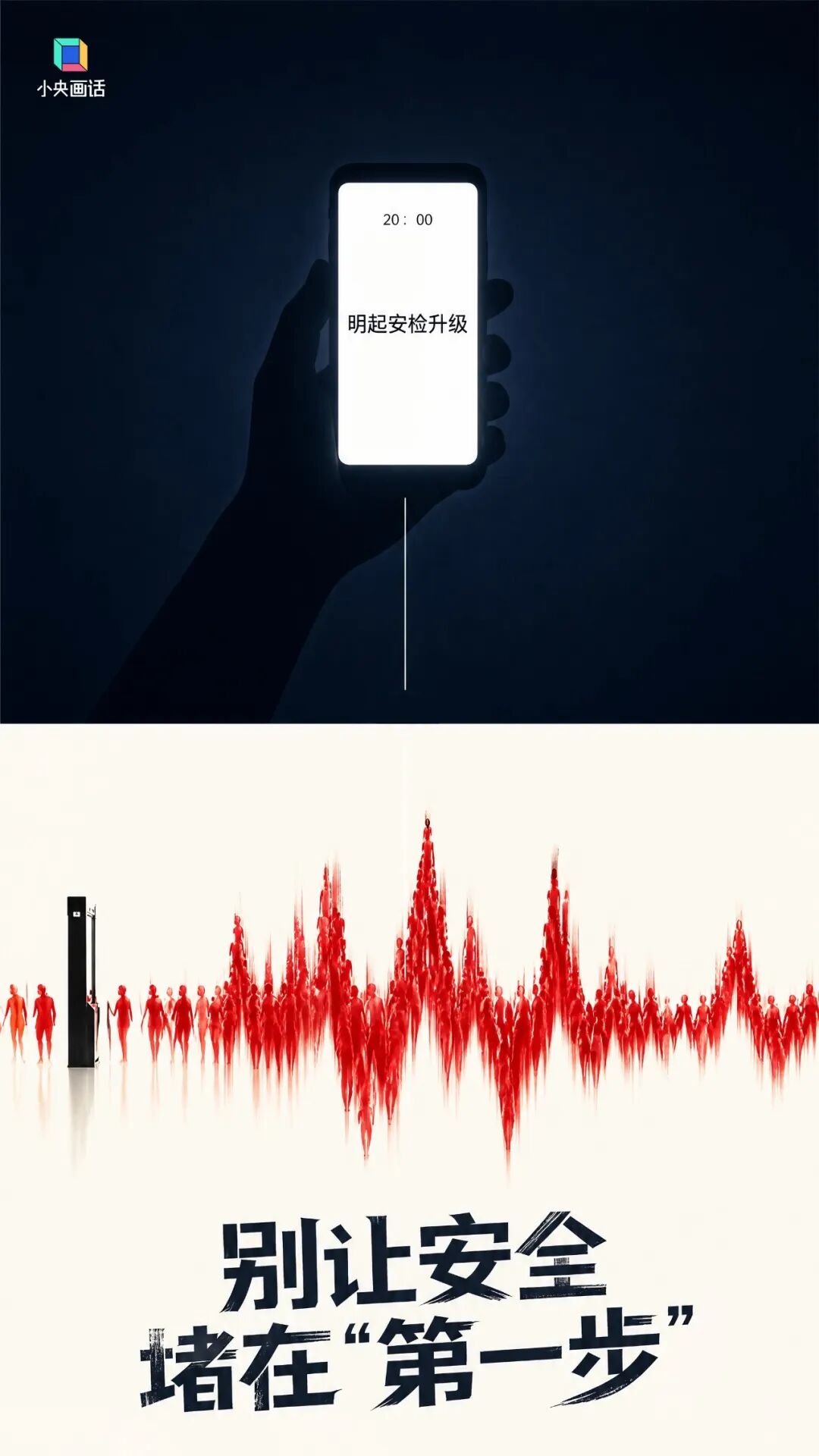
After the incident fermented, Shenzhen Metro moved quickly to make improvements: speeding up screening at high-traffic stations during peak hours, deploying additional staff for on-site crowd management, and accelerating the rollout of smart metal-detection gates. These measures are well targeted and can indeed ease congestion—but they should have been part of the contingency plan before the policy took effect. Why were they not put in place beforehand? Passenger volumes, peak pressure, and station capacity are all foreseeable, and stress-testing a new policy before launch is precisely what public-service policymaking demands.
This inevitably calls to mind another trending story about the Shenzhen Metro in the same week. Earlier, some metro stations drew public criticism for advertisements with oversaturated colors and excessive density. On July 15, Shenzhen Metro responded on its official Weibo account with "We hear you! Fixing it right away," admitting that its advertising management had focused only on "content compliance" while neglecting details such as color coordination and visual density—matters that concern public aesthetics and the everyday experience of residents.
The two incidents—one concerning public safety management, the other the visual environment of public space—differ in nature but point to the very same problem: in both cases, management goals were set and compliance baselines were held, yet ordinary people's experience of using public space was never built into the initial policy design. Only after public opinion erupted did the authorities go back to make up the missed lesson.
The speed of Shenzhen Metro's course correction deserves recognition, but the core reflection must not stop at after-the-fact remedies. For the public services of an innovative city, the standard of governance should not be judged solely by how efficiently remedies are applied once controversy breaks out. What matters more is whether, before a policy is introduced, residents' experience and the operating logic of the city are placed at the front of decision-making.