business
Two Henan Melon Farmers Appeal for Help Over 70 Tonnes of Unsold Watermelons; Field Price Just 0.2 Yuan a Jin, Sales Window May Be Only a Week
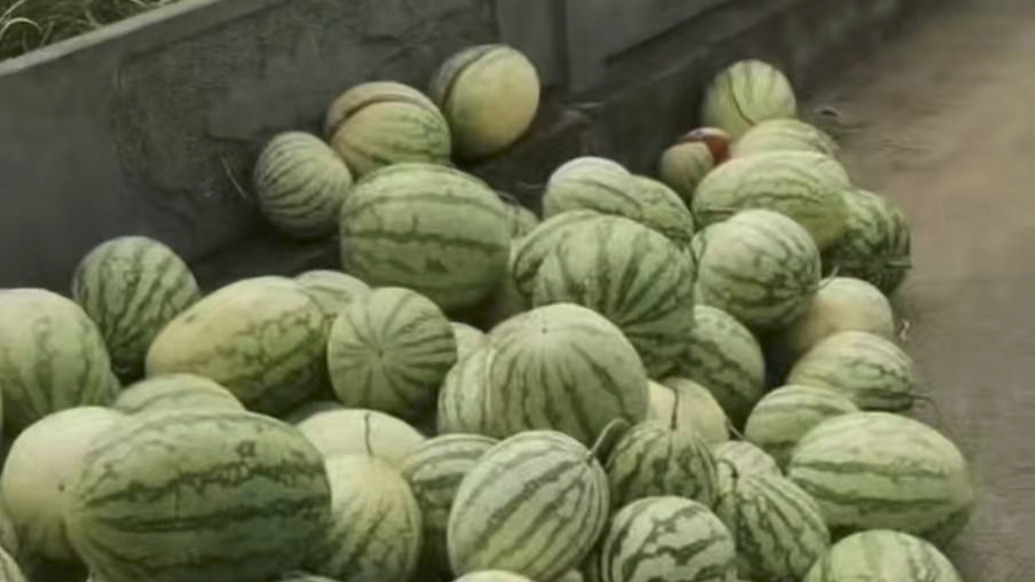
On July 22, Mr. Jin, a reader of The Paper from Xuchang, Henan, reported that watermelons grown by two farming households in Jinying Village, Jiangliji Town, Jian'an District, were going unsold, with about 140,000 jin (roughly 70 tonnes) of melons piling up in the fields. Because the melons are almost fully ripe, they are highly prone to splitting and rotting once it rains.
At present, the two households are trying to save themselves by connecting with local supermarkets and selling by the roadside in Zhengzhou. They hope that enterprises and public institutions, group-buying channels, or kind-hearted individuals can help clear the stock.
Mr. Cao, one of the farmers, told The Paper that if the melons cannot be sold out before August and the land freed up for plowing, they will miss the planting window for the next crop.
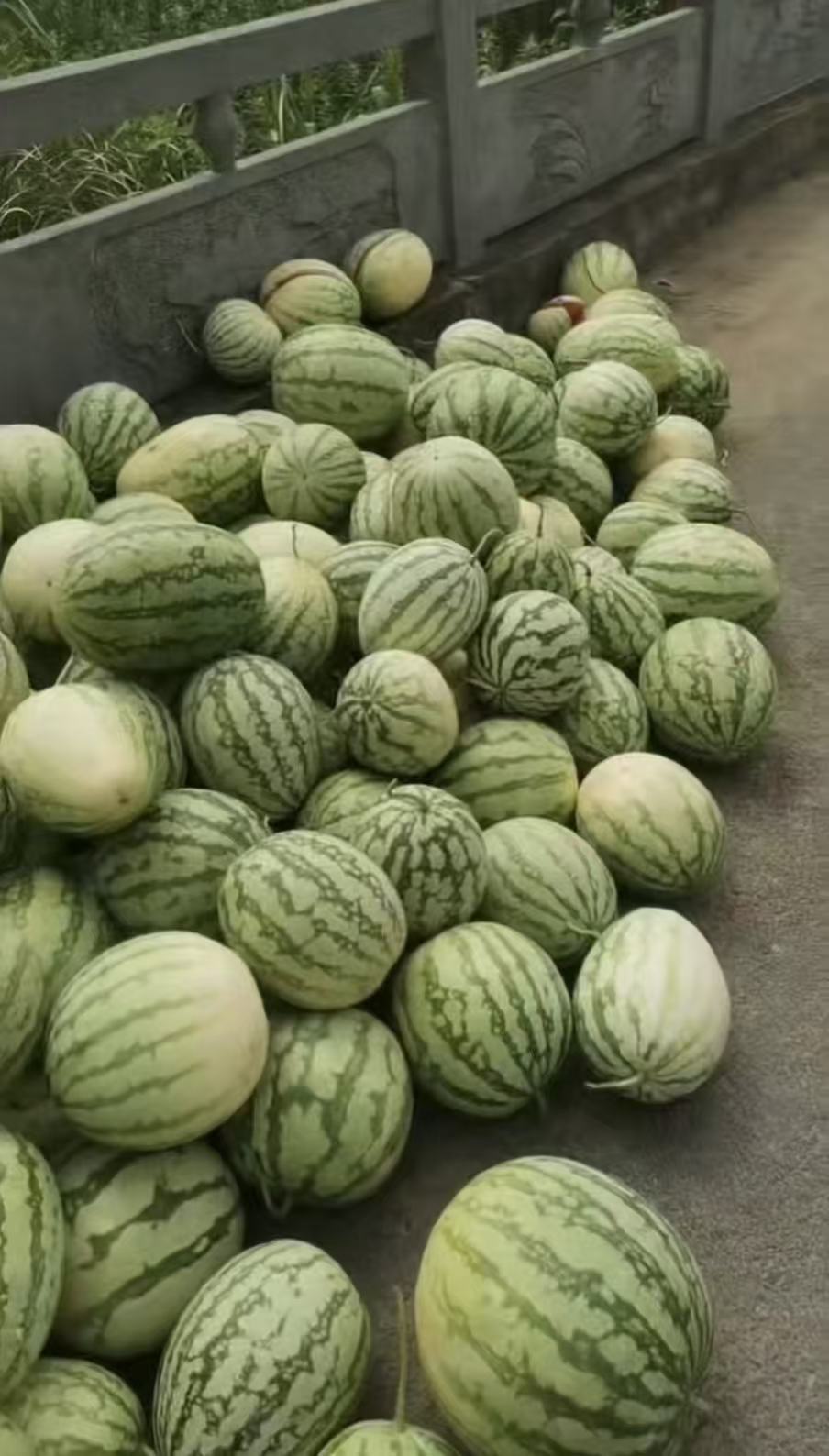
The two households' unsold watermelons
Local buying price just 0.2 yuan a jin, with at most one more week to sell
Mr. Jin is a truck driver who spends much of the year on the road. The two melon farmers are, respectively, his childhood friend and his elder brother. Together they planted about 40 mu of watermelons, yielding seven to eight thousand jin per mu.
As of July 22, the two households still had about 140,000 jin of watermelons to sell. The melons have reached a sweetness of 12.5 to 12.6 degrees and are about 95 percent ripe.
"If it rains a little and drops onto the melons, they might burst open," Mr. Jin told The Paper. If rain comes or the melons keep piling up, they will split or even rot, and it will also affect the planting of the next season's crop. The sales window for this batch is at most about one week.
Mr. Jin said the variety the two households grew is "Shuanghong Jinchengwu," with an input of about 1,060 yuan per mu. As of July 22, the local buying price for watermelons was around 0.2 yuan per jin.
"It's a losing deal that can barely recover part of the cost or reduce the losses; it can't cover the labor cost and the investment," Mr. Jin said. His childhood friend was growing melons for the first time and was full of hope, never expecting that this year's bumper harvest would be so hard to sell. Growing melons is the main source of income for these two households.
Mr. Jin's analysis is that the quality of this year's watermelons is essentially the same as last year's, and the price crash is not an isolated case. Henan's watermelon output is generally high this year, and the main reason for the price collapse is concentrated market supply outstripping demand. In addition, the melons are currently sweet and highly ripe but extremely perishable, so farmers have no choice but to dump them at below-cost prices to stem their losses.
Mr. Cao told The Paper that if the melons cannot be sold out before August and the land freed up for plowing, they will miss the planting window for the next crop.
According to public reports, since July 2026 watermelons have gone unsold on a large scale across many parts of Henan. As the country's largest watermelon-growing province, Henan planted 3.7 million mu of watermelons this year, with output expected to reach 14 million tonnes. But due to expanded planting areas in major production zones such as Kaifeng, concentrated marketing at the same time in neighboring provinces, and an early rainy season causing melons to ripen prematurely, gain water content and become less transport-resistant, the field buying price at one point fell to 0.1-0.3 yuan per jin.
Afraid to ship across provinces, farmers launch a self-rescue effort
According to Mr. Jin, in recent days they have mainly relied on acquaintances' introductions to connect with local supermarket retail, on a limited scale. On July 22, they loaded a truck with about 10,000 jin of watermelons and planned to drive to Zhengzhou to sell by the roadside themselves. "Because the melons are too ripe, they don't dare to transport them long distances across provinces; for now sales are limited to Xuchang and its surrounding areas."
Mr. Jin told The Paper that they had tried to contact farm-assistance bloggers or companies, but most of the other parties said they needed corporate approval or gave no clear timeline. The local government is doing its best to coordinate willing charitable enterprises or institutions, but time is pressing, and the farmers still need to find ways to sell on their own.
Mr. Jin stressed that if any enterprises, public institutions, supermarkets or kind-hearted individuals are willing to buy in bulk, the two households' current stock can be supplied in batches starting from 100,000 jin, and together with nearby melon farmers even more watermelons could be gathered. "Because of the unsold melons, many farmers are all trying to find a way out."
Public information shows that, facing the emergency of large-scale unsold watermelons in Henan, many parties across the country have launched rescue efforts, including government, corporate and grassroots forces.
Within Henan, agricultural and rural authorities, together with urban management departments, have set up more than 1,000 temporary sales points and launched a "watermelon map." Scenic spots such as Chongdugou in Luoyang, the Millennium City Park in Kaifeng, and Wansuishan Wuxia City have bought large quantities of watermelons to hand out free to visitors to beat the heat; local forces such as watermelon-jam producers, property management companies and the building decoration association have collectively absorbed hundreds of thousands of jin of unsold melons.
In terms of cross-provincial support, Henan natives living in cities such as Guangzhou and Hangzhou have spontaneously organized cross-provincial purchasing and transport. A Guangzhou team sold about 550,000 jin of watermelons in 20 days, and a hundred tonnes of watermelons shipped in by a Hangzhou team sold out in seven hours. A private vendor in Beijing cleared 18 tonnes of watermelon stock in a day and a half at a price of 0.8 yuan per jin.
However, constrained by intermediate costs such as transport, sorting and spoilage, the pressure from unsold melons has not yet been fully eased.
(Farmers' contact numbers: Mr. Jin 19913712066; Mr. Cao 15937431823)