business
Peking University Congratulates Alumni Wang Hong and Deng Yu on Winning the Fields Medal
The official WeChat account of Peking University posted a message on the evening of July 23: Congratulations to PKU alumni Wang Hong and Deng Yu on winning the Fields Medal!
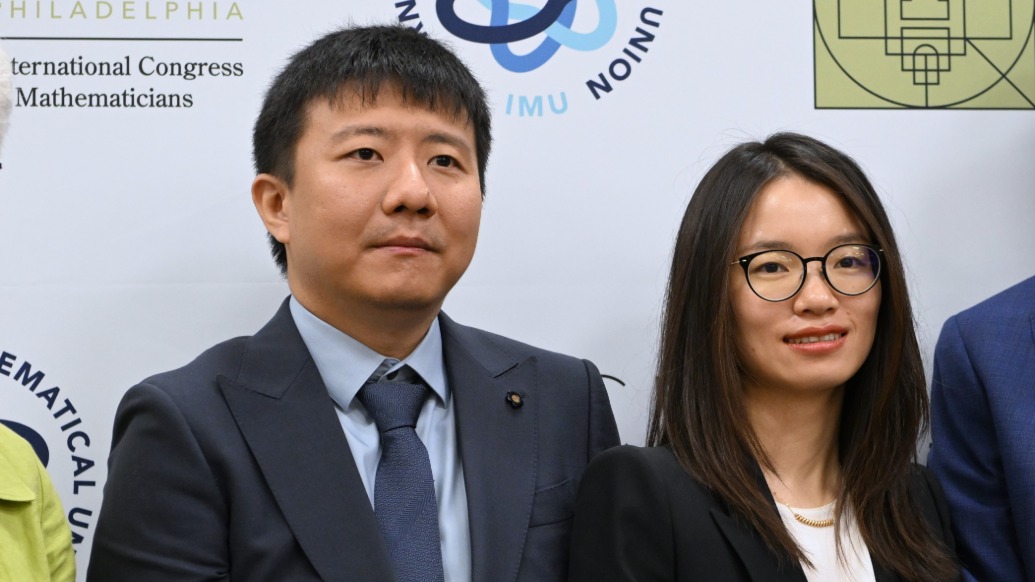
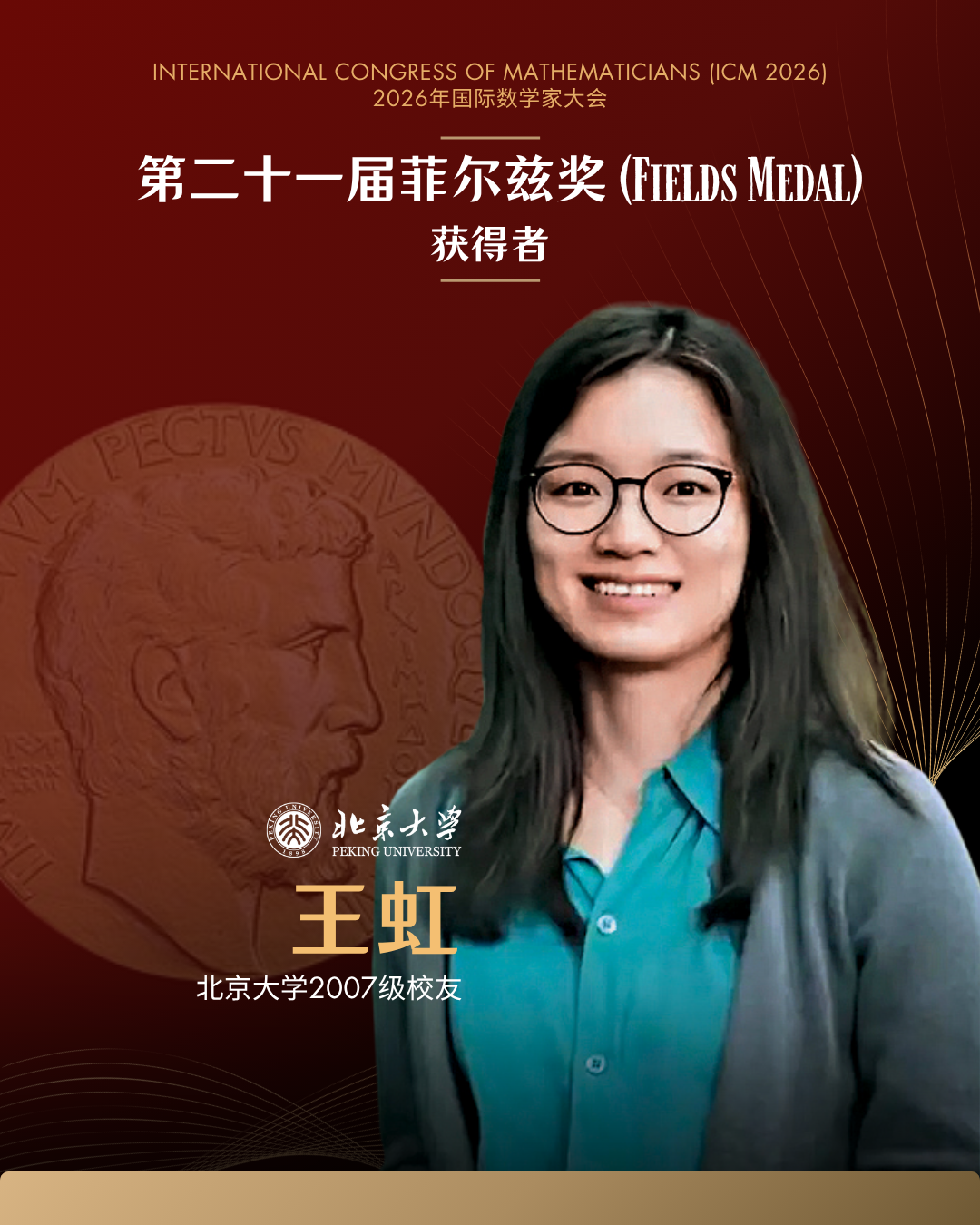
On the morning of July 23 local time, the 2026 International Congress of Mathematicians (ICM) opened in Philadelphia, United States. At the opening ceremony, the International Mathematical Union officially announced the winners of the 21st Fields Medal. Wang Hong and Deng Yu, both Peking University undergraduate alumni of the class of 2007, were among the laureates — the first time Chinese mathematicians have won the Fields Medal.
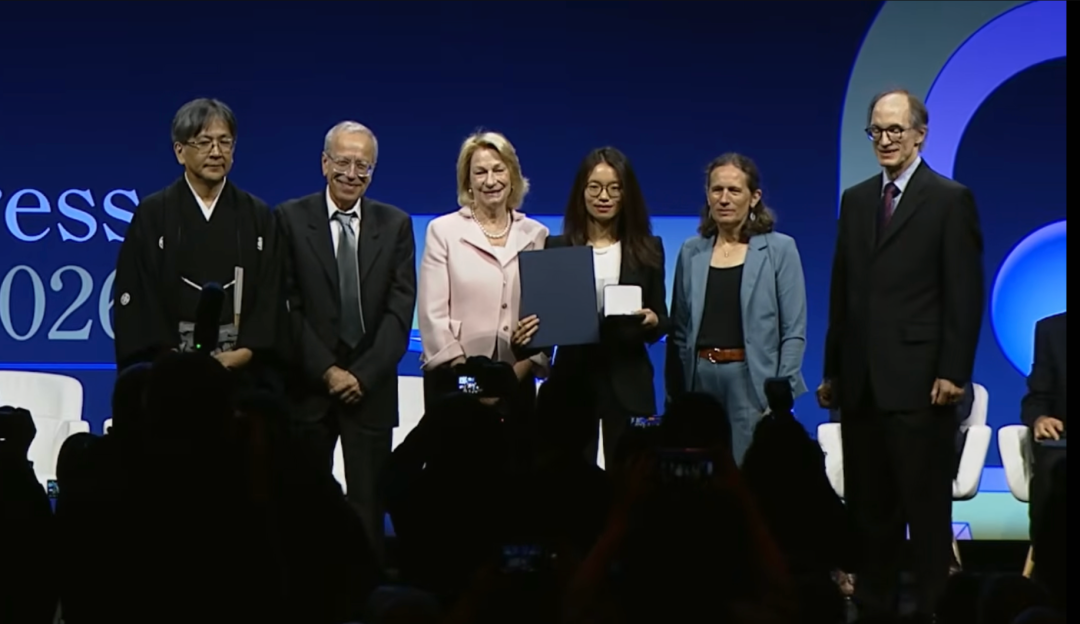
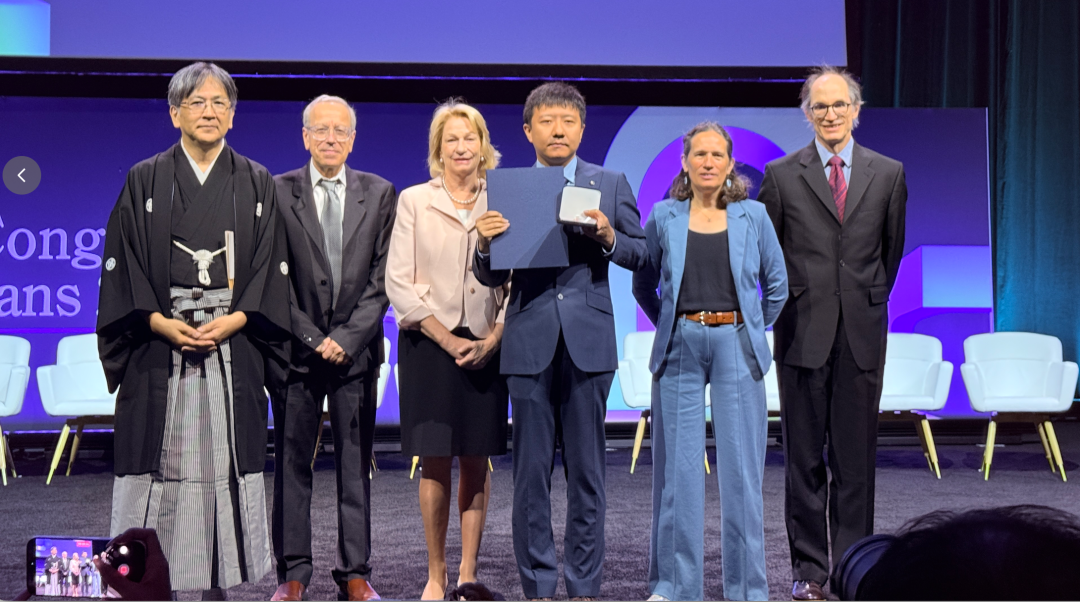
The Fields Medal is awarded every four years to no more than four recipients each time, honoring scholars under the age of 40 who have made outstanding contributions to mathematics. It is one of the highest honors in the international mathematical community and is often called the "Nobel Prize of mathematics."
Wang Hong, together with collaborator Joshua Zahl, used a refined multi-scale induction method to prove the three-dimensional Kakeya Conjecture, a problem that had puzzled mathematicians for over a century. In addition, Wang Hong made major breakthroughs on the two-dimensional Falconer distance problem in collaboration with Larry Guth, Alex Iosevich, Ou Yumeng and others, and, together with Ren Kaiyuan, completely resolved the Furstenberg set conjecture.
Deng Yu, together with collaborators Zaher Hani and Ma Xiao, completed the rigorous derivation of the Boltzmann equation from hard-sphere particle systems over long time scales, establishing a chain of derivation from Newtonian hard-sphere dynamics to the Boltzmann equation and onward to the Navier-Stokes equations — a key advance on Hilbert's sixth problem.
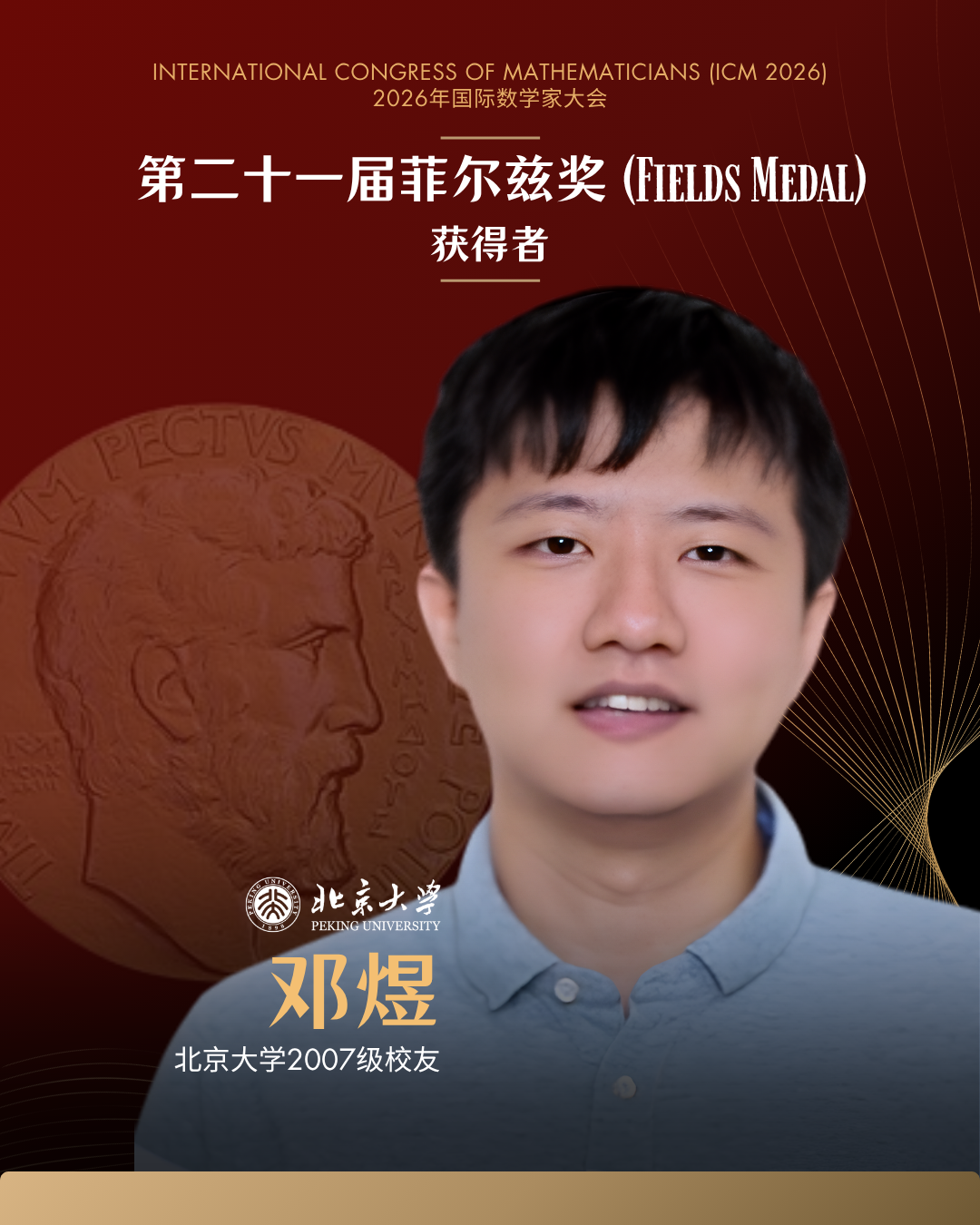
As a long-standing academic tradition, the invited lectures at the International Congress of Mathematicians come in two formats — one hour and 45 minutes — and Fields Medalists automatically become invited speakers of the congress. Their lectures represent the highest level of the international mathematical community.
The Beauty of Mathematics Runs Deep and Quiet
At the 2026 commencement ceremony of Peking University's School of Mathematical Sciences, Academician Tian Gang said in his address:
Take our alumni Wang Hong and Deng Yu — their recent breakthroughs on major mathematical problems are a vivid embodiment of the spirit of "daring to be first." This spirit lies not only in being "first," but even more in "daring." That is to say, one must not only take the lead and stand at the forefront, but also dare to enter uncharted territory and dare to challenge widely recognized major problems. It is a courage to face difficulties head-on and the steadfastness of long-term persistence.
For Wang Hong and Deng Yu, this pioneering spirit of exploration, together with the pursuit of the simple and ultimate beauty of mathematics, comes from long years of seeking, trying, and persevering — and from their studies and accumulation at PKU's School of Mathematical Sciences.
The School of Mathematical Sciences at Peking University has always valued exchange, encouraged independent exploration, and continuously expanded open international platforms, shifting the cultivation of talent from "knowledge instillation" to "stimulation of thinking." Over the years, thematic reading seminars, the "Special Mathematics Lectures," undergraduate research programs and other initiatives have fostered a rich atmosphere of learning and enjoying mathematics, and quite a few of these programs continue to this day.
In 2008, after one year of study at the School of Earth and Space Sciences, Wang Hong transferred to the School of Mathematical Sciences. During her undergraduate years, she did undergraduate research under Professor Wang Lizhong and completed her graduation thesis, "Classical Hodge Theory and Hodge Theory on Metric Spaces," under the guidance of Professor Liu Zhangju. Wang Hong was in the habit of "reading books and thinking about problems in the library." In her view, learning mathematics requires securing a basic amount of study time, and on that basis, "rest enough, then go study."
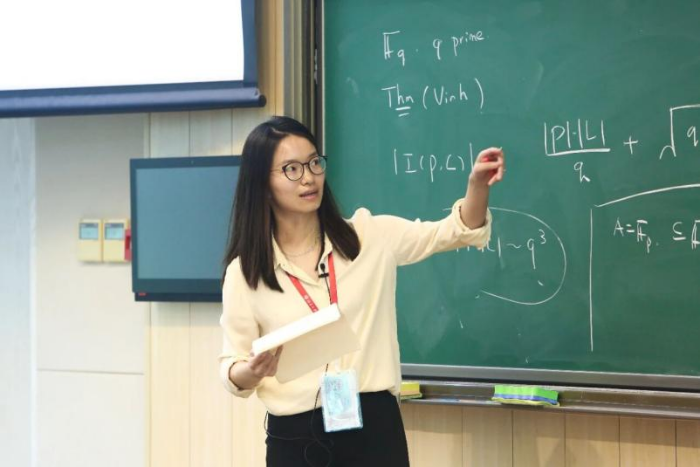
Wang Hong giving a talk during the 2023 PKU Mathematics Alumni Forum
Wang Hong's main research areas are harmonic analysis and geometric measure theory; she is among the most outstanding mathematicians of the new generation in harmonic analysis.
In June 2025, after proving the three-dimensional Kakeya conjecture, Wang Hong returned to her alma mater to give three days of lectures, sharing the journey of solving the century-old Kakeya problem. In 2023, on the 110th anniversary of the founding of PKU's mathematics discipline, Wang Hong returned to campus to give a talk during the PKU Mathematics Alumni Forum. In an exchange with students, when asked why she chose to devote herself to harmonic analysis, she answered:
If a problem strongly attracts me, it probably also has the power to attract others — so there is no need to worry about producing a result that "only I care about."
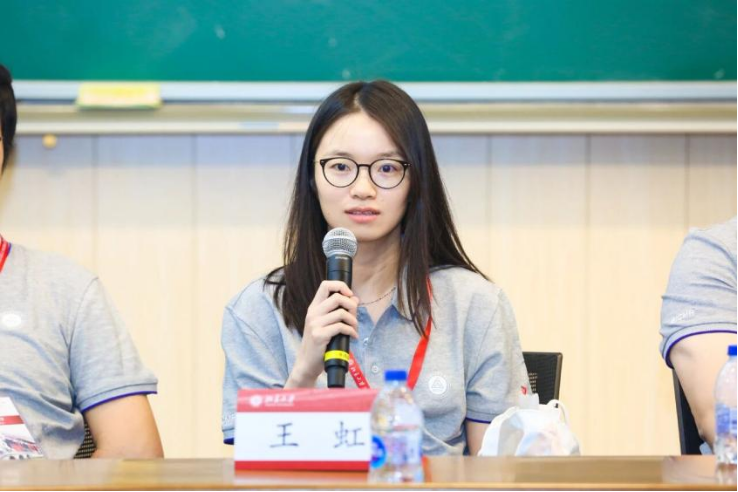
Wang Hong at a faculty-student exchange session during the PKU Mathematics Alumni Forum
At this moment, as the tower of harmonic analysis is further consolidated and the pinnacle of mathematical research is raised a little higher, the mathematician's spirit behind the Fields Medal continues to run deep and quiet, shining ever brighter through perseverance and pioneering.
For Deng Yu, the road into mathematics began as early as high school. In 2006, he won a gold medal at the International Mathematical Olympiad (IMO) and was admitted to PKU's School of Mathematical Sciences the following year through the recommendation track; two years later, he transferred to the Massachusetts Institute of Technology (MIT) in the United States.
From the shores of Weiming Lake at PKU to MIT, Princeton University, and then the University of Chicago, Deng Yu has always maintained a pure love for mathematical research. He enjoys exchanging ideas and collaborating with other scholars, discussing profound mathematical problems and broadening his research horizons — "some key ideas that did not hold at first were gradually refined through discussion."
Deng Yu works mainly in the broad field of partial differential equations (PDEs), with a long-term focus on the probabilistic theory of PDEs.
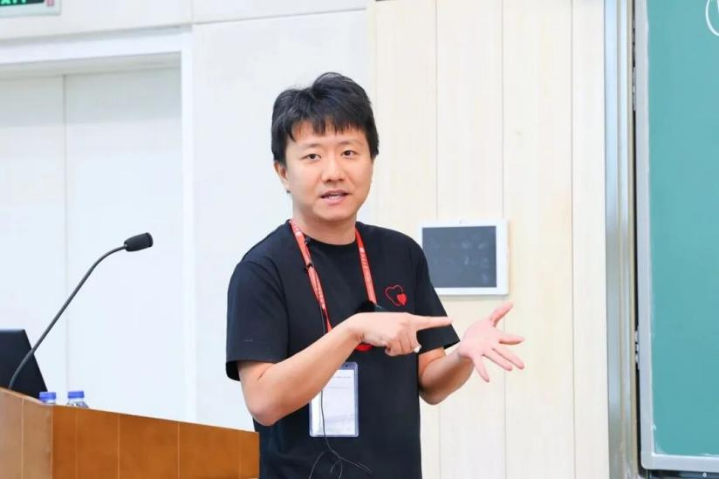
In March 2025, Deng Yu gave a talk at the workshop "Recent Progress in Kinetic Theory and Hilbert's Sixth Problem" held at Peking University
In 2018, when Fields Medalist Jean Bourgain passed away, Deng Yu wrote: "If we spend our whole lives trying, will we ever catch a glimpse of the silhouettes of those who came before us?"
The answer to that question quietly surfaced when he and his collaborators completed the key derivation for Hilbert's sixth problem, and it has become ever clearer through his sustained pursuit of multiple research questions.
Mathematics is a field whose boundaries keep expanding, and many important problems within it remain unanswered. Mathematical facts exist in their own right; through thinking and proof, we uncover these long-buried truths. Being able to take part in this process feels wonderful to me.
This is a partial translation (first portion) of the original Chinese article. Read the full original at The Paper.