top-news
The Weight of Mount Taishan Cannot Be Held Up by Razor Wire
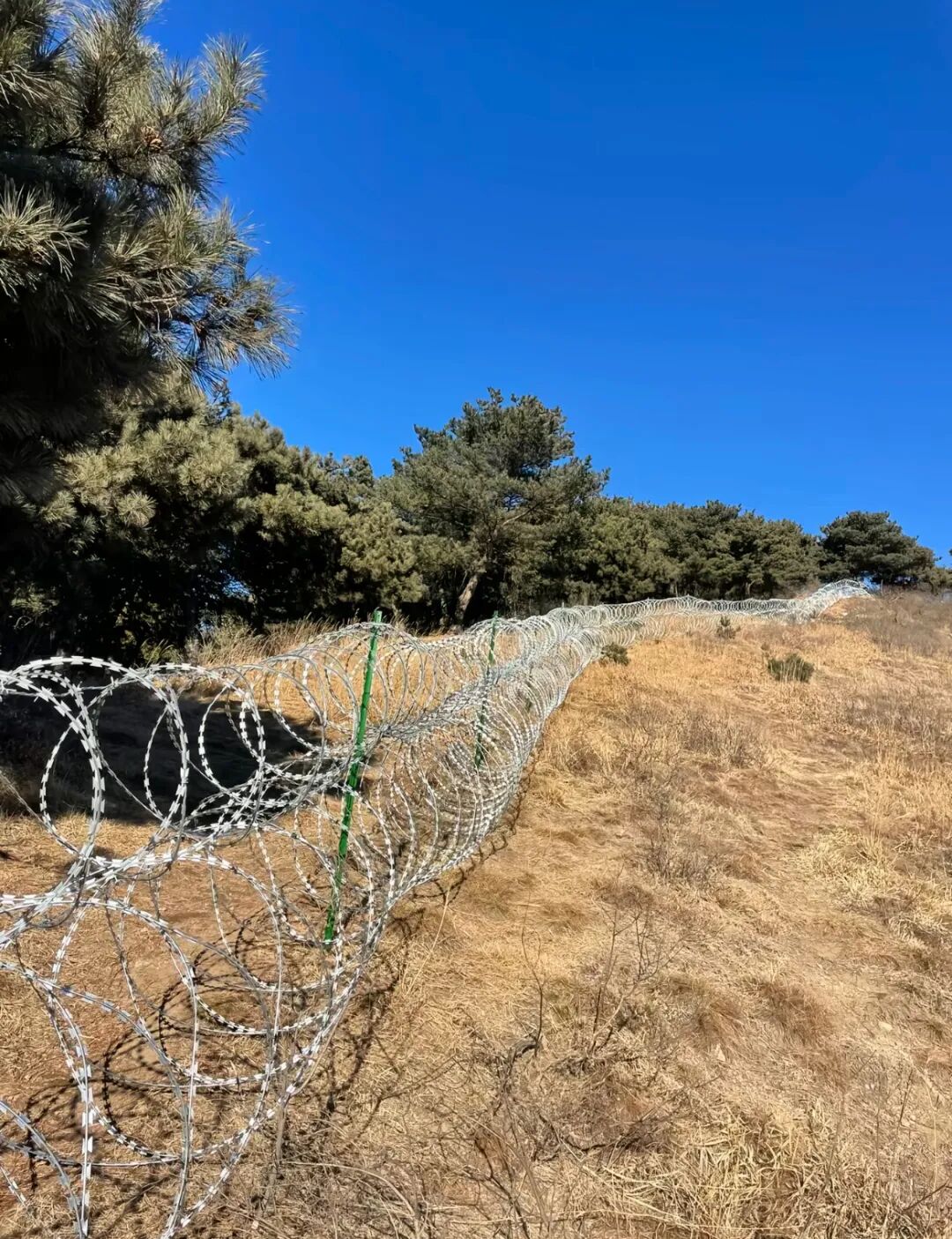
Recently, news that "Mount Taishan Scenic Area has installed roller-style razor wire isolation fences" has drawn widespread public attention. On July 2, the Mount Taishan Scenic Area Management Committee issued an open letter to netizens regarding this matter, stating that they "sincerely accept public supervision and criticism," but also emphasizing that "the roller-style razor wire isolation fences are mainly distributed in non-open areas, non-tourist areas, and hazardous sections, and do not cross or overlap with normal tourist routes."
The response consists of four paragraphs, with only a few brief words of acceptance of criticism at the beginning, while the main body essentially explains the reasons for installing the fences. Clearly, the Mount Taishan scenic area does not genuinely believe its actions were problematic; it is primarily defending its own practices.
So, is the 135-kilometer fence network, costing over 25 million yuan, with its intimidating roller-style razor wire, truly reasonable and justified? Can such explanations genuinely convince the vast number of netizens?
Has ecological protection been considered?
In its response, the Mount Taishan scenic area stated that the roller-style razor wire is based on Article 34 of the Forest Law of the People's Republic of China and Article 36 of the Regulations on Scenic and Historic Areas. Simply put, it is for fire prevention and forest protection.
However, the Forest Law of the People's Republic of China clearly stipulates that the protection, cultivation, and utilization of forest resources should respect nature, comply with nature, and adhere to the principles of ecological priority, protection priority, conservation combined with sustainable development.
Many netizens have previously questioned: the installation of razor wire around Mount Taishan is difficult to understand. What if animals migrating encounter the wire and are blocked or injured? The scenic area's response said a lot but conspicuously failed to address this very important question. Fire prevention and forest protection are important, but aside from the damage to the landscape caused by roller-style razor wire, has it truly "respected nature and complied with nature"?
Article 13 of the Wildlife Protection Law of the People's Republic of China also clearly stipulates that when formulating relevant development and utilization plans, people's governments at or above the county level and their relevant departments shall fully consider the needs of wildlife and their habitat protection, analyze, predict, and assess the overall impact of plan implementation on wildlife and their habitat protection, and avoid or reduce possible adverse consequences. In other words, if a scenic area uses high-risk isolation facilities such as razor wire, it may be suspected of violating the Wildlife Protection Law due to blocking migration or injuring animals.
Moreover, if a large-scale mountain fire were to occur, the isolation facilities would also hinder the passage of fire rescue personnel and equipment. The scenic area's justification of "fire prevention and forest protection" is fundamentally untenable.
Is it for safety or for management convenience?
The scenic area specifically emphasizes that the isolation fences "do not cross or overlap with normal tourist routes." In the view of some netizens, this is "to prevent some hikers from evading tickets." Admittedly, in recent years, some hikers have engaged in illegal crossings in the wilderness, leaving painful lessons, and it is understandable for scenic areas to take certain management measures.
However, there are many ways to manage. Whether a one-size-fits-all roller-style razor wire fence is necessary is clearly debatable. Moreover, if hikers truly take risks, they might still be able to cross the razor wire. Instead, the existence of the wire could become an obstacle delaying rescue teams. Has the scenic area considered this?
What is even more noteworthy is the tendency of "enclosing land for profit" commonly seen in many famous scenic areas across the country behind this incident.
Around the May Day holiday in 2023, the Hukou Waterfall in Yichuan, Shaanxi Province, built high walls along the highway to block free viewing angles, claiming to ensure tourist safety, later dismantled under public pressure. Hundreds of kilometers of fences were erected around Qinghai Lake, with many self-driving tourists complaining about "traveling thousands of miles only to view the lake from behind a fence." Daocheng Yading designated provincial roads as internal scenic area roads, prohibiting social vehicles and forcing tourists to pay for shuttle buses. These scenic areas all use maintaining safety and protecting ecology as high-sounding reasons to compress public space for free sightseeing, cut off low-cost viewing channels, and force tourists to pay higher travel costs.
After netizens reported the installation of razor wire at Mount Taishan, journalists contacted the Tai'an Culture and Tourism Bureau, but the staff member expressed helplessness, saying "we can't control the scenic area either." Mount Taishan is a famous mountain carrying national cultural heritage, with its landscape resources belonging to all citizens. The duty of a scenic area should be to provide better services to visitors, not to treat public resources as its own profit channel.
Is the decision-making process for building the fences compliant with regulations?
According to public information, in 2022, the Mount Taishan Scenic Area proposed a "sky net, ground net, human sentry, water shield" three-dimensional prevention and control system. The "ground net" is the exposed roller-style razor wire isolation fence. Phase one was 62 kilometers, with phase two as an extension. In December 2025, the winning bid for the "Mount Taishan Scenic Area Tourism Resource Safety Enhancement Project (Phase 2, Section 2)" was announced at 4.1669 million yuan. Including supporting projects, the total investment in the "Circular Mount Taishan Forest Fire Prevention Corridor" is approximately 25.193 million yuan.
According to media reports, some netizens have indicated that parts of the razor wire appear to have been dismantled. The Mount Taishan scenic area also stated in its response that "in the next step, we will organize experts in forestry, fire prevention, environmental protection, cultural tourism, law, and other fields for comprehensive assessment, and continuously optimize and improve relevant work measures based on ecological, safety, and friendly principles."
But the question remains: the cost of over 25 million yuan has already been spent. If it is dismantled one day, who will be responsible for such a high construction cost? Before making such a decision, was there no adequate feasibility study? Were the possible consequences not considered? Was the entire process compliant?
According to the "Analysis and International Comparison of Ticket Prices of China's 5A Scenic Spots (2015)" report published by the Tourism Research Center of the Chinese Academy of Social Sciences, the average ticket price of China's 186 5A-level scenic spots is 112 yuan, far higher than the ticket price levels of famous scenic spots in developed countries. A considerable portion of the huge cost spent by Mount Taishan on building the razor wire fences may well be invisibly passed on to unsuspecting tourists. If the scenic area does not change its underlying logic of "enclosing land and prioritizing fees," this time it is razor wire, but next time there could be other problems.
Not long ago, the Ministry of Culture and Tourism completed a nationwide special rectification of A-level scenic spots, focusing on correcting forced shuttle buses, unreasonable charges, artificially created sightseeing barriers, and other problems. Many well-known 5A scenic spots across the country were named and criticized, sending a clear signal of rectifying unreasonable charges and breaking down sightseeing barriers. As a mountain carrying China's millennia of history and culture, Mount Taishan should return its magnificent scenery to all visitors.