business
Instant Commentary | Envy Stephen Chow, Become Stephen Chow, Surpass Stephen Chow
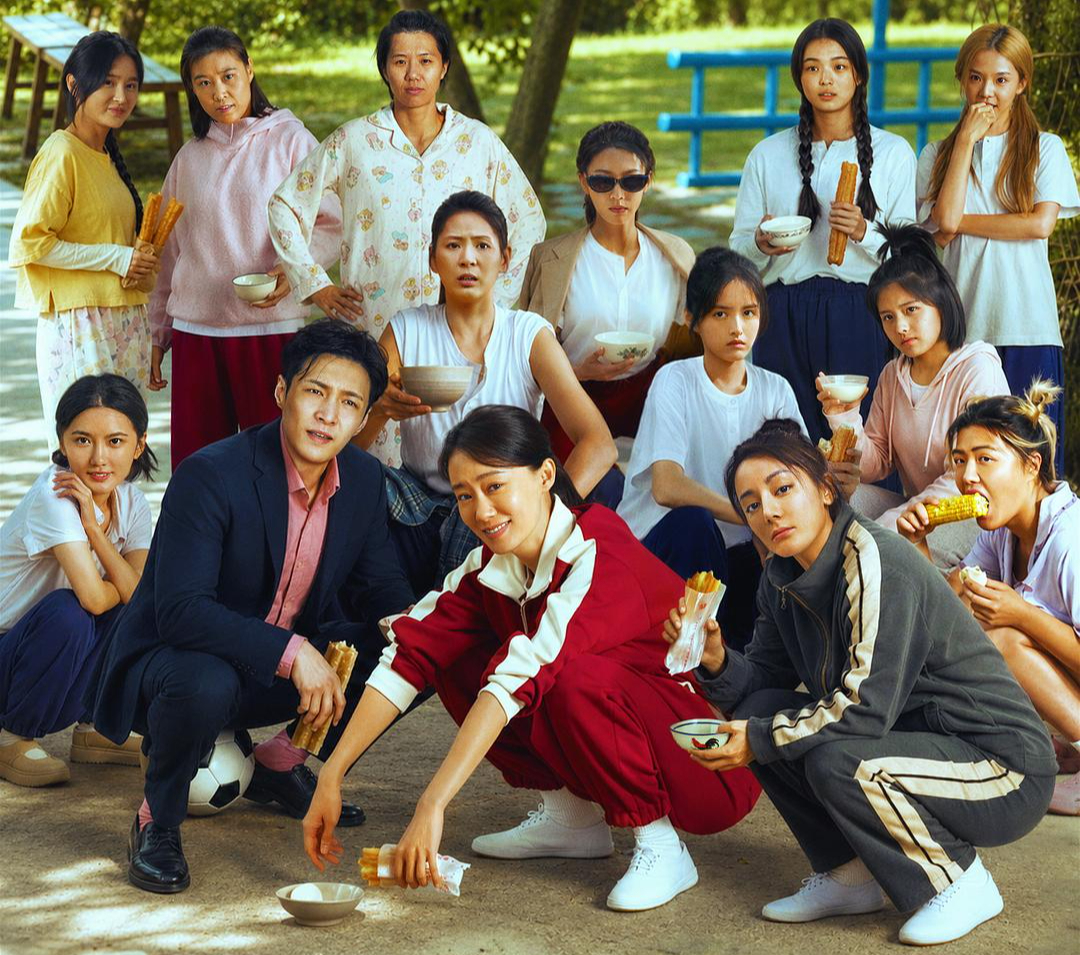
Still from Kung Fu Women's Soccer.
Stephen Chow's self-written and self-directed film Kung Fu Women's Soccer broke 500 million yuan at the box office just two days after its release, with strong momentum. While shattering multiple records in Chinese film history, it also got the summer movie season off to a good start.
At the same time, the film's reception has been sharply polarized: its Douban score is only 6.6, yet ticketing-platform ratings reach as high as 9.4. Some netizens praised it, saying, "Thank goodness Stephen Chow is still making fairy tales for grown-ups," while others bluntly argued the film is merely "cashing in on nostalgia." The debate between the two camps even topped social-media trending lists.
Anyone who has seen the film will admit that Stephen Chow is still Stephen Chow — he hasn't changed. Although he never actually appears on camera, every viewer can tell that each character bears his signature. Those unconventional plot devices, bizarre action designs, and absurdly comical mo lei tau set pieces are elements his fans know all too well, and from them one can plainly see how seriously he takes his craft.
If so, why has this film still drawn controversy? In truth, the problem may not lie with Stephen Chow or his movie itself. His freewheeling comedic style once influenced a whole generation of viewers and opened their eyes — so this is how a film can be made.
But years have passed, and both the times and the media landscape have changed. Today, people pick up their phones and scroll through short videos to find countless imaginative and creative works, many of them homages to or imitations of Stephen Chow's classics. Conversely, the more people have seen, the more refined their taste has become, and Stephen Chow's films and his mo lei tau style no longer feel so "unique."
In fact, it is not just Stephen Chow. Today, no renowned director or big star dares to pat their chest and guarantee they will win unanimous acclaim from the broad audience. No matter how brilliant the past résumé or how excellent the earlier work, none of it counts anymore, because audiences are no longer easy to fool. If the film and television industry and market once prized "IP power" above all, today's viewers, more than empty fame, trust only their own eyes, care only about a work's content, and focus only on creative quality.
The Notice on Regulating Actor Credits in Television (Web) Series, jointly issued earlier by the China Television Drama Production Industry Association, the China Netcasting Services Association, and the Actors Committee of the China Radio and Television Social Organizations Federation, took effect on July 10. Today, many familiar actors have reappeared before audiences under their real names.
The new rule was introduced because credit-order chaos has worsened in recent years: fans fight over their idols' rankings and positions, producers rack their brains to balance everyone's interests, and the cast list has ceased to be a record of the creative crew, becoming instead a battlefield for fandoms. Behind this disorder lies commercial capital's superstition with empty fame — the mistaken belief that as long as a star's halo and built-in traffic and hype are present, profits are guaranteed and defeat impossible.
Unified real-name crediting and standardized ordering rules are by no means redundant; they mark the industry's return to creation itself. Whether for actors, directors, singers, or stars, evaluation has shifted from "checking the billing" to "examining the work" — what competes now is not traffic or star power, but the completeness of each creative effort.
From this perspective, audiences no longer blindly worship the "Stephen Chows" but boldly voice their own thoughts and opinions — which is actually a good thing for the healthy development of the entire film and television industry. If anyone today still eagerly uses big-data analysis to set creative direction, mistakenly believing that a certain name's blessing makes everything fine, they are clearly gravely mistaken. Only by re-establishing the principle that acting skill matters more than billing and quality matters more than placement can artistic creation recover its soul.
That said, it is perfectly normal for Kung Fu Women's Soccer to meet with some controversy — it may even fuel the box office. Back in the day, Stephen Chow's mo lei tau style drew plenty of criticism too, yet he rarely defended himself, quietly answering with one classic work after another and cementing his place in cinema. So whether Kung Fu Women's Soccer is good and worth seeing likewise does not depend on trending social-media topics; every viewer will vote with their feet.
Of course, this principle applies to more than just Stephen Chow. The unexpected breakout of A Love Letter to Grandma in this year's film market has already reminded us that whether one is a veteran heavyweight or a raw newcomer, presenting a carefully honed, high-quality work beats everything else. All film and television professionals should realize that returning to the essence of artistic creation and building a clean and wholesome cultural ecosystem is the inevitable trend.
Source: The Paper (澎湃新闻), by Li Qinyu (澎湃首席评论员). Originally published July 13, 2026.