
world
Haaland, unstoppable! After 28 years, Norway returns to the Round of 16!
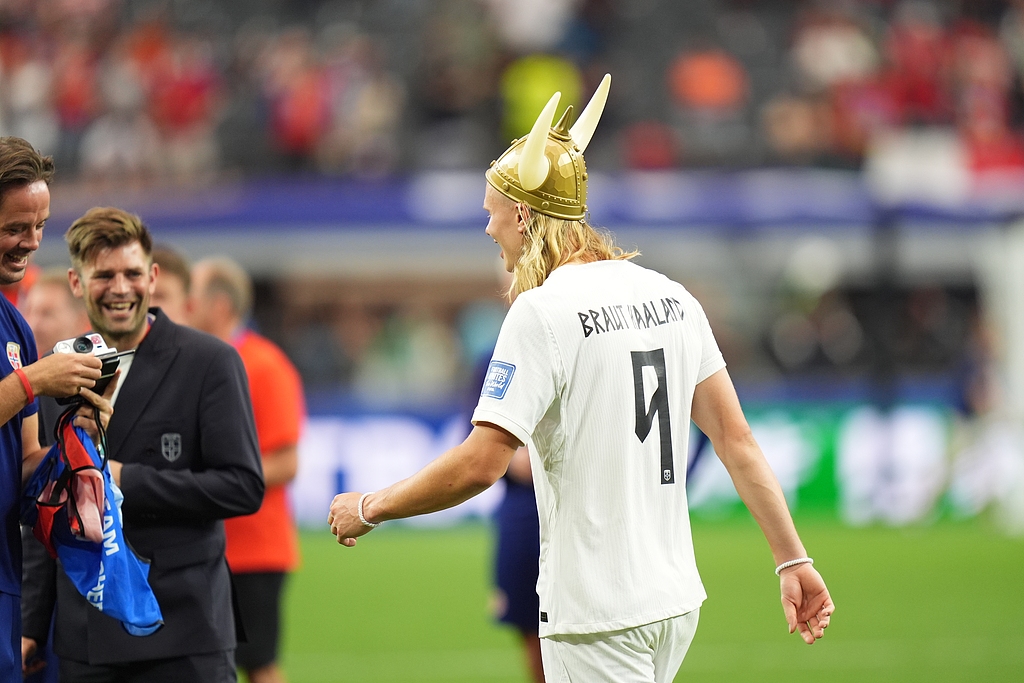
On the first day of July, the long-distance duel between the new twin superstars began once again.
Compared to Mbappé's effortless brace, Haaland, playing earlier in the day, carried the dual mission of scoring and advancing. In Dallas with a feels-like temperature of nearly 37°C, Norway's team and their star player, accustomed to cooler weather, seemed gripped by the heat, humidity, and sweat.
But this chaos lasted only half an hour. The Nordic Vikings, who had rotated 10 players, saw their stamina pay off in the closing stages. Haaland's clinching goal perfectly aligned national honor with personal output. Brazil next? With their goal already achieved, the Norwegians have no pressure — they just want to row!
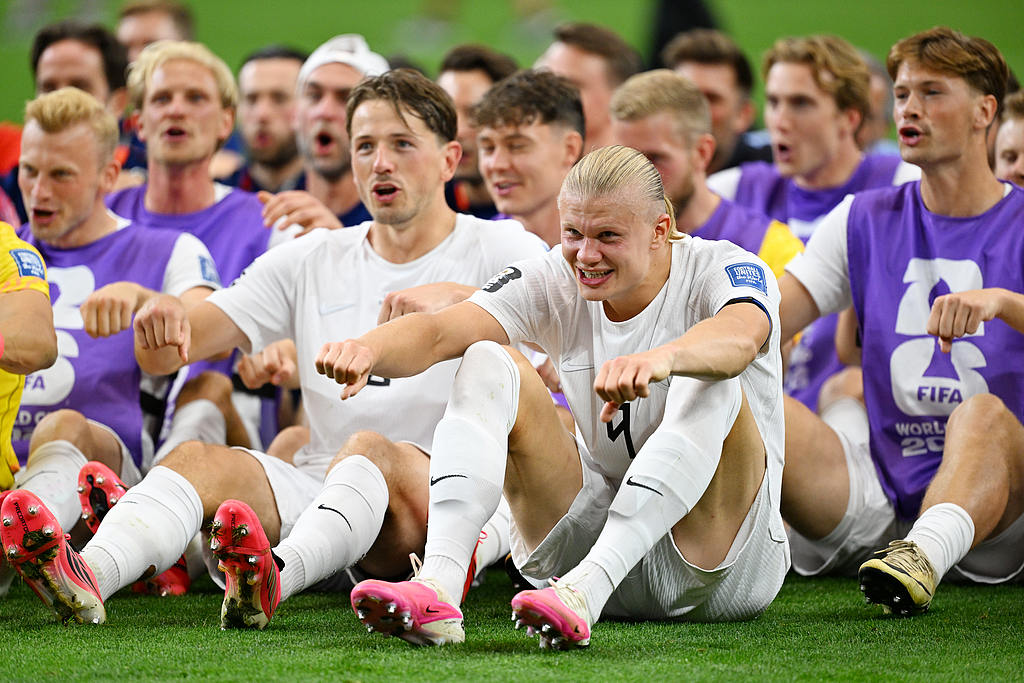
A Nightmare Half Hour, One Strike Decides It All
Looking at just the first 30 minutes, Haaland had only 3 touches — 2 in his own penalty area — looking more like a center-back with faint presence, which was essentially a microcosm of Norway's entire team performance. After an unprecedented 10-player rotation in the final group match, the starters who had rested too long had no match rhythm at all, unable to organize even a decent attack.
Against Côte d'Ivoire's strikerless formation, a noticeably sluggish Norway struggled. Jean-Diomande and Nicolas Pépé repeatedly pulled at both flanks, their clever link-up play causing panic in Norway's box. Their experience beating Senegal seemed completely forgotten.
Yet under pressure, it was still Haaland who nearly stepped up to change the score. His only touch in the opponent's box in the first half was an awkward header on goal. But his next chance was more threatening — after Sorloth's header flick-on, Haaland faced a mostly open net but saw his shot blocked by midfielder Sangaré sliding in to cover.
To borrow a word Haaland hated most during his Manchester City days — today he was once again "in prison."
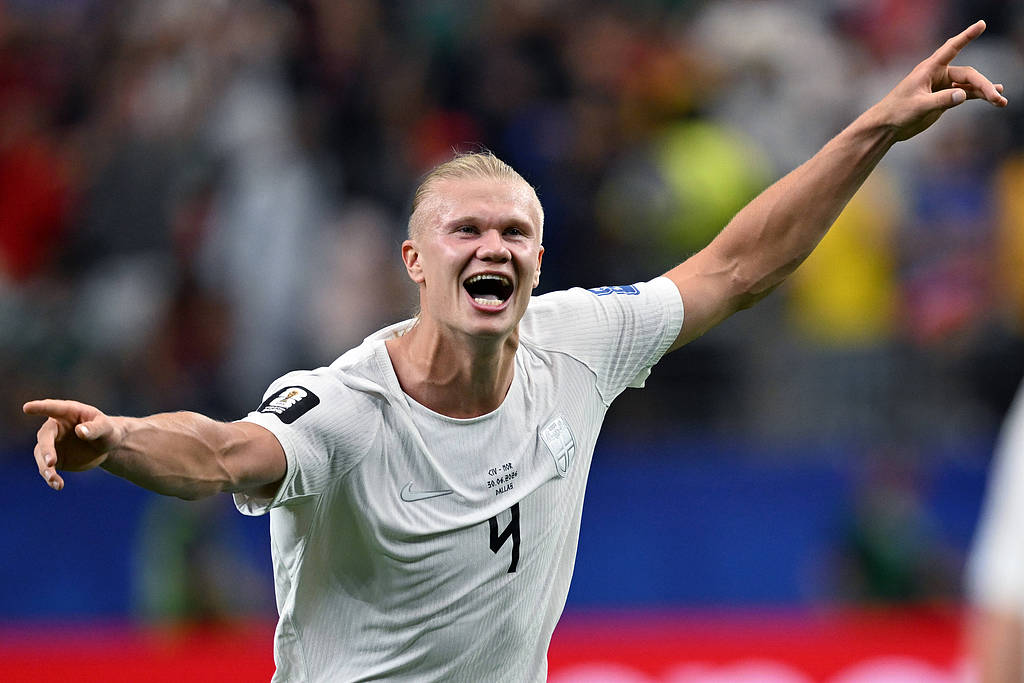
Despite being heavily marked, the Norwegians had real luck on their side. Nusa's world-class strike was rare individual brilliance from this tactically disciplined side. Around the time Amad Diallo equalized, Nicolas Pépé had already stormed the goal several times. Fortunately for Norway, Côte d'Ivoire had an overflow of elite wingers but not a single true finisher.
And what Côte d'Ivoire lacked was precisely Norway's greatest asset. As the game neared its end and a third consecutive extra-time seemed imminent, Bobb delivered a line-breaking through ball, Patrick Berg drew three Ivorian defenders before sending a deadly cross — and there was Haaland in the six-yard box.
Without fully adjusting his stride, Haaland's shot wasn't powerful, even slightly awkward and comical — but it was enough to beat Yahia Fofana's outstretched hands.
Watching his son finally score, old Haaland — his face flushed with tension in the box — leaped up, punched the air in wild celebration, and even shed tears of emotion. On the pitch, all of Norway's outfield players and substitutes rushed toward Haaland. Captain Ødegaard, after the final whistle, lay emotionally on the turf, his shoulders heaving.
Without question, this was an extraordinarily significant victory in Norwegian football history. And the man who created it was still Haaland, who has now scored 60 goals for his country in just 53 matches. Since Gerd Müller's 48 games in 1973, the feat of averaging over a goal per game has returned to earth. With 13 consecutive international matches scoring and 25 goals in that span, given his age and output, Haaland is Ronaldo's most formidable challenger for the international scoring record.
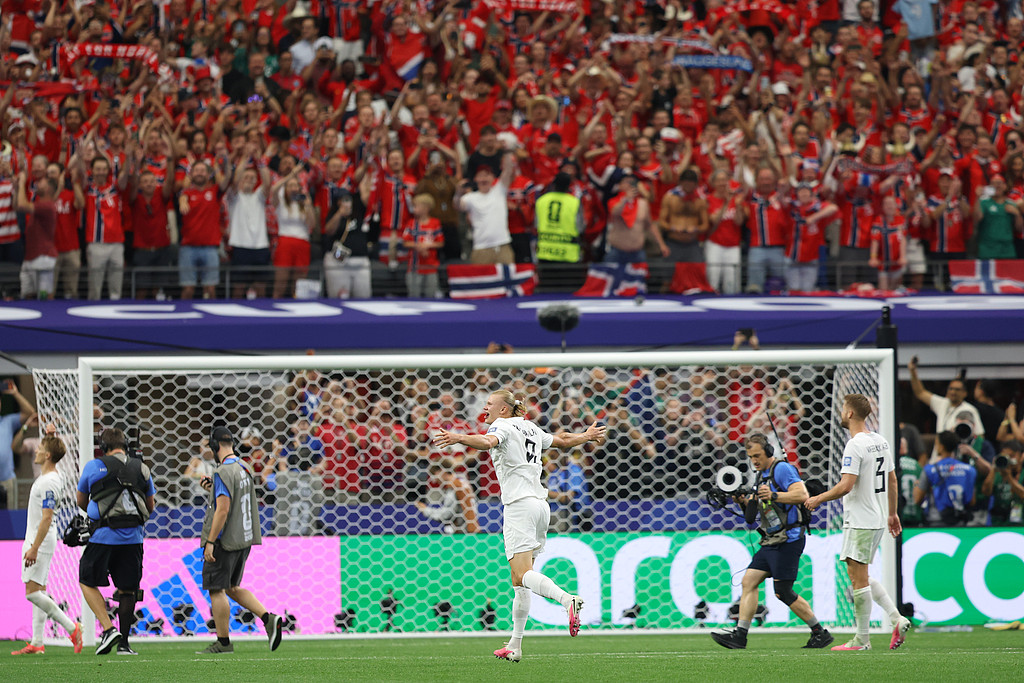
Haaland, But Not Haaland Alone
As a fringe nation in European football, Norway reaching the Round of 16 again sparked nationwide celebration. After the match, the seismograph at the University of Bergen showed clear fluctuations. Professor M. Sørensen, head of the research group at the university's Geophysics department, said: "When Nusa scored, we saw a clear signal. And when Haaland scored the winner near the end, the signal was even stronger."
Normally, the seismograph is used to record earthquakes and other seismic activity. But on Tuesday night local time, it recorded the vibrations of Norwegian fans celebrating their World Cup advancement. "It's not unusual to record such vibrations at concerts or live matches, but this time people were scattered across the city watching the game."
Even Wayne Rooney, a Manchester United legend with no connection to Norway, was drawn in. He said that if Norway reaches the quarterfinals, he would go to the Mersey River and celebrate by rowing like the Norwegians.
"Haaland is the world's top scorer — I wouldn't swap him for any striker." After the match, Norway's coach Solbakken reaffirmed Haaland's value, though the striker himself considered the odds of getting past Brazil extremely low. But Solbakken was confident: "I will prepare a battle plan for him."
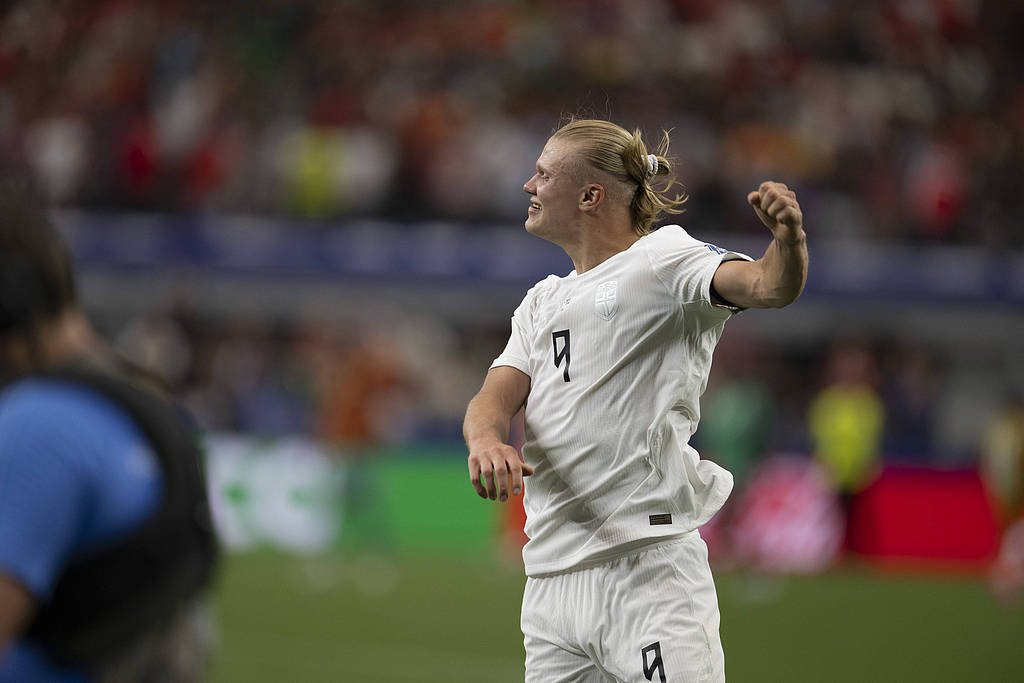
Norway's only two previous knockout stage appearances both ended in elimination by Italy, and they never scored. But after topping their qualifying group — beating their old rivals — Norway's confidence has grown day by day, and Haaland now has more reliable partners around him.
As the second-most important figure in the squad after Haaland, Ødegaard — despite mixed reviews at Arsenal — has always brought full intensity for the national team. After missing the final group match, Norway's captain once again delivered an assist, becoming the first World Cup player to record assists in three consecutive appearances.
Youngster Nusa, who scored the opening goal, not only ended Norway's 88-year knockout-stage goal drought but also set the record for Norway's youngest-ever World Cup scorer. His emergence has also allowed Solbakken to abandon the rigid 4-4-2 from the qualifiers in favor of a more balanced 4-3-3.
Even the defense, which had conceded in every group match, seemed to find its form as the tournament progressed. Goalkeeper Nyland's last-gasp save to deny Amad's curling free-kick aimed at the top corner was one of the best saves of the knockout stage so far. Defensive towers like Ajer and Petersen — who stepped up in Ryerson's absence — also delivered standout performances.
"In our era, Rosenborg stood alone — almost every player aspired to play for them. But now, with Bodø/Glimt's rise, more young players are going abroad, giving us a much deeper talent pool." Solbakken's confidence is rooted in Norway's golden generation of football talent.
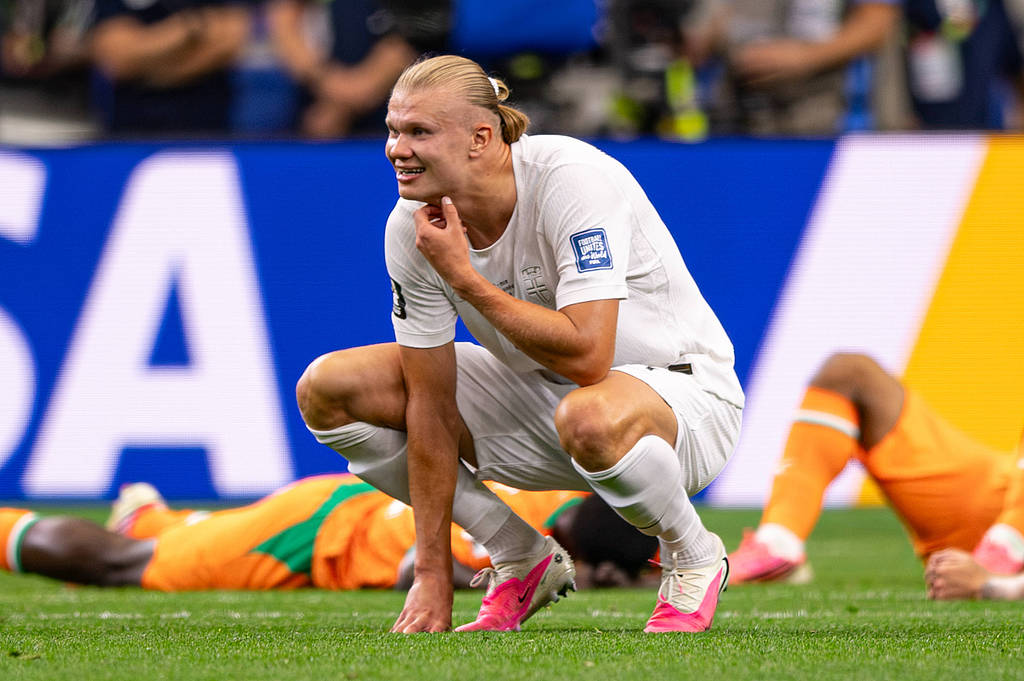
Facing the "Benefactor," Settling Scores with the "Enemy"
Returning to the Round of 16 after 28 years, Norway's post-match rowing celebrations were short-lived. They now face Brazil, who just eliminated Japan and whose mission in this tournament seems to be suppressing dark horses.
Though Norway's World Cup history is sparse, Brazil is one of their most familiar opponents. In the third group match of the 1998 World Cup, already-qualified Brazil was coasting, while Norway — needing a win to edge past Morocco — scored twice in the 83rd and 89th minutes to complete a stunning comeback and snatch second place.
That match saw Brazil field a full-strength but distracted side. T. Flo and Rekdal, the goalscorers, became Norwegian heroes. Norway scored just 5 goals across their 4 games in that tournament — roughly equal to what Haaland alone produces today.
28 years on, all participants from that match have retired. Ronaldo, who failed to score, now appears more often as a VIP guest. The only person who witnessed that comeback still in the game is Norway's coach Solbakken — but he watched the entire match from the substitutes' bench without playing.
For Haaland, who simply cannot stop scoring, facing Brazil means not only testing himself against the Seleção but also settling scores with an old "enemy."
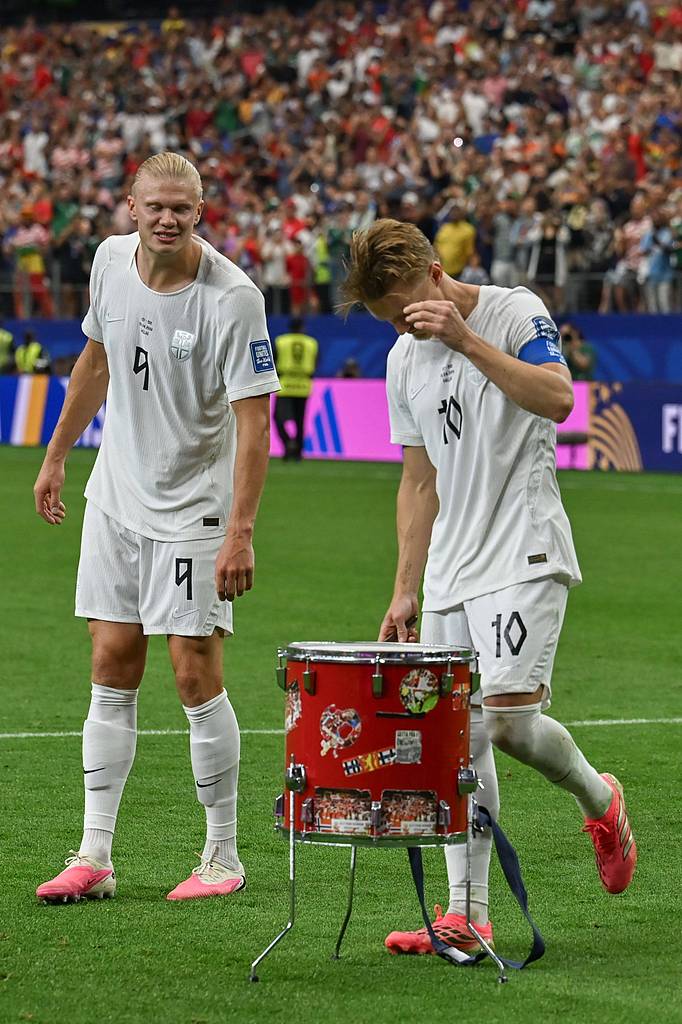
As one of the center-backs who has directly marked Haaland most often on this planet, Brazil's defensive core Gabriel and Haaland have a long history of animosity. In last season's Premier League title decider, Gabriel repeatedly tussled with and disrupted Haaland, even tearing his shirt. The two clashed head-to-head, both earning yellow cards. In the end, Haaland still managed to score despite the close marking.
This was not their first Premier League confrontation. In the first meeting of the 2024-2025 season between Manchester City and Arsenal, Haaland threw the ball at Gabriel's head after scoring a late equalizer, then knocked over Thomas Partey at kickoff and confronted Gabriel. In the return fixture, Gabriel chased Haaland with relentless trash talk — the Norwegian ignored him but certainly remembered.
In 11 previous club encounters going head-to-head with Gabriel, Haaland has 5 wins, 4 draws, and 2 losses, with 6 goals — slightly below his usual output. This is partly due to Arsenal's overall strength, but Gabriel may indeed be the center-back best at containing Haaland.
"Haaland is without doubt a super striker, but I enjoy every duel with him, and I believe he does too. Against him, you have to be strong enough and focused on every battle," the Brazilian center-back once said of the Norwegian phenomenon during the tightest stretch of the Premier League title race.
Now, these two destined lifelong adversaries, who constantly cross paths, are about to meet again.