top-news
When a Young Person Living Alone Loses a Pet They've Raised for 13 Years
In moments of despair, people are easily willing to believe that "connections can be rebuilt."
After her little cat Kaikai passed away, Shen Bei joined some mutual support groups. At first, group members would share their feelings with each other, but as conversations progressed, they would inevitably turn in another direction: some claimed they could "communicate" with deceased pets, others claimed they could "find reincarnations," and some said they could help confirm whether the pet was still by your side.
A price list would quickly arrive — entry-level price starting at 399 yuan per session, with prices ranging into the thousands or tens of thousands.
Shen Bei almost believed it. But she soon discovered that few people in the group actually cared about her pain. Gradually, she stopped talking. After a while, she found herself kicked out of the group.
She then understood: those groups would periodically purge "inactive" members — or rather, people unwilling to spend money. It dawned on her: after a pet passes away, many people simply want to "lick each other's wounds" in a support group, but grief can also become a business.
At that time, Kaikai had just left her. She kept replaying that last night, trapped in the same image: Kaikai lying in the hospital, dying in pain. She knew those claims in the support groups sounded hollow, even absurd, but at least they acknowledged one thing — the cat she lost was not just a pet.
Shen Bei remembers that on the day Kaikai died, her family urged her to dispose of the body quickly, saying, "it'll stink by tomorrow." A colleague who noticed she wasn't doing well asked, "It's just a cat, really?" She felt dismissed.
Shen Bei realized what truly trapped her was the feeling that her grief was not acknowledged. Even she herself was once confused, "Why am I so upset? Why has it been so long and I still can't get over it?"
Shen Bei is a member of the post-90s generation, and in her view, this is not just her story alone.
According to the "2026 China Pet Industry White Paper," in 2025, the number of urban dogs and cats reached 126 million. In terms of pet ownership and consumer behavior, the trend toward younger demographics is increasingly evident. Among pet owners, post-90s account for 42.7%, post-00s for 26.3%, and post-80s for 24.5%.
For the single-child generation and young people living alone for extended periods, pets have become an important emotional outlet. Especially in cities, Shen Bei feels she constantly faces fragmented and heavy pressures, while pets do not judge or rush her — they simply wait at home every day, accompanying her, as if woven into the fabric of her daily life.
Around her, many colleagues and friends have also gotten cats. But she got one earlier. She thinks that as the first batch of pets raised by this generation enters old age, more and more people will encounter similar farewells, without necessarily knowing how to face them.
One month after Kaikai's departure, Shen Bei walked into a psychological counseling room. She continued counseling for eight months. After several more months, she gradually returned to herself, re-entering a forward-moving life. In the real world, she tried to build new connections: friends, work, writing, travel, and understanding herself.
She still misses Kaikai. The difference is that she is learning to keep her longing in real life, rather than remaining trapped in the past.
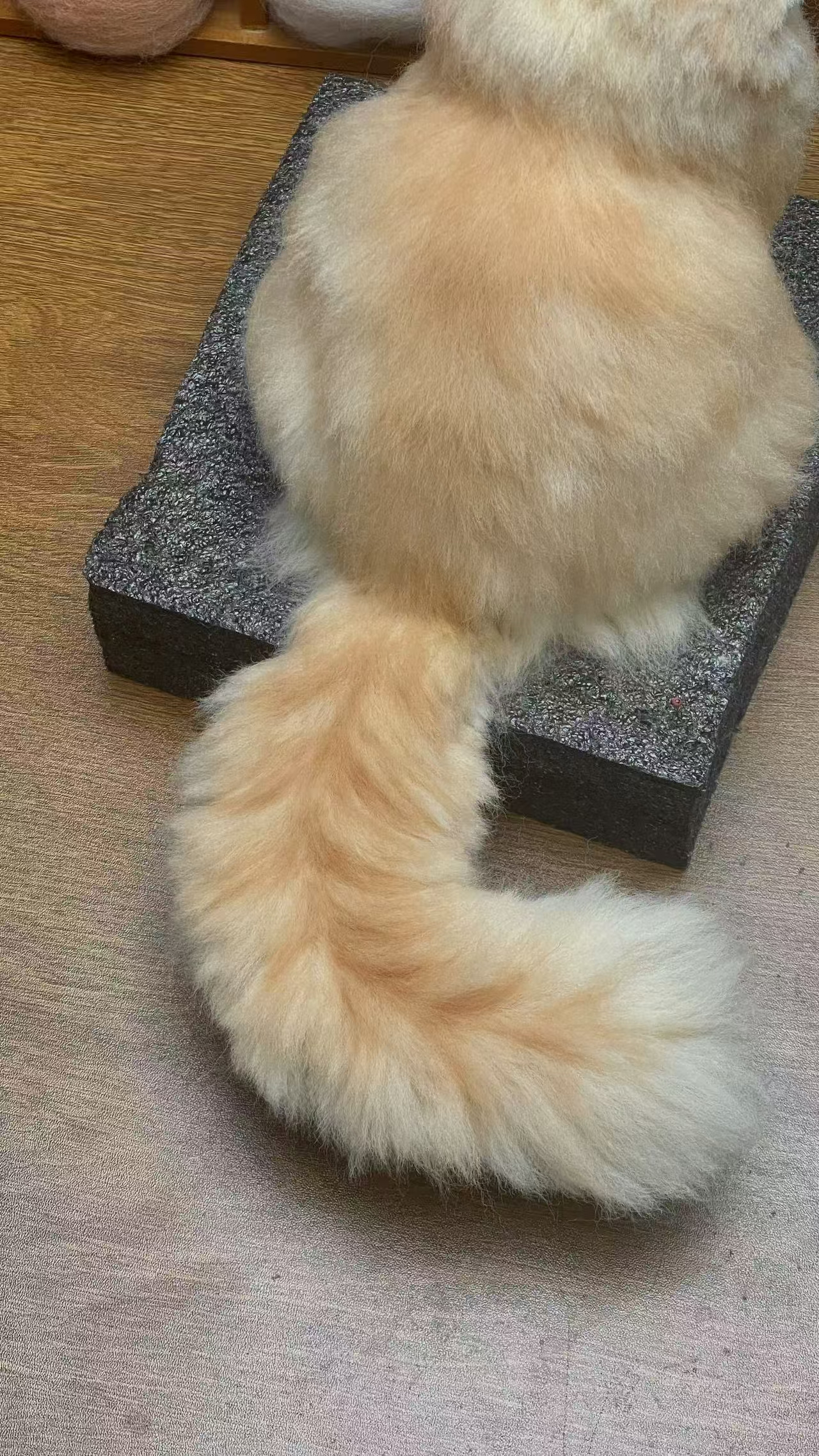
Kaikai. All images in this article are provided by the interviewee.
Departure
Kaikai was over 13 years old when he passed away. It happened in 2024. At first, he just skipped two meals — but for a cat who had always been greedy, this was very unusual. After spotting this on her automatic feeder's monitor, Shen Bei took leave from work and rushed Kaikai to a pet hospital with decent online reviews.
Shen Bei recalls that the hospital first said Kaikai had an intestinal blockage but couldn't pinpoint the exact cause. After observation and anti-inflammatory treatment, Kaikai seemed to improve temporarily. Later, the doctor decided to operate. She hesitated — Kaikai was already 13, which is old age for a cat.
The doctor's confidence made her trust him. According to Shen Bei, during the surgery, the doctor opened Kaikai's abdomen, removed the tissue causing the blockage, and sent it for testing.
Right after the surgery, Kaikai seemed fine, but then deteriorated rapidly. After Kaikai passed away, Shen Bei consulted other doctors on various online platforms and realized the hospital's care might have been problematic: during treatment, the doctor administered medication and water every 20 minutes through a tube. When the liquid couldn't be fed any more, the doctor made another incision in Kaikai's neck to insert a tube directly to his stomach.
On the night Kaikai died, the attending doctor was not there, and the on-duty doctor refused to take over. "He watched me as he died," Shen Bei said.
In the month that followed, she kept replaying everything: "Why did I go to that hospital? Why did I trust that doctor? Why did I agree to the surgery? Why didn't I make a different decision?" She wanted to retrace every fork in the road, to find the point where Kaikai's death could have been avoided.
At the same time, another emotion took hold: she hated that doctor and the hospital staff, hated that they wouldn't apologize even after Kaikai's death. But more often, her hatred would turn back on herself, becoming deeper self-blame.
In the counseling room, psychologist Luan Lan often hears these guilt-ridden voices. Pet owners enter a cycle of rumination: "What if I had chosen a different hospital, gone earlier, gone later, not made this decision — would the outcome have been different?" Luan says this compulsive recalling and repeated attribution keeps people stuck in the traumatic scene, unable to move on.
Shen Bei's body reacted violently. She had always been prone to anxiety, and after Kaikai's departure, her anxiety spiraled out of control. Her back pain worsened, she was in so much pain that she went to the hospital, but no cause was found. She began suffering from severe insomnia and frequent nightmares. At work, she would suddenly "blank out" — one second she had feelings, the next she felt like an empty shell. Sometimes she felt like she was standing beside her own body, watching another version of herself speak and act.
Once, during a meeting, she was so anxious that she picked at her hand under the table. When she felt something sticky and looked down, her thumb web was bloody and mangled. She froze — she hadn't felt any pain at all.
"At that moment I got a little scared," she said. "I thought, am I losing my mind?"
She later learned it was dissociation caused by severe grief and trauma.
Luan Lan says that grief after losing a pet often doesn't just manifest as crying and low mood — it also appears on a physical level: insomnia, loss of appetite, chest tightness, heart palpitations, difficulty concentrating, and even intensified physical pain. Especially when grief is not understood, these reactions become more subtle and harder to recognize. These emotions can also affect one's state at work and in interpersonal relationships.