top-news
Over 20 Cameras on a 2-Kilometer Road: Media Calls for 'Reasonable and Moderate' Rural Security Construction
The construction and use of public security video systems should adhere to principles of unified planning, reasonable moderation, and safety controllability, and must be necessary for maintaining public security. In other words, more surveillance is not always better.
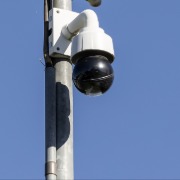
Recently, a village in Yunnan was reported to have surveillance cameras installed on utility poles along the road into the village, with over 20 monitoring devices deployed along approximately 2 kilometers of road. Villagers reported that livestock theft and crop theft frequently occurred in the area, and the cameras have served as a deterrent against theft. Village officials responded that the cameras were installed by the village committee in 2023, and only village officials can view the footage. The local police station said it is looking into the matter (according to a July 2 report by The Beijing News).
Over 20 cameras on a 2-kilometer road — one every less than 100 meters on average. How should we view this? Villagers say it's good because it effectively prevents theft; but outsiders who see it wonder: is it really necessary to have so many?
Objectively speaking, public safety is a hard requirement — there's no dispute about that. The village is located in a remote area with relatively weak public security forces. The village committee's original intention of densely installing surveillance equipment along the main road into the village to protect villagers' property and improve rural security is a very practical and immediately effective choice.
However, decisions on public affairs cannot be supported solely by "good intentions" and "effectiveness" — they also require regulation, procedures, and oversight. Are over 20 surveillance devices on a 2-kilometer road reasonable and necessary? Is there clear institutional control over the claim that "only village officials can view the footage"? Who oversees the implementation of these systems? This is not about distrusting individual village officials, but rather recognizing that unchecked power always carries hidden risks.
The "Regulations on the Management of Public Security Video and Image Information Systems," effective from April 1, 2025, clearly stipulate that the construction and use of public security video systems should "adhere to unified planning, reasonable moderation, standard guidance, and safety controllability" and be "necessary for maintaining public security." In other words, more surveillance is not always better — the key lies in whether cameras are installed based on actual needs and scientific deployment. Without prior assessment, even well-intentioned measures may deviate from actual needs, wasting resources and causing discomfort among the public.
Of course, there are currently no specific quantitative regulations on how many cameras constitute "reasonable and moderate." Raising questions does not mean denying the value of rural security construction or nitpicking grassroots governance — it is about maintaining prudent oversight of public resource construction and utilization based on public interest considerations and personal information protection.
While "over 20 surveillance devices on a 2-kilometer road" seems questionable, the matter is still under investigation, and it is too early to draw conclusions. The priority is to clarify several key issues: Does the installation of these monitoring devices follow the principle of reasonable moderation? Was the installation procedure compliant? Are there institutional safeguards for footage management? Is data storage secure? How are villagers' privacy rights protected? In their investigation, relevant authorities should recognize the practical benefits of security construction for grassroots public safety while strictly examining its compliance and reasonableness in accordance with laws and regulations.
Rural security construction is important, but governance approaches that are tailored to local conditions, scientific, and standardized are equally indispensable. The word "security" carries great weight, but there also needs to be a voice reminding us of the importance of the four words: "reasonable and moderate."