world
Exclusive Interview: Former White House Science Advisor Says Market Forces Trump Policy Headwinds in US Clean Energy Expansion
After Donald Trump returned to the White House in 2025, U.S. federal climate policy once again swung dramatically. This year, the energy supply anxiety triggered by the Iran crisis has reignited tensions between "energy independence" and "energy transition." At this moment of profound uncertainty, the international community is asking: Is global climate action losing its direction?
Meanwhile, the AI-driven boom in data center construction is facing community backlash across the United States, and Global South nations are growing increasingly wary of the environmental costs behind technological prosperity. Around these critical issues, The Paper recently interviewed Kelly Sims Gallagher, Dean of The Fletcher School of Law and Diplomacy at Tufts University and a professor of energy and environmental policy, who was in China attending the World Economic Forum. A renowned climate and energy policy scholar, former U.S. government climate affairs advisor, and a key participant in Sino-U.S. climate diplomacy, Gallagher has spent over two decades studying how policy drives clean energy technology diffusion, China's energy transition, and the interactions of Sino-U.S. climate policy. During the Obama administration, she served as a senior advisor at the White House Office of Science and Technology Policy and as a senior China advisor in the Office of the Special Envoy at the U.S. State Department, deeply involved in the Sino-U.S. climate negotiations leading up to the Paris Agreement.
In the interview, Gallagher reviewed the evolution of global responses to the climate crisis since the 1990s, when the IPCC (Intergovernmental Panel on Climate Change) confirmed that "climate change is caused by human activity," and bluntly stated that the impacts of climate change are coming "faster and stronger than scientists initially predicted." She believes that although the Trump administration is attempting to reverse the green policy legacy of the Biden era, the expansion of U.S. clean energy is now largely driven by market forces. "Market forces have surpassed political resistance," she said. Against the backdrop of intensifying geopolitical conflicts, the energy security crisis may push some countries to temporarily return to coal, but it could also accelerate their shift toward local clean energy sources.

"We Have Been Warned"
The Paper: Since the 1990s, what journey has the world gone through in responding to the climate crisis?
Gallagher: I became interested in climate change when I was in college in the early 1990s, when not many people were paying attention to this field. In 1995, the IPCC released its Second Assessment Report, and I attended the rollout event in Baltimore. That conference had a profound impact on me. It was the first time the IPCC confirmed that the climate change we are observing can indeed be attributed to human greenhouse gas emissions.
As I sat there listening to their predictions, I had a very strong feeling: we had been warned. The general public had already been informed in a very compelling way back in 1995 about these scientific facts.
Most of the impacts we are seeing now, like the extreme heatwaves in Europe, had already been predicted back then. The only thing I would add is that climate change impacts today are stronger and arriving earlier than scientists initially predicted. In other words, climate change seems to be turning out even worse than originally thought. I truly believe the world has waited too long to take serious action.
The Paper: If we look at policy actions, who has done the best? Where do Europe, the U.S., and China stand?
Gallagher: If we're talking about action, I would give the most credit to Europe. Europe has done the most in terms of emissions reduction. Overall, Europe's emissions are now about 35% to 40% below 1990 levels. That's already a very significant reduction.
In comparison, the U.S. has developed a pattern since that period of first participating in negotiations and signing agreements, then withdrawing under different administrations. So U.S. emissions reduction progress hasn't been as significant, but there has been some progress. U.S. emissions are now about 6% to 10% below 1990 levels, and they peaked around 2005.
Now the whole world is waiting for China to reach its carbon peak. Many people are asking: Has China already peaked? Is it in a plateau period? But for me, the more important question is: What happens after China peaks? Will China follow a path like the U.S., with some fluctuations but an overall downward trend? Or will it be more like Europe, with a steeper decline after the peak? That will be crucial.
The Paper: Europe is often seen as a pioneer in addressing climate change, but in recent years, facing frequent extreme weather, Europe and the entire Western world seem severely underprepared for climate adaptation. Why is that?
Gallagher: That's an excellent question, and I completely agree with your observation. I go to Europe almost every summer, and I'm always shocked by the same thing: Why don't they universally have air conditioning yet? Why are they so unprepared? But this isn't just Europe's problem. I think most countries in the world have similar situations.
I have a few explanations. First, in the early days of the global response to climate change, there was a strong preference for "mitigation." People didn't even want to talk about "adaptation" because it was seen as admitting that mitigation efforts had failed — a kind of defeatism. I had this bias myself when I was younger. It was my students who convinced me that climate change is already happening, and we need to work on adaptation while continuing mitigation.
Second, people overlooked the synergy between mitigation and adaptation. For example, when a strong typhoon or hurricane hits, if a community has renewable energy plus storage (like distributed solar, microgrids, and battery storage), the grid can recover quickly, giving people tremendous resilience. Now many ordinary American households are also starting to buy rooftop solar and batteries.
Frankly, on a global scale, I can't point to any country that has done perfectly on climate adaptation policy. However, many developing countries (like Ethiopia, which has very low emissions but is highly vulnerable to drought) are quite rightly focusing their main efforts on adaptation.
"The Choice Between Coal and Green Energy"
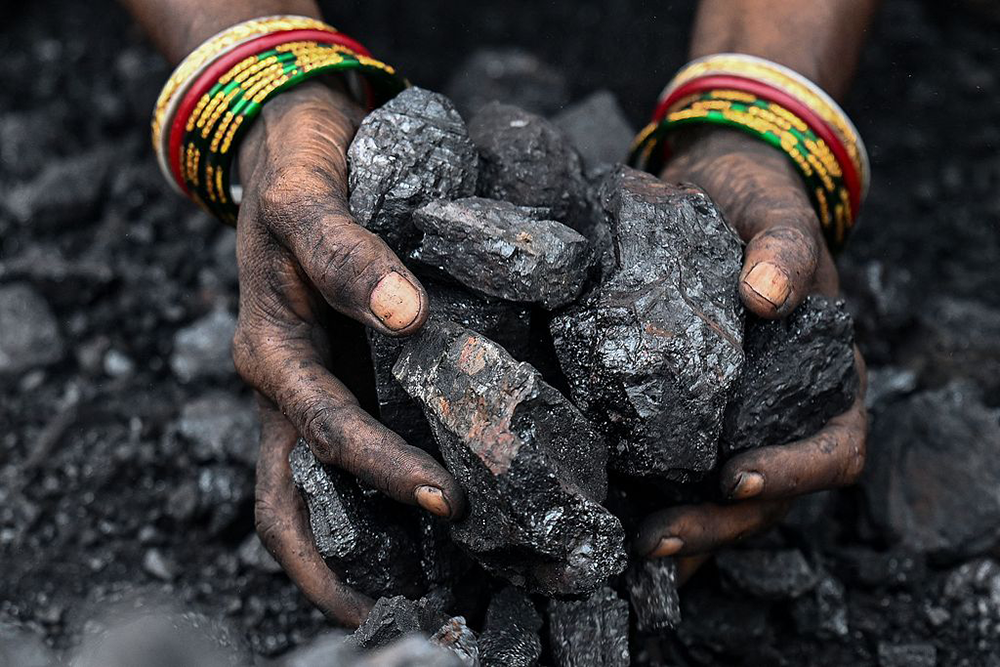
The Paper: Against the backdrop of the U.S.-Israel-Iran conflict and energy security anxiety, many are debating whether a major fossil fuel security crisis will accelerate the global transition or force some countries to fall back on coal. What's your view?
Gallagher: Frankly, it's both.
The Strait of Hormuz is a critical chokepoint for global oil and gas transport. Everyone knows this, but people have short memories. Once oil prices drop, everyone forgets their vulnerability. It's only when prices surge or supply is actually disrupted that people wake up again.