culture
The "Dirtiest Fruit" Ranked #1: Many People Love Eating It in Summer! Be Careful - One Bite Could Make You Sick
As the hot summer arrives,
Street-side cut fruit has become increasingly popular.
But many people overlook the fact that
This seemingly convenient fresh-cut fruit
Can very likely cause gastrointestinal discomfort.
Moldy Fruit Passed Off as Good
When fruit goes slightly bad, vendors face a dilemma: they can't sell it as is, but throwing it away seems wasteful. Some resourceful merchants simply cut away the rotten parts, leaving the seemingly good portion to be made into cut fruit. This practice of passing off inferior goods is hard to detect with the naked eye.
Rotten fruit typically falls into two categories: one is local tissue damage caused by frost or bruising; the other is decay due to improper storage. While the latter may appear to have only a small spoiled area, the entire fruit may already be contaminated. Even after cutting off the spoiled part, consumption is not recommended.
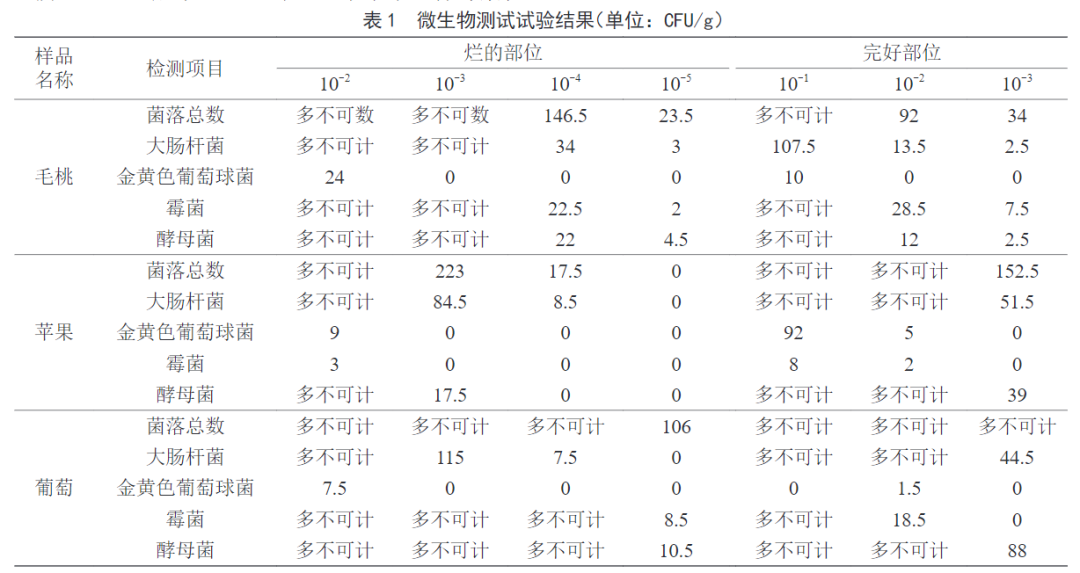
An organization collected samples of slightly rotten fruit from the market — including common varieties like peaches, apples, and grapes — for microbial and mycotoxin analysis. The results showed that once a fruit is partially rotten or moldy, the entire fruit has high levels of microbial contamination, including E. coli, Staphylococcus aureus, and mold. Many slightly rotten fruits exceed bacterial limits even in the seemingly intact parts — the contamination is just invisible to the naked eye.
Gansu Agricultural University conducted a detailed study on patulin in rotten apples. The research showed that the larger the rotten area of an apple, the higher its patulin content. Moreover, patulin spreads to surrounding apple tissue — the farther from the rotten spot, the lower the patulin concentration, and the closer, the higher. The content increases with the diameter of the rotten area, and patulin can spread throughout nearly the entire apple.
Fruit spoilage is not just a surface phenomenon; it silently permeates every part. The best course of action is to discard the whole fruit.
Concerning Hygiene Conditions
- Not Washing Hands Thoroughly
Our hands appear clean but actually harbor many bacteria, with the dominant hand carrying even more. If hands are not thoroughly cleaned or disposable gloves are not worn before cutting fruit, bacteria from the hands can contaminate the fruit.
Some people also look at their phones while cutting fruit. Phone surfaces commonly harbor pathogens such as Staphylococcus epidermidis, E. coli, Enterococcus, Candida, Staphylococcus aureus, and Salmonella, which can easily contaminate food.
- Unclean Knives and Cutting Boards
Knives and cutting boards that have come into contact with fruit peels can breed bacteria if not properly cleaned. Using them later to cut fruit flesh can lead to cross-contamination. The larger the contact area, the faster the spoilage.
- Not Peeling Fruit
Some fruits, even if the skin is not eaten, should still be washed before peeling. Cantaloupe, for example, may carry Listeria.
- Not Wearing a Disposable Mask
Studies show that normal speaking, coughing, and sneezing all release droplets. Larger droplets can travel up to 2.5 meters horizontally before landing, while smaller droplets evaporate completely into droplet nuclei, remaining airborne for long periods and traveling with air currents. Without proper mask-wearing, droplets can contaminate food.
Unknown Preparation and Storage Times
For cut fruit displayed at street stalls, we have no idea when it was prepared or how long it has been sitting. The degree of fruit spoilage increases with storage time, as does the food safety risk.
A 2017 study published in Foodborne Pathogens and Disease compared the growth of Salmonella and E. coli in fresh-cut cantaloupe, honeydew melon, mango, watermelon, dragon fruit, papaya, and pineapple stored at different temperatures.
The results showed that Salmonella and E. coli in fresh-cut fruit showed no significant change over six days when stored at 5°C. However, when stored at 25°C, the bacterial count of both pathogens could increase fourfold in a single day, with numbers continuing to rise over time.
This demonstrates that the probability of bacterial contamination in street-side cut fruit is not low. The longer the storage time and the higher the temperature, the greater the risk of food poisoning.
Street-side cut fruit is convenient,
But it's best to keep your distance from unlicensed stalls.
Especially for children, the elderly, pregnant women,
and others with weaker immune systems,
Extra caution is needed when purchasing.
Share this reminder with family and friends~
Source: China Science Communication (Kepu China)
Editor: Yu Siwei
Reviewer: Hu Qiongyao
Produced by: Hubei Daily Media Convergence Center