top-news
China Places 20 Japanese Entities on Export Control List: What These Entities Are
On June 29, the Ministry of Commerce issued a notice placing 20 Japanese entities on an export control list and another 20 on a watch list.
In accordance with the Export Control Law of the People's Republic of China and the Regulations on the Export Control of Dual-Use Items of the People's Republic of China, as well as other relevant laws and regulations, and for the purpose of safeguarding national security and interests and fulfilling international obligations such as non-proliferation, it was decided to list 20 Japanese entities — including the National Institute for Defense Studies — that are involved in enhancing Japan's military capabilities on the export control list. The measures following inclusion in the control list mainly consist of two aspects: first, export operators are prohibited from exporting dual-use items to the aforementioned entities; second, foreign organizations and individuals are prohibited from transferring or supplying dual-use items originating from the People's Republic of China to the aforementioned entities. Relevant ongoing activities shall be immediately halted.
China's Ministry of Foreign Affairs responded on the 29th to the inclusion of certain Japanese entities on the export control list, stating that China's move is entirely legitimate, reasonable, and lawful, aimed at resolutely curbing Japan's "new militarism" recklessness, and expressing hope that Japan would recognize its mistakes, correct its wrongful actions, truly reflect, and return to the right track.
The 20 Japanese entities placed on the export control list can be mainly divided into five categories: first, research and development institutions represented by the National Institute for Defense Studies (NIDS) and a series of military equipment research institutes; second, the Japan Steel Works (JSW) military-industrial manufacturing system; third, the Mitsubishi Group's electronic defense and military-industrial manufacturing system (including Mitsubishi Electric and its subsidiaries, Mitsubishi Heavy Industries and its subsidiaries); fourth, the aerospace military-industrial manufacturing system represented by Kawasaki Heavy Industries; and fifth, other small precision manufacturing suppliers.
A Japanese domestically produced P-1 anti-submarine patrol aircraft in flight. Institutions and companies such as Japan's Ministry of Defense's Acquisition, Technology & Logistics Agency (ATLA) aerospace equipment research institute, Kawasaki Heavy Industries, Mitsubishi Heavy Industries, and Nippon Aircraft Co., Ltd. all participated in the development and manufacturing of this aircraft.
Japan Ministry of Defense R&D Institutions
According to public information, the National Institute for Defense Studies (NIDS) was established in 1952 and is the core policy research institution of Japan's Ministry of Defense, primarily conducting policy-oriented research on security and military history. Furthermore, the institute's official website also describes it as a "strategic university-level advanced officer training institution for the Self-Defense Forces," providing research programs annually to senior SDF officers and senior administrative officials of the Ministry of Defense.
The institute regularly publishes strategic research reports such as the "China Security Strategy Report" and the "East Asian Strategic Overview," hyping the "China military threat."
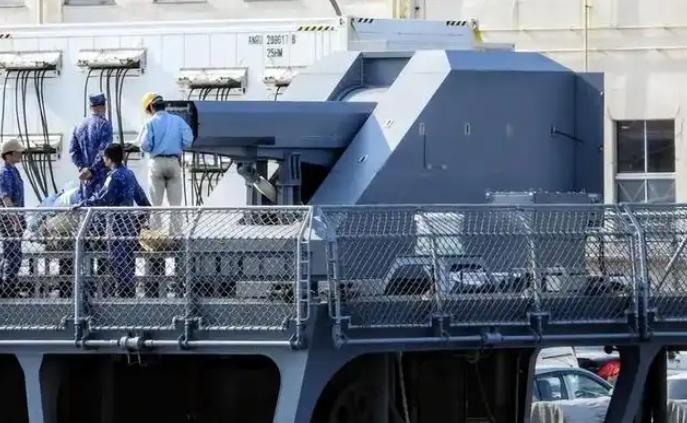
The Ground Systems Research Center (GSRC), affiliated with Japan's Acquisition, Technology & Logistics Agency (ATLA), conducts research work in various fields including weapons, ammunition, bulletproof and blast-resistant structures, vehicles, vehicle equipment, engineering equipment, and personal equipment. The center focuses on developing electromagnetic railguns, electromagnetic pulse systems, and high-impact resistance warheads. An electromagnetic railgun developed by the center was deployed on the SDF experimental ship "ASUKA" for live-fire testing in April last year. The railgun will be used in the future to "shoot down hypersonic missiles."
Japan publicly displays an electromagnetic cannon under development, which will be used to intercept hypersonic missiles.
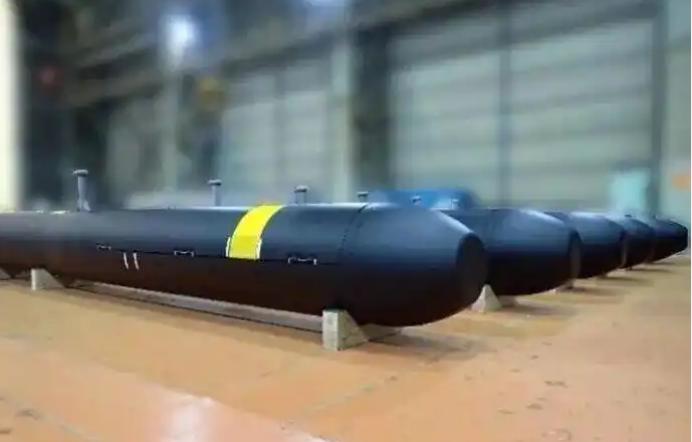
The Naval Systems Research Center (NSRC), also under Japan's ATLA, is responsible for the research, development, design, and technical evaluation of naval vessels, underwater weapons, and advanced maritime combat technologies. The center is the core R&D unit for Japan's large-scale underwater unmanned vehicles and submarine projects. The UUV was developed in cooperation between the research center and Mitsubishi Heavy Industries, aiming to achieve long-duration endurance and autonomous underwater operation capabilities.
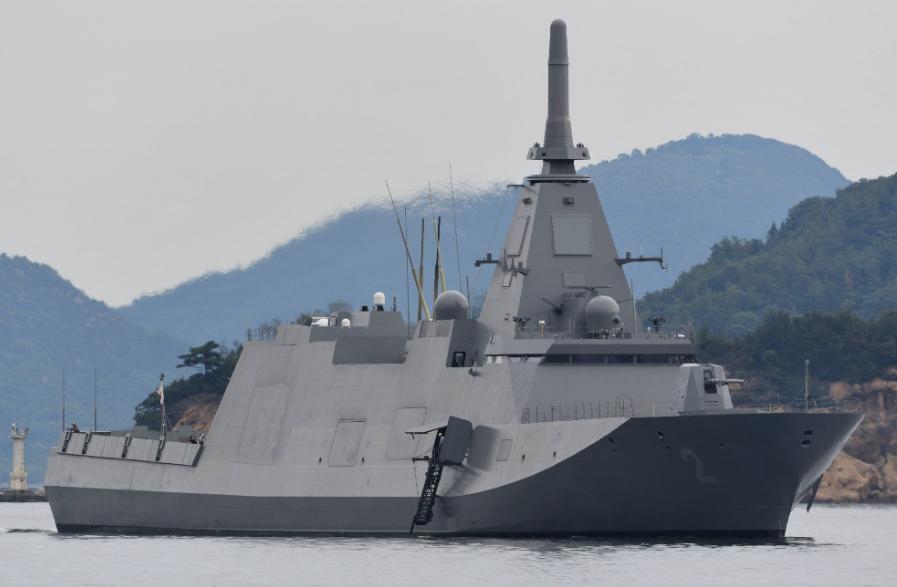
The center also participates in weapons technology research and development for the "Soryu"-class and "Taigei"-class submarines, new-generation frigates (FFM), and new torpedoes. The "Taigei"-class is Japan's newest submarine, equipped with lithium-ion batteries, providing underwater endurance far exceeding conventional submarines without AIP systems, with further improved comprehensive combat performance.
On January 20, 2026, Japan's Maritime Self-Defense Force confirmed that it had officially received and commissioned a domestically produced small unmanned underwater vehicle (UUV) designed specifically for underwater operations.
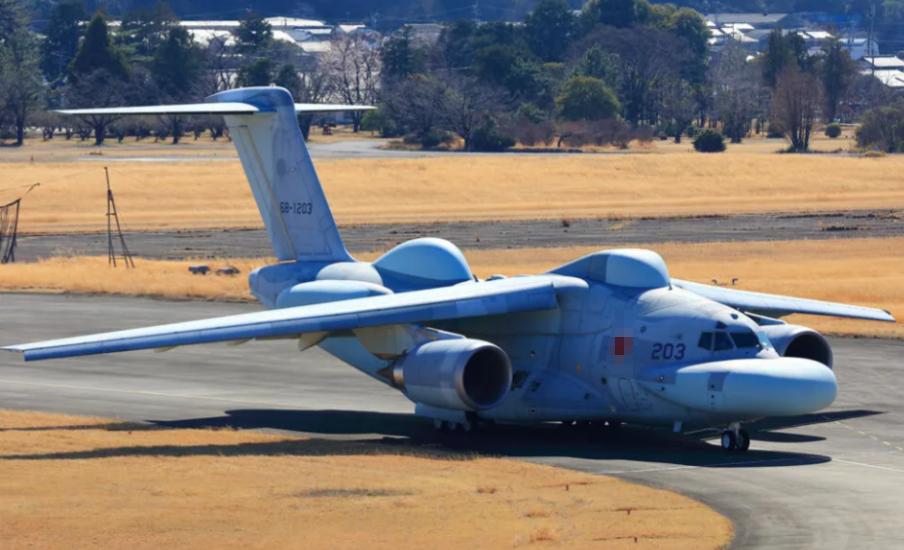
The Aerospace Systems Research Center (ASRC), also under ATLA, is responsible for the research, development, testing, and evaluation of military aircraft, engines, missiles, and avionics equipment. The research center includes three departments, responsible for aircraft, engine, and missile research respectively. The center's key research projects include manned-unmanned aerial vehicle cooperative flight systems and artificial intelligence and advanced autonomous systems for flight decision-making and real-time situational awareness.