business
New Fuel Refueling Regulations Coming: Instant Invoicing from November 2026
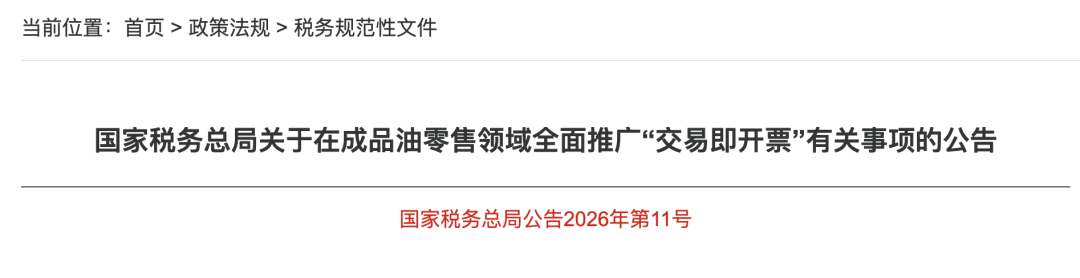
"Instant Invoicing on Transaction"! New Fuel Refueling Regulations Are Here
Source: State Taxation Administration
Original (Chinese): https://fgk.chinatax.gov.cn/zcfgk/c100012/c5250347/content.html
Implementation Timeline
- Announcement: June 8, 2026 — effective immediately upon publication
- Transition Period: June 8, 2026 – October 31, 2026 — all gas stations complete system upgrades
- Full Rollout: November 1, 2026 — all licensed fuel retail outlets nationwide enforce the new rules
Core Points of the New Regulation
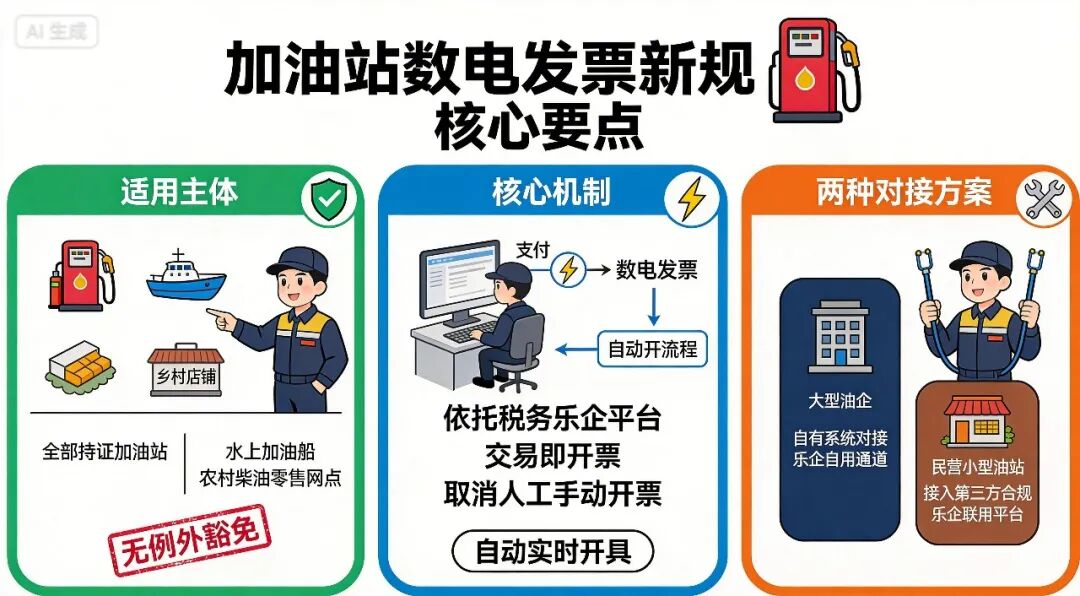
✅ Applicable Entities
All licensed gas stations, marine refueling vessels, and rural diesel retail outlets — no exceptions or exemptions.
✅ Core Mechanism
Leveraging the tax authority's Lèqǐ ("Happy Enterprise") digital platform, after fuel payment is completed, digital (electronic) invoices are automatically generated in real time, achieving "transaction-based instant invoicing" and eliminating manual invoicing.
✅ Two System Integration Options
- Large fuel enterprises: Connect their own systems directly to the Lèqǐ platform via dedicated channels
- Small private stations: Access the Lèqǐ platform through compliant third-party shared platforms
Implementation Scenarios for "Transaction-Based Instant Invoicing" in Fuel Retail
"Transaction-Based Instant Invoicing" covers different transaction scenarios in fuel retail:
For buyers who pay via third-party payment platforms or internet platforms: invoices are generated instantly upon payment ("Pay-and-Invoice").
For buyers who pay via fuel cards or cash: invoices are generated instantly upon transaction completion ("Transaction-and-Invoice").
✅ Scenario 1: After refueling, the buyer pays via a third-party payment platform. The Lèqǐ platform automatically generates an invoice upon payment completion.
Example 1: Individual A refuels at Station F and pays 200 yuan via a payment platform's scan feature. The shared platform aggregates transaction data (fuel type, quantity, unit price) and payment amount (200 yuan) to automatically generate a standard VAT invoice. A can pre-set invoice header info (default: "Individual").
✅ Scenario 2: The buyer pays through an internet platform after refueling. The platform immediately issues an invoice to the buyer with the gas station as the seller.
Example 2: Individual A finds Station G on Internet Platform X, refuels, and pays 200 yuan through Platform X. The platform automatically generates an invoice with Station G as the "Seller" and 200 yuan as the "Total Amount".
✅ Scenario 3: The buyer tops up a fuel card at the station and amounts are deducted automatically when refueling. The buyer can choose either to have a non-taxable invoice at the time of top-up OR a regular/special VAT invoice at the time of refueling — only one option can be chosen.
Example 3: Individual A tops up 1,000 yuan at Station H for a fuel card and refuels for 200 yuan. A can choose to invoice the top-up amount: the system generates a non-taxable invoice with Station H as the seller for 1,000 yuan. Subsequent fuel purchases will not generate additional invoices.
Example 4: Individual A tops up 1,000 yuan at Station H but chooses to invoice per refueling. The system marks the 1,000 yuan top-up (no invoice issued for it) and generates a standard invoice for 200 yuan for this refueling. Subsequent refuels will each generate invoices until the 1,000 yuan balance reaches zero.
✅ Scenario 4: The buyer pays by cash, credit, or corporate bank transfer after refueling. Based on actual transaction data, the station generates invoices via the Lèqǐ platform.
Example 5: Entity B refuels at Station J (Lèqǐ direct-connect) and pays 200 yuan in cash. Upon completion, the system automatically generates a standard or special VAT invoice with Station J as the seller for 200 yuan.
Example 6: Entity B refuels at Station K (Lèqǐ shared platform) and pays 200 yuan in cash. Station K manually supplements payment info on the shared platform to generate the invoice.
What Is the Lèqǐ Platform?
The Lèqǐ platform is a digital platform built by the State Taxation Administration based on open-rules and unified standards, directly connecting to enterprises' own information systems. It provides functions including access application, capability subscription, testing verification, rule application, and authorization management.
Penalties for Non-Compliance
Stations that fail to upgrade within the transition period, use private QR codes for payment acceptance, or hide revenue for tax evasion will face fines, back taxes with surcharges, and penalties according to regulations.
Current Fuel Prices in Shanghai
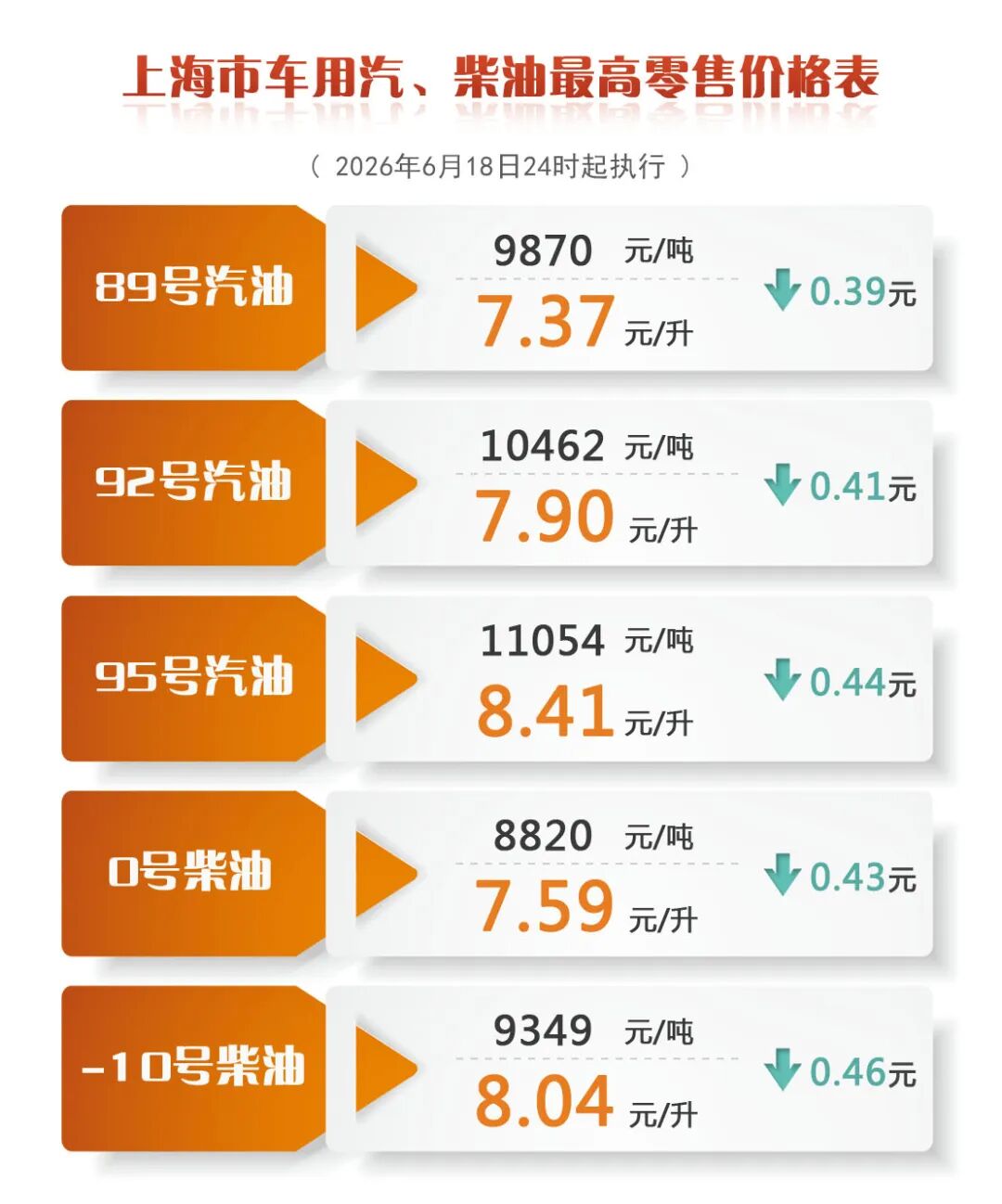
Per the National Development and Reform Commission notice, fuel prices were adjusted downward effective 24:00 on June 18:
- 92# Gasoline: 7.90 yuan/liter
- 95# Gasoline: 8.41 yuan/liter
- 0# Diesel: 7.59 yuan/liter
Note: 98# Gasoline is priced independently by enterprises.
Source: Shanghai Municipal Development & Reform Commission
Next fuel price adjustment: July 3 (Friday)